Leaks
Is Your Car Leaking Oil? How to Tell Before You Panic
Finding a patch under the car is unsettling, and about half the time it turns out to be either something harmless or somebody else parking there before you. Five minutes of checking answers it.
What this guide covers
First: Is It Even Oil?
Several things drip from a car and only some of them matter. Colour and position identify most of them immediately.
- Clear, watery, under the front passenger area, after using the air conditioning. Condensate from the AC. Completely normal and the most common false alarm in this climate.
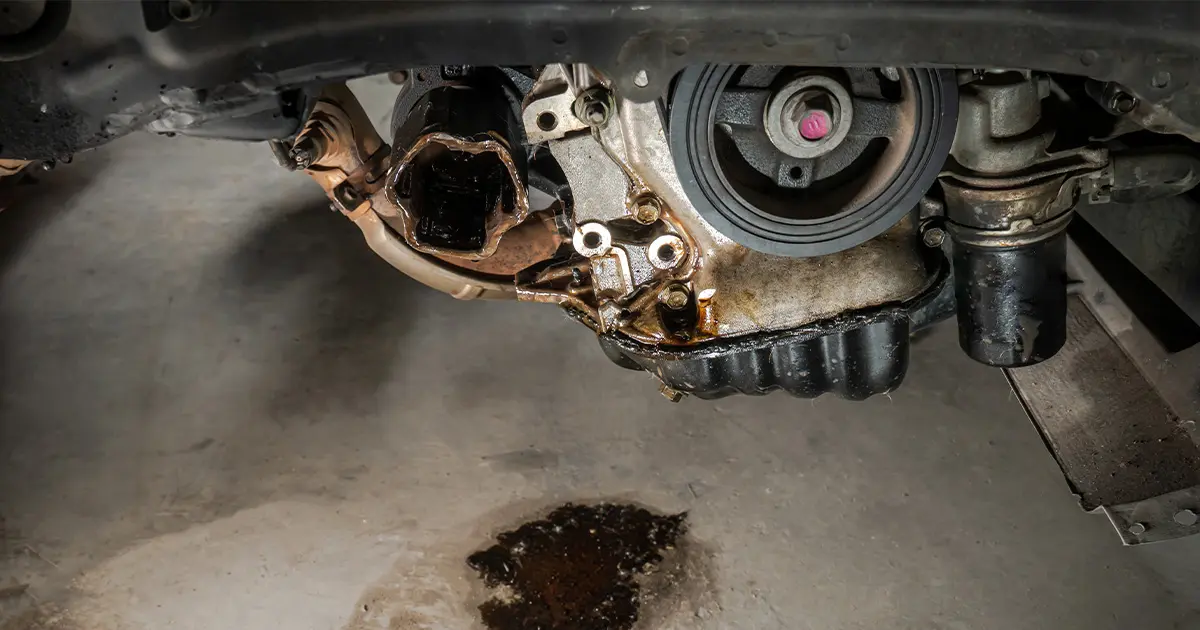
- Dark brown to black, thick and slippery. Engine oil.
- Amber or light brown, thinner. Fresh engine oil, or possibly brake fluid.
- Green, pink, orange or blue, slightly slimy. Coolant. More urgent than oil.
- Reddish, thin and slippery. Usually transmission fluid, sometimes power steering.
- Dark and near one wheel only. Could be a leaking damper.
If it is clear and oily near a wheel, treat it as brake fluid until proven otherwise and do not drive the car. That is the one fluid on this list where being wrong matters immediately.
Second: Is It Actually Yours?
This sounds obvious and it catches people out constantly, particularly in shared parking.
Lay a sheet of cardboard or a light-coloured cloth under the engine bay overnight, positioned where you saw the patch.
In the morning you will know three things at once: whether it is your car, exactly where the drip lands, and roughly how much.
Position matters more than most owners realise. A drip lands where gravity takes it, not necessarily below the leak, but it narrows the search considerably.
Third: Is the Level Actually Dropping?
This is the question that decides how much the leak matters.
A car can leave a small mark and lose almost nothing measurable. Another can leave nothing visible and be using oil steadily.
- Check the level on level ground, with the engine cold or several minutes after switching off.
- Note where it sits on the dipstick, or use the electronic reading if the car has no dipstick.
- Drive normally for a week, then check again in the same conditions.
- A level that has visibly moved is a leak worth pursuing regardless of what appears on the driveway.
The Leak With No Drip
A smell of burning oil with nothing on the ground is a common and often misunderstood situation.
Oil weeping onto a hot engine or exhaust burns off before it ever reaches the floor. You smell it through the vents and see nothing underneath.
It is still a leak, and on a hot engine it is worth attending to. Cam cover gaskets and oil filter housings are the usual culprits on modern engines.
Our guide to where engine oil leaks come from covers the specific sources.
What Not to Do
- Do not add a stop-leak product. They work by swelling seals, which affects every seal in the engine rather than the one that is leaking.
- Do not just keep topping up. That is managing a symptom, and the level between top-ups tells you how fast it is getting worse.
- Do not assume a small leak stays small. A weeping gasket under pressure and heat generally does not improve.
- Do not steam clean the engine before diagnosis. The oil trail is the evidence, and washing it away means waiting for it to reappear.
When It Stops Being a Watching Brief
Some situations move this from an inconvenience to something that needs immediate attention.
- The red oil pressure warning light. That means stop the engine, not book an appointment.
- A sudden large loss where there was none before.
- Smoke from the engine bay, which means oil is hitting something hot enough to burn.
- Oil visible near brake components, which is a safety issue rather than a maintenance one.
For a straight answer on how long a leak can wait, see how long you can drive with an oil leak.
Getting It Found Properly
The hard part of an oil leak is rarely the repair. It is establishing which of several possible sources it actually is, because oil travels once it escapes.
Exotic Auto Services cleans the area, adds a UV dye where needed and runs the engine, which shows the true origin rather than where the oil ended up.
For repair options and costs, see oil leak repair in Abu Dhabi.
Frequently Asked Questions
What is the clear water dripping under my car?
If it is under the front passenger area and appears after using the air conditioning, that is condensate and it is completely normal. The system removes moisture from the cabin air and it has to drain somewhere. In this climate it is the single most common thing owners mistake for a leak.
How do I know if my car is actually leaking oil?
Lay cardboard under the engine bay overnight, which tells you whether it is your car, where the drip lands and roughly how much. Then check the oil level on level ground, drive for a week and check again in the same conditions. A level that has visibly moved is the real answer.
I can smell burning oil but there is nothing on the ground. Why?
Because the oil is weeping onto a hot engine or exhaust and burning off before it reaches the floor. It is still a leak, and on a hot engine it deserves attention. Cam cover gaskets and oil filter housings are the usual sources on modern engines.
Do oil stop-leak additives work?
They work by swelling rubber seals, and they cannot choose which seals to swell. That affects every seal in the engine rather than the one leaking, and it can create new problems while masking the original one. They are a way to move a car, not a repair.
Should I clean the engine before bringing it in?
Please do not. The oil trail is the evidence we use to find the source, and a clean engine means waiting for the leak to reappear before anything can be traced. Bring it as it is, and we will clean the area ourselves as part of the diagnosis.