Servicing
Minor vs Major Car Service: What Each Includes
Minor and major are not standardised terms. They are workshop shorthand, and two quotes using the same words can describe genuinely different work, which is the single most common reason service prices look inconsistent.
What this guide covers
Why the Terms Are Slippery
No standards body defines a minor or major service. Manufacturers publish schedules of specific items at specific intervals, and the two words are a convenience layered on top of that.
So a workshop quoting a major service is describing its own package, and another workshop using the same phrase may include or exclude quite different things.
That is not necessarily dishonest. It becomes a problem when a customer compares two numbers and concludes one workshop is expensive, when it is actually doing more work.
Ask for the item list rather than the service name. A workshop that will not put in writing what is included is telling you something useful.
What a Minor Service Usually Covers
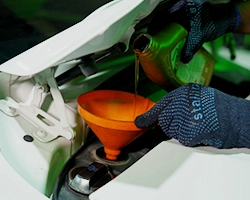
- Engine oil and oil filter replaced.
- All fluid levels checked and topped where needed.
- Tyre condition and pressures.
- Brake pad and disc measurement, with the readings.
- Lights, wipers and washers.
- A visual inspection of suspension, steering, exhaust and the underside.
- The service indicator reset.
It is the visit most cars have most of the time, and its real value is the inspection: an hour on the ramp is when a small problem is found while it is still small.
What a Major Service Usually Adds
- Air filter replaced. In this dust it earns its place.
- Cabin filter replaced, which affects airflow and cabin smell.
- Spark plugs, on their own interval rather than every major service.
- Brake fluid, typically every two to three years because it absorbs moisture with time.
- Fuel filter where accessible and scheduled.
- A fuller inspection, sometimes including a diagnostic read.
Whether all of those are due is a separate question from whether the package includes them, which is why a good workshop checks against the car rather than the calendar.
The Items That Sit Outside Both
This is where most missed maintenance lives, and none of it is in a standard package.
- Gearbox oil and filter. Scheduled, skipped constantly, and the cheapest transmission work available.
- Coolant. Its corrosion inhibitors deplete with time and heat well before it looks dirty.
- Differential and transfer case oils on all-wheel-drive vehicles.
- Haldex or coupling oil on some all-wheel-drive systems.
- The timing belt where fitted, which is a hard interval and not an advisory one.
- Brake pads and discs, which are measured at service and replaced on wear rather than schedule.
Asking what is due outside the service package is a genuinely useful question, and the answer is often nothing, which is also worth knowing.
Which One Do You Need?
The honest answer is that the question is slightly wrong.
What matters is which items are actually due on your car, based on its schedule, its mileage, its age and what was done last time.
A car that had plugs and brake fluid done last year does not need them again because a package includes them. A car with no history may need considerably more than either package covers.
Exotic Auto Services quotes against what the car is due rather than a fixed package, and tells you what can safely wait until next time.
Comparing Quotes Properly
- Ask for the item list from each workshop, in writing.
- Check the oil specification, not just that oil is included. On a turbocharged engine that is the expensive detail.
- Ask whether the filter is included every time or every other service.
- Check whether brake fluid is in the major, because it frequently is not.
- Ask what happens if something is found. Whether you are called before extra work.
- Ask for the measurements on brakes and tyres afterwards.
That last one separates a service from a box-ticking exercise. See how often to service here and packages versus pay per repair.
Frequently Asked Questions
What is the difference between a minor and major car service?
A minor service is broadly oil and filter, fluid levels, tyre and brake checks and a full inspection. A major service adds items on longer cycles such as air and cabin filters, spark plugs and often brake fluid. Neither term is standardised, so the item list matters more than the name.
Which service does my car need?
It depends on which items are actually due, based on your schedule, mileage, age and what was done last time, rather than on which package a workshop offers. A car that had plugs and brake fluid done last year does not need them again just because a major package includes them.
Why do service quotes vary so much between workshops?
Usually because they are quoting for different work under the same name. Neither minor nor major is a defined term, so one workshop may include brake fluid and a specific oil grade while another does not. Comparing item lists rather than headline prices is the only way to compare fairly.
What maintenance is not included in a normal service?
Gearbox oil and filter, coolant, differential and transfer case oils on all-wheel-drive vehicles, coupling oils such as Haldex, and the timing belt where one is fitted. None of those are in a standard package and all of them are scheduled, which is where most missed maintenance sits.
What should I ask for when booking a service?
The item list in writing, the oil specification rather than just that oil is included, whether the filter is replaced every time, whether brake fluid is part of it, whether you will be called before any extra work, and for the brake and tyre measurements afterwards. That last one separates a service from a box-ticking exercise.