Range Rover ownership
Five Signs Your Range Rover Needs Attention
A Range Rover tells you a great deal before anything actually fails. The difficulty is that some of what it tells you is urgent and some can wait a week, and the two look similar from the driver seat.
What this guide covers
1. The Car Sits Low on One Corner
This is the Range Rover symptom worth acting on fastest, and the one owners most often live with.
Air springs perish with heat and age. When one leaks, the car settles overnight and the compressor works harder every day trying to hold height.
Eventually the compressor fails as well, which turns one repair into two. Finding the leak is the job; replacing the compressor without finding it buys a few months at most.
If the car has dropped and will not lift, do not keep driving it on the bump stops. That is how a leaking air spring becomes suspension and body damage as well.
See Range Rover suspension repair.
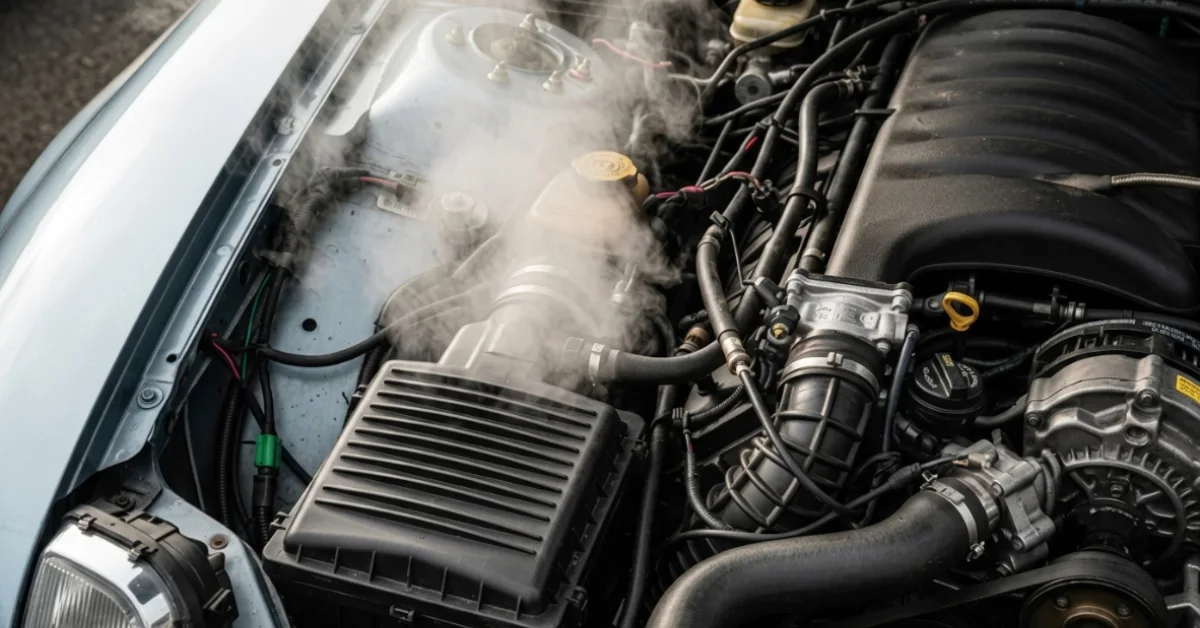
2. The Temperature Gauge Climbs in Traffic
Of everything on this list, this is the one that should stop you driving.
A large engine in Abu Dhabi traffic has little cooling margin. A tired radiator, a failing fan or a small coolant leak all show up first as heat that will not clear at a standstill.
Cooling components heat-age here as wear items, and an overheated engine is a different order of repair from a hose. See Range Rover engine repair.
3. Several Warning Lights Appear at Once
A screen full of unrelated warnings looks alarming and is usually one fault.
These cars monitor a great deal and report widely when system voltage drops. A weak battery, or a charging fault, produces exactly that pattern.
Testing the battery and charging system first is quick, and most of those messages disappear with it. See Range Rover battery replacement.
If the lights persist after a good battery, then it is time to read the fault codes properly rather than guess.
4. A Knock or Clunk Over Bumps
A knock at low speed over uneven ground is one of the most common complaints on these cars, and one of the cheapest to resolve.
It is usually an anti-roll bar link or a worn bush rather than anything structural. Both are inexpensive parts.
They feel similar from the driver seat and are easy to tell apart on the ramp with the suspension loaded, which is why it is worth checking rather than replacing both.
Left alone, worn bushes change the geometry and the tyres pay for it, which costs more than the bush did.
5. Fluid Under the Car
Colour and position tell you most of what you need before anyone lifts the car.
- Clear water under the passenger side after using the air conditioning is condensate. That one is normal.
- Bright green, pink or orange is coolant, and that is the urgent one.
- Dark brown or black, thicker is engine oil.
- Reddish and slippery is usually transmission fluid.
- Clear and oily near a wheel can be brake fluid, which means stop driving.
An oil smell with nothing on the floor is worth checking too. A leak onto a hot engine burns off before it drips.
What to Do With Any of These
Two of these five mean stop: an overheating engine and anything that looks like brake fluid. The rest mean book it in rather than panic.
Exotic Auto Services reads the stored fault codes, measures the wear items and tells you which of these you actually have, with the readings rather than a verdict.
For the full range of work we handle, see Range Rover repair and service.
Frequently Asked Questions
Why does my Range Rover sit low on one corner overnight?
That is an air suspension leak. Air springs perish with heat and age, and while one is leaking the compressor works harder every day trying to hold the car up. Left long enough the compressor fails too, so one repair becomes two. Finding the leak is the actual fix.
Is it safe to drive a Range Rover with the suspension dropped?
No. Driving on the bump stops damages suspension components and can damage the body, which turns an air spring repair into something much larger. If the car has dropped and will not lift, it is worth recovering rather than driving.
Why did several warning lights come on at the same time?
Almost always low system voltage rather than several simultaneous faults. These cars monitor a great deal and report widely when supply drops, so a weak battery or a charging fault produces a screen full of unrelated messages. Testing the battery and charging system first usually clears most of them.
What is the clunk from my Range Rover over speed bumps?
Usually an anti-roll bar link or a worn bush, and both are inexpensive parts. They feel similar from the driver seat but are easy to tell apart on the ramp with the suspension loaded. Left alone, worn bushes shift the geometry and the tyres end up paying for it.
There is water dripping under my Range Rover. Should I worry?
If it is clear water under the passenger side after running the air conditioning, that is condensate and it is normal. Coloured coolant, dark oil, reddish transmission fluid or anything clear and oily near a wheel are all worth checking, and the last of those means stop driving.