Brakes
Why Cheap Brake Pads Can Damage Your Car
A brake pad is not a generic block of friction material. It is a compound engineered for a specific weight of car, a specific disc and a specific temperature range, and the cheap ones save money by getting all three approximately right.
What this guide covers
What a Brake Pad Actually Has to Do
A pad converts the kinetic energy of a moving car into heat, then survives that heat and does it again immediately.
To do that well it needs a friction coefficient that stays roughly constant from cold to very hot, material that wears in preference to the disc, and a structure that does not break down under repeated heat cycles.
Those three things are what the price difference buys, and each one has a consequence when it is missing.
Cold Performance
Cheap pads generally use harder, more heat-tolerant material because it is cheaper to make and lasts a long time on paper.
Harder compounds do not grip well until they are warm. The first stop of the morning, the sudden stop in slow traffic, the emergency stop after a gentle drive: those are all cold-brake situations.
The pedal feels the same and the car takes longer to stop, which is the worst combination because there is no warning that anything has changed.
Brake Fade
At the other end, cheap pads fade sooner. Fade is what happens when the binder in the friction material begins to break down and outgas under sustained heat.
The pedal stays firm and the braking effect reduces, which is disconcerting and genuinely dangerous.
Abu Dhabi is precisely the condition that produces it: heavy vehicles, high ambient temperatures and repeated braking in traffic.
Fade is also why a pad that seems fine for months can be alarming on the one day you need it repeatedly, such as a long descent or heavy traffic in August. It is a heat threshold rather than a wear threshold.
What They Do to the Disc
This is where the saving disappears entirely.
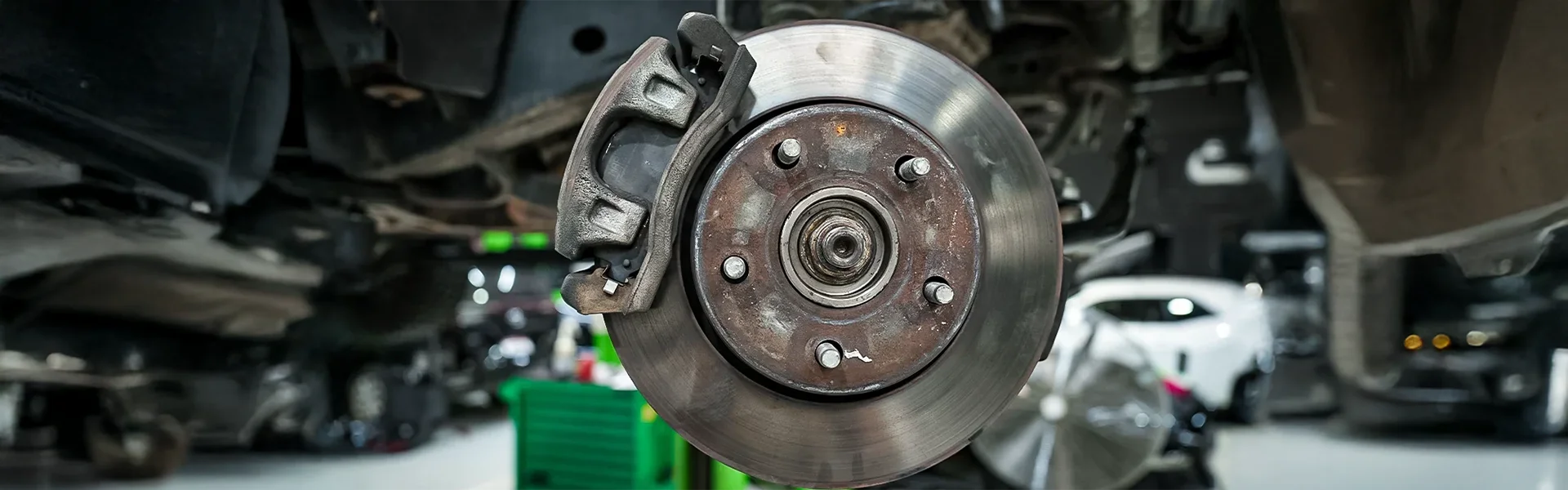
A pad and disc are a matched pair, and one of them is meant to wear. In a correctly specified system it is the pad, because a pad is inexpensive and a disc is not.
A harder, more abrasive pad reverses that. The pad lasts well and machines the disc instead, so you replace discs at two or three times the price of the pads you saved on.
Cheap pads also tend to deposit material unevenly on the disc, which produces the judder people describe as warped discs.
The Things You Notice Daily
- Noise. Hard compounds squeal more, often continuously rather than just when worn.
- Dust. More abrasive material produces more of it, and it is corrosive on alloy wheels.
- Feel. A wooden pedal that needs more pressure for the same result.
- Inconsistency. Brakes that behave differently cold, warm and hot are harder to judge.
What the Options Actually Are
This is not a choice between genuine and dangerous, and it is worth being accurate.
- Genuine. The manufacturer part in a manufacturer box, at manufacturer pricing. Frequently made by an outside supplier.
- OEM. The same component from that same supplier in their own box. Usually the best value on the list.
- Quality aftermarket. Established friction brands producing compounds engineered for the application. Entirely appropriate.
- Cheap unbranded. Where the problems above come from.
The meaningful line is not price, it is whether the compound was engineered for your car. Exotic Auto Services uses OEM or established friction brands and tells you which before the work starts.
Why It Matters More on a Heavy Car
Energy scales with mass. A heavy SUV puts far more energy through its brakes than a small saloon at the same speed, and all of it becomes heat.
That is why premium and large vehicles are less tolerant of an approximate friction compound: they operate closer to the limit of what the material can absorb.
See our luxury car brake service cost guide for what a proper job involves.
The Honest Arithmetic
Cheap pads save a modest amount at fitting.
Against that: discs replaced sooner at several times the pad cost, longer cold stopping distances, fade when the brakes are hot, more noise and more wheel dust.
Brakes are one of very few components where the cheapest option is a genuinely poor decision rather than a reasonable economy. See when to replace brake pads.
Frequently Asked Questions
Are cheap brake pads actually dangerous?
They are worse in exactly the situations that matter. Harder compounds grip poorly until warm, so cold stopping distances are longer with no change in pedal feel to warn you. They also fade sooner under sustained heat, which Abu Dhabi traffic produces readily. Neither is dramatic day to day, and both matter in an emergency stop.
Do cheap brake pads damage brake discs?
Yes, and this is where the saving disappears. A pad and disc are a matched pair and the pad is meant to be the part that wears. Harder, more abrasive pads reverse that and machine the disc instead, so you replace discs at several times the cost of the pads you saved on.
Why are my new brakes squealing?
Hard friction compounds are the usual reason, and cheaper pads use them because the material is cheaper and lasts well on paper. They squeal continuously rather than only when worn, and they produce more brake dust. If new pads squeal from the first week, the compound is a likely explanation.
Do I have to use genuine brake pads?
No. Many genuine pads are made by outside friction suppliers and sold in a manufacturer box at a premium, and the same supplier part is often available for less. Quality aftermarket compounds from established friction brands are also entirely appropriate. The line that matters is whether the compound was engineered for your car, not the price.
What is brake fade?
It is what happens when the binder in the friction material begins to break down and outgas under sustained heat, reducing braking effect while the pedal still feels firm. It is a heat threshold rather than a wear threshold, which is why pads that seemed fine for months can be alarming on one hot day in heavy traffic.