
Porsche ownership
Porsche Maintenance Tips for Long-Term Performance
A Porsche is designed to deliver strong performance, sharp handling, and a smooth driving experience. Keeping those qualities over many years requires more than fixing problems when they appear. Regular maintenance helps protect the engine, transmission, brakes, suspension, and other key systems.
What this guide covers
UAE conditions can make proper care even more important. High temperatures, dusty roads, heavy traffic, and long periods of air conditioning use can place extra stress on a Porsche. Regular oil changes protect the engine, while cooling system checks help control heat.
Tyre and brake inspections support safe handling, and battery checks help prevent electrical issues. Following the correct service schedule also helps detect small faults before they become costly repairs.
Why Regular Porsche Maintenance Matters
Porsche vehicles use advanced engines, transmissions, suspension systems, and electronic controls. These parts are designed to work together with high precision. Delaying routine maintenance can allow small problems to affect other components.
Regular servicing gives technicians a chance to check fluid levels, filters, brakes, tyres, belts, hoses, and electronic systems.
It also helps identify early signs of wear. Maintenance needs can vary between Porsche models, such as the 911, Cayenne, Macan, Panamera, and Taycan. The engine type, mileage, age, and driving style should all be considered when planning service.
Essential Porsche Maintenance Checks for Long-Term Performance
Several vehicle systems need regular attention to keep a Porsche reliable and responsive. Engine oil, cooling components, brakes, tyres, suspension, transmission, battery, and electronics all play an important role in the car's performance.
A proper inspection should look at the complete vehicle instead of focusing on one part. This helps technicians find related problems and understand the condition of the car as a whole.
UAE driving conditions can also affect service needs, so a vehicle that spends a lot of time in traffic or extreme heat may need closer checks than one used less often.
1. Change the Engine Oil on Time
Engine oil protects internal components by reducing friction and helping control heat. Over time, oil becomes contaminated and can lose some of its protective ability. Low oil levels can also increase wear on moving parts.
Using the correct oil grade for the specific Porsche engine is important. During an oil service, the oil filter should normally be replaced as well.
Technicians should inspect for leaks around the oil pan, seals, filter housing, and other areas. Regular oil changes can help protect components such as the crankshaft, camshafts, bearings, and turbocharger.
2. Check the Cooling System
A Porsche engine produces considerable heat, especially during fast driving or long journeys. The cooling system must keep engine temperature within the correct range. UAE summer temperatures can add more stress to this system.
The radiator, coolant, hoses, thermostat, water pump, and cooling fans should be checked during service. Low coolant may indicate a leak that needs to be found and repaired.
Warning signs include a temperature warning, coolant smell, unusual fan operation, or steam. Driving an overheated vehicle can cause serious damage to the engine and cylinder head.
3. Maintain the Braking System
Strong braking performance is essential for a Porsche. Brake pads and discs experience wear during normal driving, while repeated hard braking can create more heat and stress.
A brake inspection should include the pads, discs, brake fluid, calipers, and related parts. A squealing sound does not always mean the brakes have failed, but a change in braking feel should be checked.
Vibration, pulling to one side, a soft pedal, or longer stopping distance can indicate a problem. Brake fluid should also be replaced according to the recommended car maintenance schedule.
4. Inspect Tyres and Wheel Alignment
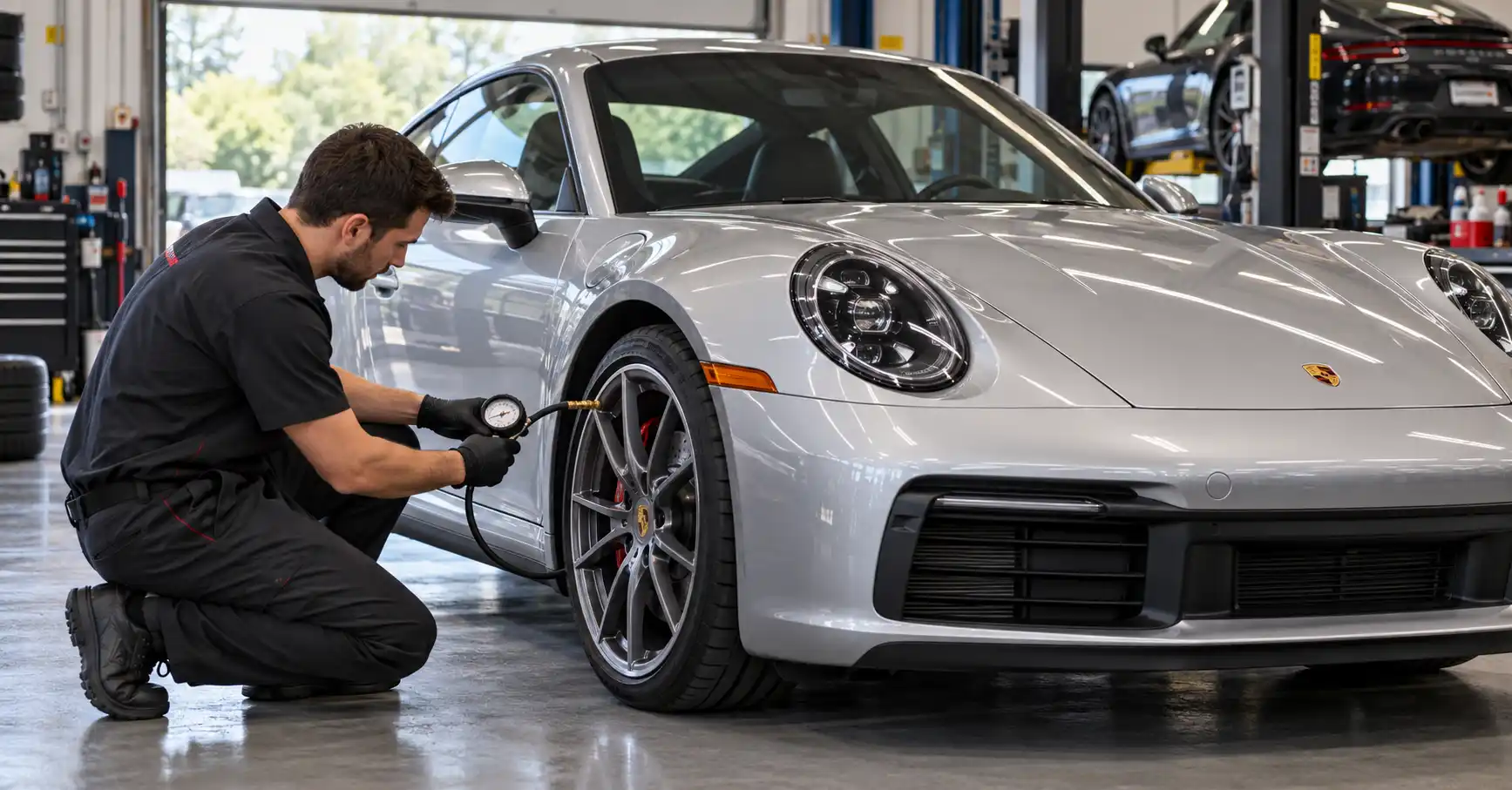
Tyres are the main contact between the Porsche and the road. Their condition affects acceleration, braking, steering, and cornering. Incorrect tyre pressure can also affect handling and cause uneven tread wear.
Tyre pressure should be checked regularly, especially when temperatures change. The tread, sidewalls, and tyre age should also be inspected. Uneven wear may point to incorrect alignment or a suspension issue.
Using suitable tyres for the specific Porsche model is important because different models can have different tyre requirements.
5. Check the Suspension System
Porsche vehicles are known for precise handling, and the suspension plays a major role in maintaining that feel. Rough roads, potholes, speed bumps, and regular driving can cause wear in suspension components.
Technicians should inspect dampers, bushings, control arms, joints, and other related parts. Unusual knocking sounds, excessive bouncing, uneven tyre wear, or changes in ride height can indicate a suspension problem.
Vehicles equipped with advanced systems such as Porsche Active Suspension Management may also need electronic diagnostics when a fault occurs.
6. Service the Transmission Correctly
The transmission transfers engine power to the wheels and needs proper care to maintain smooth gear changes. Porsche models can use different transmission systems, including PDK and automatic transmissions, depending on the model and year.
Warning signs include harsh shifting, delayed engagement, unusual sounds, slipping, or transmission warning messages. Fluid condition and service requirements vary by transmission type.
Technicians should follow the correct procedure for the specific vehicle rather than using a general service method. Early diagnosis can help prevent a smaller transmission fault from becoming a major repair.
7. Keep the Battery in Good Condition
A Porsche depends on its battery to power many electronic systems. Extreme heat can shorten battery life, while long periods without driving can cause the battery to discharge.
Battery voltage and starting performance should be checked during regular service. The charging system should also be tested because an alternator or electrical fault can cause battery problems.
If the car is rarely driven, suitable battery maintenance can help reduce discharge. Warning messages, slow starting, dim lights, or electrical issues should be inspected instead of being ignored.
8. Inspect Filters and Air Intake Parts
Clean filters help the engine receive the correct amount of air while keeping dust and dirt away from sensitive components. UAE roads can expose vehicles to fine dust and sand, making air filter checks useful.
A restricted engine air filter can affect airflow and engine performance. The cabin filter should also be checked because it helps keep dust and particles outside the passenger area.
Replacement intervals depend on the Porsche model and driving conditions. Cars that are regularly driven in dusty areas may need closer inspection.
9. Check the Air Conditioning System
A working air conditioning system is essential in the UAE. The system has to remove heat from the cabin quickly, especially during summer. Poor cooling can make driving uncomfortable and may indicate a fault that needs attention.
If the air conditioner produces weak airflow, takes too long to cool, or makes unusual sounds, it should be inspected. Possible causes include a blocked cabin filter, low refrigerant, compressor problems, or electrical faults.
Regular inspection can help keep the system working efficiently and reduce the chance of sudden cooling problems.
10. Use Proper Diagnostic Equipment
Modern Porsche vehicles use electronic control units and sensors to manage many vehicle functions. These systems can store fault codes when a component does not work as expected.
A diagnostic scan can help identify faults in the engine, transmission, suspension, brakes, battery, and other systems. However, a fault code does not always mean that the related part needs replacement.
Wiring, connectors, sensors, and low battery voltage can sometimes cause similar warnings. Proper testing helps technicians find the actual cause and avoid unnecessary repairs.
11. Protect the Paint and Interior
Strong sunlight, heat, dust, and sand can affect a Porsche's exterior and interior over time. Dust should be removed using safe washing methods because rubbing dry particles across the paint can create fine scratches.
Whenever possible, parking in a covered area can reduce direct sunlight and cabin heat. The interior should also be cleaned with products suitable for leather, plastic, and other materials used in the vehicle.
Owners who want extra protection can consider paint protection options based on how often the vehicle is driven and where it is stored.
Watch for Early Warning Signs
Small changes can provide useful clues about a developing problem. A driver should pay attention to new sounds, warning lights, changes in handling, or unusual fluid loss.
Important signs include:
- Engine warning lights: These may point to engine, sensor, fuel, or emissions faults.
- Fluid leaks: Oil or coolant under the vehicle needs inspection.
- Unusual sounds: Knocking, ticking, whining, or grinding should not be ignored.
- Brake changes: Vibration or a soft pedal can indicate brake problems.
- Poor handling: Pulling, shaking, or uneven tyre wear may involve suspension or alignment.
- Transmission changes: Harsh or delayed gear changes need proper diagnosis.
- Battery warnings: Electrical alerts may be caused by low voltage or another system fault.
Prepare Your Porsche for Long UAE Drives
A quick inspection before a long journey can reduce the chance of unexpected problems. Long drives place continuous demand on the engine, cooling system, tyres, brakes, and air conditioning.
Check the engine oil, coolant, tyre pressure, brake condition, and battery before travelling. Look for visible leaks and make sure there are no active warning lights. If the vehicle has recently developed a new vibration, sound, or performance change, have it checked before the trip.
This is especially useful before longer journeys between Abu Dhabi, Dubai, Al Ain, or other parts of the UAE.
Follow the Recommended Service Schedule
Porsche maintenance should follow the service requirements for the specific model and engine. A 911 may have different requirements from a Cayenne, Macan, Panamera, or Taycan.
Mileage, age, driving conditions, and driving style can also affect maintenance needs. A car that is used for short trips, heavy traffic, or frequent performance driving may need closer inspection of certain components.
Keeping a complete service record helps technicians understand what has already been replaced or inspected. It also makes it easier to plan future maintenance instead of waiting for warning signs.
When Should You Take Your Porsche for Service?
Do not wait for a major failure before arranging an inspection. New warning lights, overheating, unusual engine sounds, fluid leaks, rough gear changes, brake issues, or changes in handling should be checked promptly.
Professional diagnostics and physical inspection can help identify the source of a problem. This is especially important for a Porsche because several systems may produce similar symptoms. Finding the root cause allows the right component to be repaired or replaced and helps avoid unnecessary work.
Conclusion
Long-term Porsche performance depends on regular care of the engine, cooling system, brakes, tyres, suspension, transmission, battery, air conditioning, and electronic systems. UAE heat, dust, traffic, and road conditions make these checks even more important.
Changing fluids on time, checking warning signs, maintaining correct tyre pressure, and following the proper service schedule can help protect the vehicle for years. Regular inspections also give technicians a chance to find wear before it becomes a major repair.
For professional Porsche servicing, diagnostics, maintenance, and repairs in the UAE, Exotic Auto Services can help keep your Porsche performing smoothly and reliably.
Frequently Asked Questions
How often should a Porsche be serviced in the UAE?
It depends on the model, engine, mileage, age and driving style, so the starting point is the service schedule for your specific Porsche. Cars used for short trips, heavy traffic or frequent performance driving may need closer inspection of certain components between services.
Do different Porsche models need different maintenance?
Yes. A 911 may have different requirements from a Cayenne, Macan, Panamera or Taycan, and the engine type and transmission, such as PDK or automatic, also change what is needed. The service should follow the procedure for the specific vehicle.
Why does UAE heat matter for Porsche maintenance?
High temperatures, dust and slow traffic put extra load on the cooling system, battery, tyres and air conditioning. Cooling system checks, battery tests, tyre pressure checks and air filter inspections become more important here than in a cooler climate.
Does a Porsche fault code mean a part needs replacing?
Not always. Wiring, connectors, sensors and low battery voltage can cause similar warnings. Proper testing alongside the diagnostic scan helps find the actual cause and avoid unnecessary repairs.