Tyres
Luxury Car Tyre Maintenance in Abu Dhabi Heat
In Abu Dhabi, a tyre is far more likely to age out than wear out. Heat hardens the rubber compound over years, and a tyre with plenty of tread can be well past its useful life. The date code on the sidewall matters more here than the tread depth.
What this guide covers
Age Beats Tread Here
Tyre rubber is a compound with oils and additives that keep it flexible. Heat and ultraviolet drive those out over time, and the rubber hardens.
A hardened tyre has less grip, particularly in the wet, and is more prone to cracking and sudden failure. None of that shows in the tread depth.
In a temperate climate a tyre usually wears out first. Here it frequently does not, and a car doing modest mileage can be running tyres that are technically legal and genuinely past it.
How to read the date code
Every tyre carries a DOT code on the sidewall. The last four digits are what matter: the first two are the week of manufacture, the last two the year.
So 2823 means the twenty-eighth week of 2023. It takes ten seconds to check on all four tyres.
Look for cracking in the sidewall and between the tread blocks, sometimes called crazing. Fine cracks are the visible sign that the compound has hardened, and a tyre showing them should be replaced regardless of tread depth.
Pressure Matters More Than You Think
Underinflation is the single most damaging thing you can do to a tyre, and it is worse here than elsewhere.
An underinflated tyre flexes more in the sidewall, and that flexing generates heat. Add ambient heat and road surface temperature and the tyre is operating far hotter than intended.
Heat is what causes the sudden failures people describe as blowouts, and most of them start as a pressure that was never checked.
Check them cold
Pressure rises as a tyre warms, and in this climate the difference between a cold and hot reading is significant.
Setting pressures on a hot tyre means underinflating it once it cools, which is exactly the wrong direction.
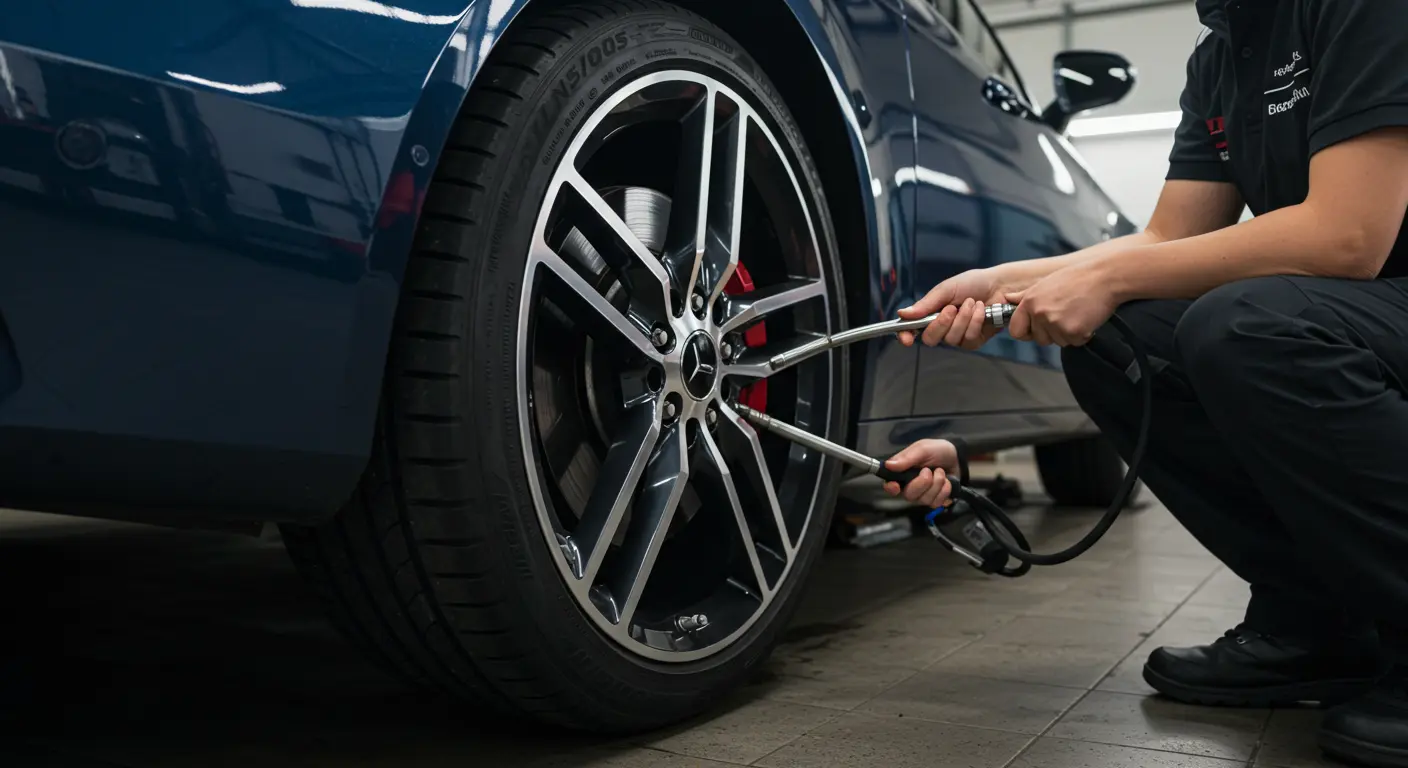
Check first thing in the morning, or after the car has stood for a few hours.
Do not reduce pressure because it is hot
Letting air out of a hot tyre to bring the reading down is a common mistake and it leaves the tyre badly underinflated when cool.
The manufacturer figure is a cold pressure, and the rise while driving is expected and accounted for.
Reading the Wear
Tyres are the most honest diagnostic tool on the car, because they record what actually happens under load.
- One edge worn points at camber, from alignment or a worn component.
- Feathering, sharp one way and rounded the other, points at toe.
- Both edges worn is underinflation.
- Centre worn is overinflation.
- Cupping or scalloping points at worn dampers rather than tyres.
See six signs your wheels need alignment.
Run-Flats
Many premium cars leave the factory on run-flats, and there are things worth knowing before you need them.
- They cost noticeably more than conventional tyres.
- Once driven on while deflated, most cannot be repaired and must be replaced.
- The reinforced sidewall means a harsher ride, which some owners choose to move away from.
- Switching to conventional tyres means carrying a repair kit or a spare, since the car may not have one.
It is a legitimate choice either way. It is worth making deliberately rather than discovering at the roadside.
Rotation, Pairs and Sets
Rotating tyres evens out wear and extends the life of a set, and on many performance cars it is not possible because front and rear are different sizes.
Where sizes differ, tyres are replaced in axle pairs rather than rotated.
On all-wheel-drive cars this matters more. A significant difference in rolling circumference between axles puts load through the centre differential or coupling, and some manufacturers are strict about it.
If your car is all-wheel drive, replacing a single tyre is a question to ask rather than an assumption to make.
A Sensible Routine
- Check pressures cold, monthly, including the spare if there is one.
- Read the date codes once a year and know how old your tyres are.
- Look for sidewall cracking when you check pressures.
- Run a hand across the tread to feel for feathering.
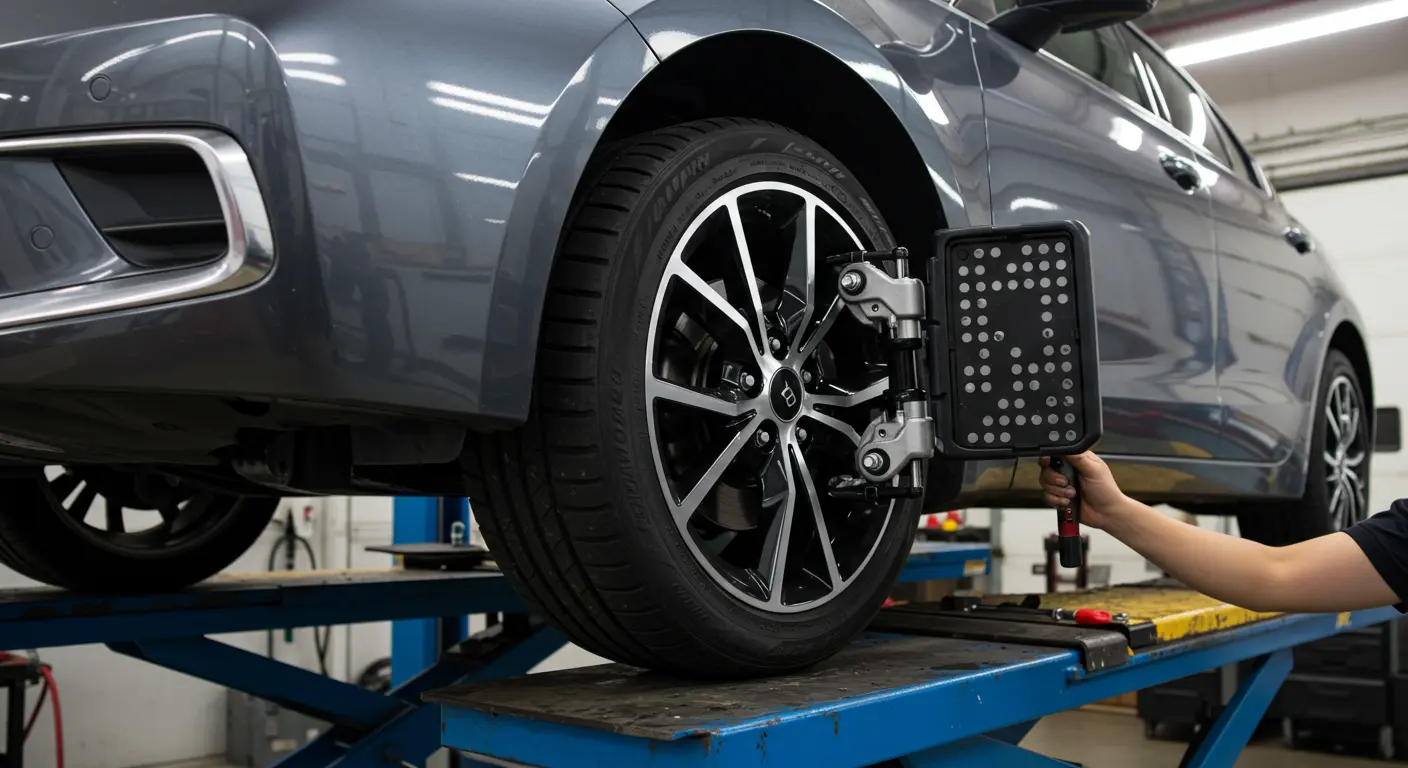
- Have the alignment checked after any kerb strike or suspension work.
- Do not park in direct sun long term where it can be avoided, since UV accelerates hardening.
Exotic Auto Services checks tyre age and condition at every service, not just tread depth, because in this climate tread depth is often the least useful measurement.
Frequently Asked Questions
How old is too old for a car tyre?
In this climate, treat age as a limit in its own right rather than waiting for tread to run out. Heat and ultraviolet drive the oils out of the rubber so it hardens and loses grip, particularly in the wet. Check the last four digits of the DOT code on the sidewall: week and year of manufacture.
Where is the date code on a tyre?
On the sidewall, at the end of the DOT code. The final four digits are what matter: the first two are the week of manufacture and the last two the year, so 2823 means the twenty-eighth week of 2023. It takes seconds to check all four tyres.
Should I let air out of my tyres when they are hot?
No, and it is a common mistake here. Tyre pressures rise as they warm and the manufacturer figure is a cold pressure, with the rise accounted for. Letting air out to bring a hot reading down leaves the tyre badly underinflated once it cools, which generates more heat and does more damage.
Can a run-flat tyre be repaired?
Usually not, once it has been driven on while deflated. The reinforced sidewall carries the weight of the car when there is no air, and doing so damages its internal structure even when nothing is visible from outside. Most manufacturers specify replacement rather than repair.
Can I replace just one tyre on an all-wheel-drive car?
It is a question worth asking rather than assuming. A significant difference in rolling circumference between axles puts continuous load through the centre differential or coupling, and some manufacturers are strict about the tolerance. Depending on the car and the wear on the others, replacing in pairs may be necessary.