Suspension
Worn Suspension: What Each Symptom Points At
Suspension complaints all sound alike until you notice when they happen. A knock over bumps and a clunk while turning are different parts, and the cheapest one on the list is the most common cause of both.
What this guide covers
Rattle or Knock Over Rough Ground
The most common suspension complaint and usually the cheapest to fix.
Anti-roll bar links
These connect the anti-roll bar to the suspension at each side. They are small, they take constant movement, and they are among the least expensive parts on the car.
A worn link knocks over speed bumps and rough surfaces and is often silent on smooth roads.
This is the first thing to check, because it accounts for a large share of these complaints and costs very little to put right.
Worn bushes
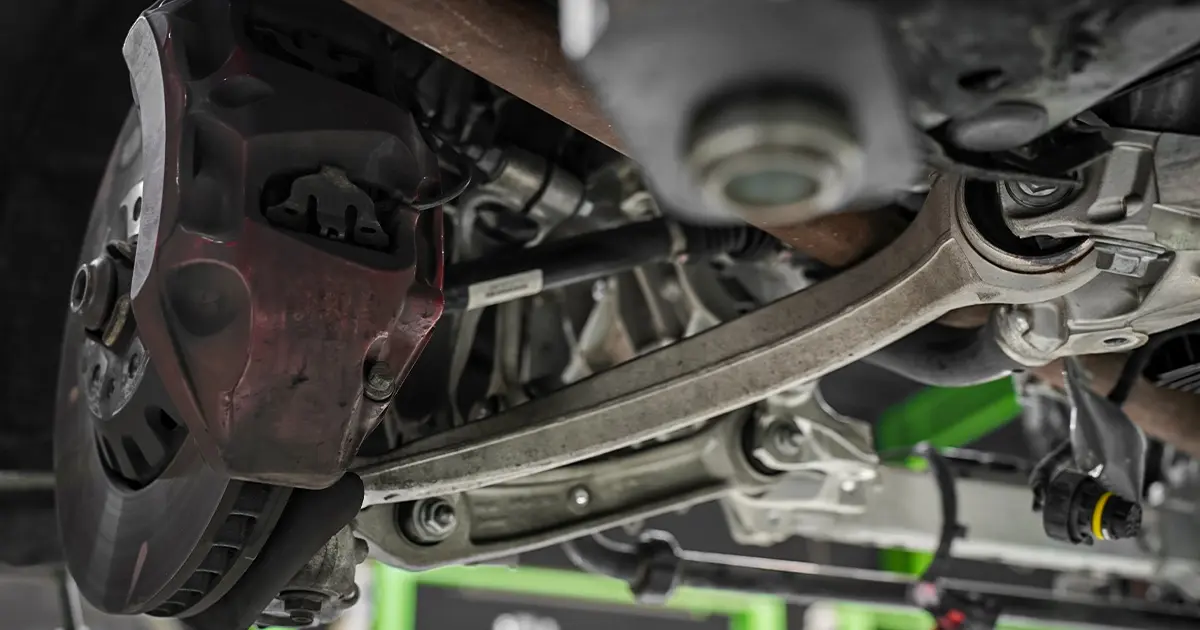
Control arm and subframe bushes are rubber, and heat cycling hardens them until they crack and allow movement.
They produce a duller knock than a link, and usually add vague steering as well.
Clunk or Notchiness While Turning
Top mount bearing
The strut rotates within a bearing at the top when you steer. When that bearing dries out or fails, turning at parking speed feels notchy or produces a creak.
It is a distinctive symptom because it happens with steering input rather than with bumps.
Ball joints
A worn ball joint gives a knock on turning and, if allowed to progress, is genuinely a safety concern.
It also shows in tyre wear before it becomes loud, which is one more reason to read the tyres.
Driveshaft joints
A clicking that increases with steering lock, particularly on full lock, is usually an outer driveshaft joint rather than suspension at all.
Worth knowing because it is often quoted as suspension.
A Floating or Wallowing Ride
This is dampers, and it is the symptom that creeps up most gradually.
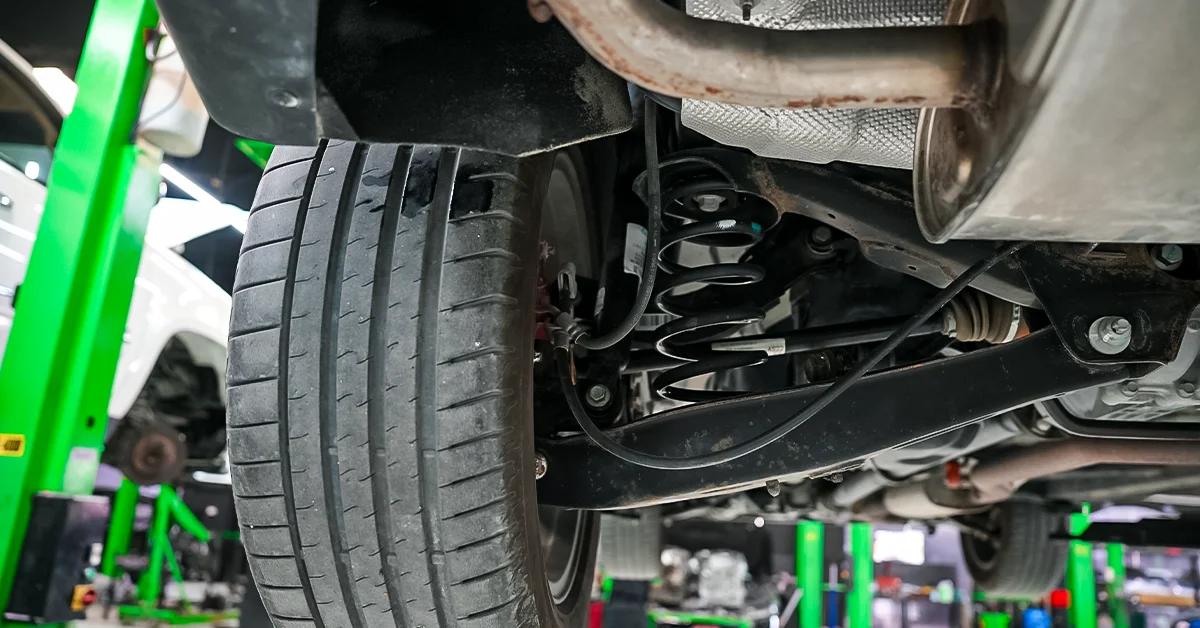
The car continues moving after a bump rather than settling, dives noticeably under braking, and feels unsettled at speed over undulations.
It matters beyond comfort: a damper that is not controlling the spring is lengthening your braking distances. See why worn suspension is a braking problem.
Dampers are replaced in pairs so the axle behaves consistently.
Uneven Tyre Wear
Tyres are the most honest diagnostic tool on the car, and they record what happens under load rather than what a static measurement shows.
- Cupping or scalloping, uneven patches around the tread, points at failed dampers.
- Inside edge wear points at camber, which can be geometry or a worn component allowing movement.
- Feathering, where tread blocks wear at an angle, points at toe.
- One tyre only points at a component on that corner rather than at alignment.
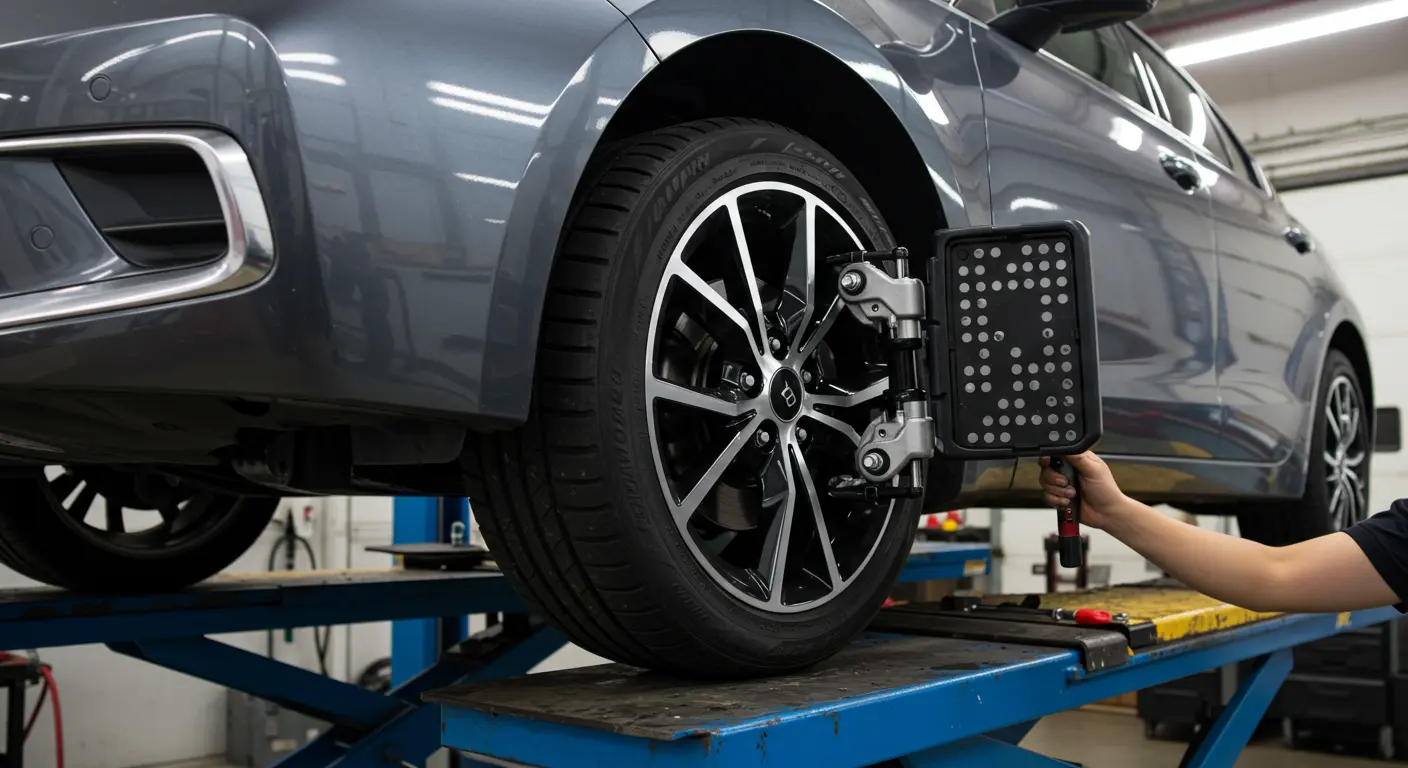
Aligning a car that has play in it corrects the numbers while the wheels are clamped in the machine and changes nothing on the road. The worn part has to be dealt with first, then the alignment holds.
The Air Suspension Case
On cars with air suspension the symptoms are different and the urgency is higher.
A corner sitting low overnight is a leaking air spring, and while it leaks the compressor runs harder every day trying to hold height until it fails as well.
Finding the leak is the repair. Replacing the compressor without finding it buys a few months at most, and driving on the bump stops damages more than the spring.
Why This Climate Is Hard on Suspension
- Heat degrades damper oil and seals, so they fade faster than in a temperate climate.
- Rubber bushes harden with heat cycling, independent of distance covered.
- Speed bumps and road surface deliver the impacts that find weak components.
- Dust gets into joints and accelerates wear once a boot has split.
A split rubber boot on a ball joint or driveshaft is worth acting on quickly here, because dust ruins the joint once it is exposed.
Getting It Diagnosed
Suspension is checked with the components loaded, because most play does not show with the wheels hanging.
Exotic Auto Services checks joints, bushes, mounts and dampers as a set, reads the tyres for what they record, and road tests where the symptom warrants it.
Alignment follows the repair rather than substituting for it. See what control arm replacement involves.
Frequently Asked Questions
What causes a knocking noise over speed bumps?
Most often an anti-roll bar link, which is among the cheapest parts on the car and takes constant movement. Worn control arm bushes give a duller knock and usually add vague steering. Both are easy to tell apart on the ramp with the suspension loaded, which is why checking beats replacing both.
Why does my steering feel notchy at parking speed?
Usually a top mount bearing. The strut rotates within a bearing at the top when you steer, and when it dries out or fails you feel notchiness or hear a creak. It is distinctive because it happens with steering input rather than over bumps.
Can worn suspension cause uneven tyre wear?
Yes, and the pattern identifies the cause. Cupping or scalloped patches around the tread point at failed dampers. Inside edge wear points at camber. Feathering points at toe. Wear on one tyre only points at a component on that corner rather than at alignment across the car.
Will an alignment fix my suspension noise?
No, and doing it first is money wasted. Aligning a car with play in it corrects the numbers while the wheels are clamped in the machine, then the worn component allows movement again on the road. The part gets replaced first and the alignment is done after, which is when it holds.
Why does suspension wear out faster in the UAE?
Heat degrades damper oil and seals so they fade sooner, and rubber bushes harden through heat cycling regardless of how far the car has travelled. Add speed bumps and road surface and components age on a timeline driven by years and temperature rather than kilometres.