Tyres and alignment
Six Signs Your Wheels Need Alignment
Alignment and balancing are different jobs solving different problems, and they get confused constantly. Vibration is almost always balance. Pulling and uneven tyre wear are almost always alignment. Booking the wrong one is a common and avoidable waste.
What this guide covers
Alignment or Balancing?
Worth settling before the six signs, because it decides which job you should be booking.
Balancing corrects weight distribution around a wheel and tyre. An imbalance makes the wheel vibrate as it spins, felt at particular speeds.
Alignment corrects the angles at which the wheels sit relative to the car and the road. Bad alignment makes the car pull and wears tyres unevenly.
One is about the wheel spinning smoothly. The other is about the wheel pointing correctly. A vibration will not be cured by an alignment, and a pull will not be cured by balancing.
1. The Car Pulls to One Side
On a straight, level road with a light grip on the wheel, the car drifts consistently to one side.
Before assuming alignment, check tyre pressures. An underinflated tyre on one side produces exactly this, and it costs nothing to rule out.
A pull only under braking is a brake problem rather than alignment, usually a caliper dragging on one side.
2. The Steering Wheel Is Off Centre
You are driving straight and the wheel sits at an angle. This is one of the clearest indicators there is.
It commonly appears after hitting a kerb or a deep pothole, or after suspension work where the alignment was skipped.
It is also worth noticing because it means the geometry has moved rather than simply drifted.
3. Uneven Tyre Wear
The most reliable sign, because the tyres record what actually happens rather than what a static measurement shows.
- Inside or outside edge worn while the centre is fine points at camber.
- Feathering, where tread blocks are sharp on one side and rounded on the other, points at toe.
- Both edges worn, centre fine is underinflation rather than alignment.
- Centre worn, edges fine is overinflation.
- Cupping or scalloping points at dampers rather than alignment.
Running a hand across the tread in both directions tells you more than looking at it. Feathering is felt more easily than seen.
4. The Steering Feels Loose or Wandering
The car needs constant small corrections to hold a straight line, and does not self-centre properly after a turn.
This one is worth treating carefully, because it can be alignment or it can be play in a worn component.
If there is play, the alignment will not hold. See what each suspension symptom points at.
5. Squealing Tyres at Low Speed
Tyres that chirp or squeal on a normal turn in a car park, on dry tarmac, are being dragged rather than rolled.
That is usually a toe setting that is out, and it is quietly destroying the tyres while it does it.
6. It Happened After Something
Alignment does not usually drift on its own. Something moves it.
- A kerb strike or a deep pothole.
- Any suspension or steering component replaced.
- A change in ride height, including on air-sprung cars.
- A significant load carried regularly.
If any of those happened and the car has felt different since, that is your answer without needing the other five signs.
After suspension work, an alignment is part of the job rather than an extra. Replacing any arm, joint or damper changes the geometry, and skipping the alignment means the new parts wear the tyres.
Check the Parts Before the Angles
This is the single most useful thing to know about alignment, and it is why an alignment sometimes seems not to work.
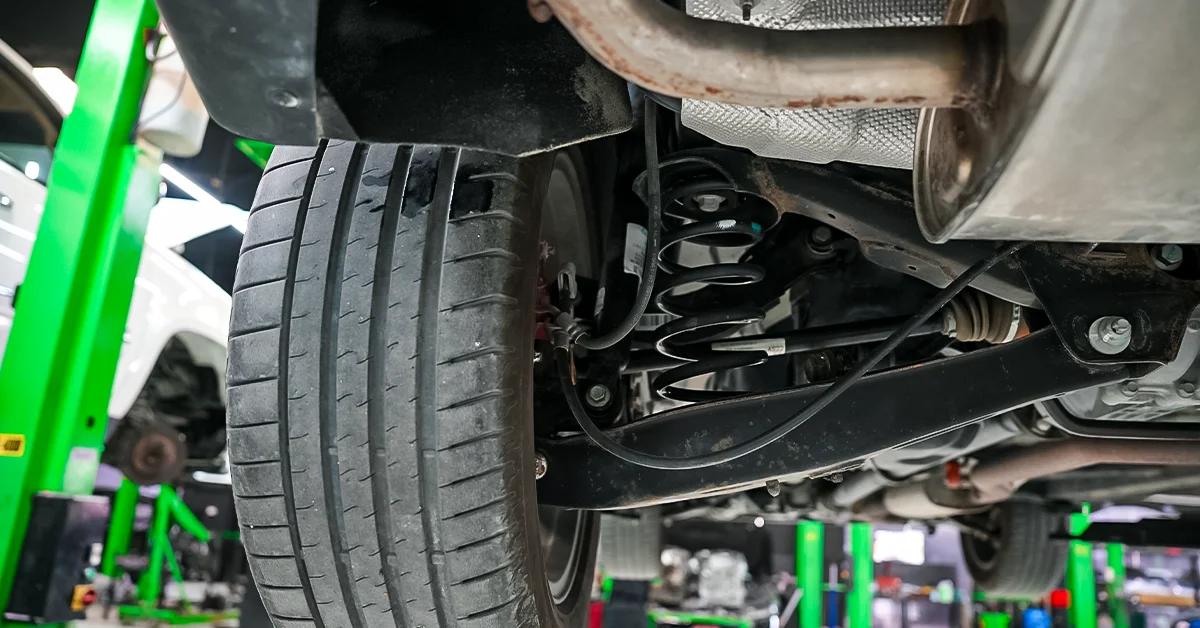
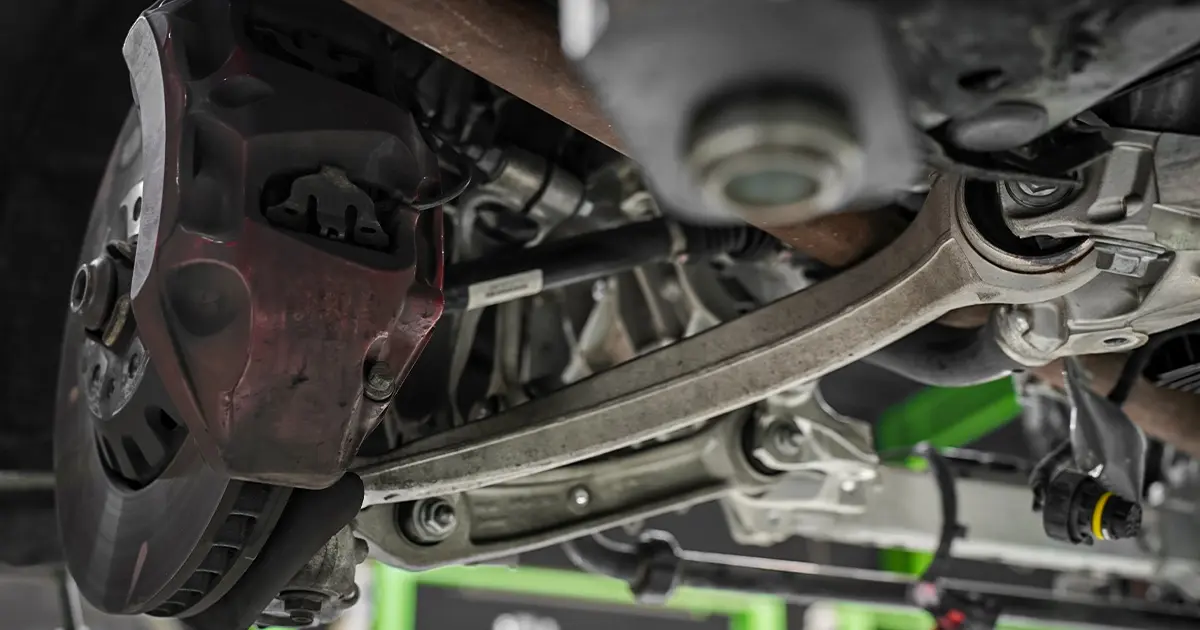
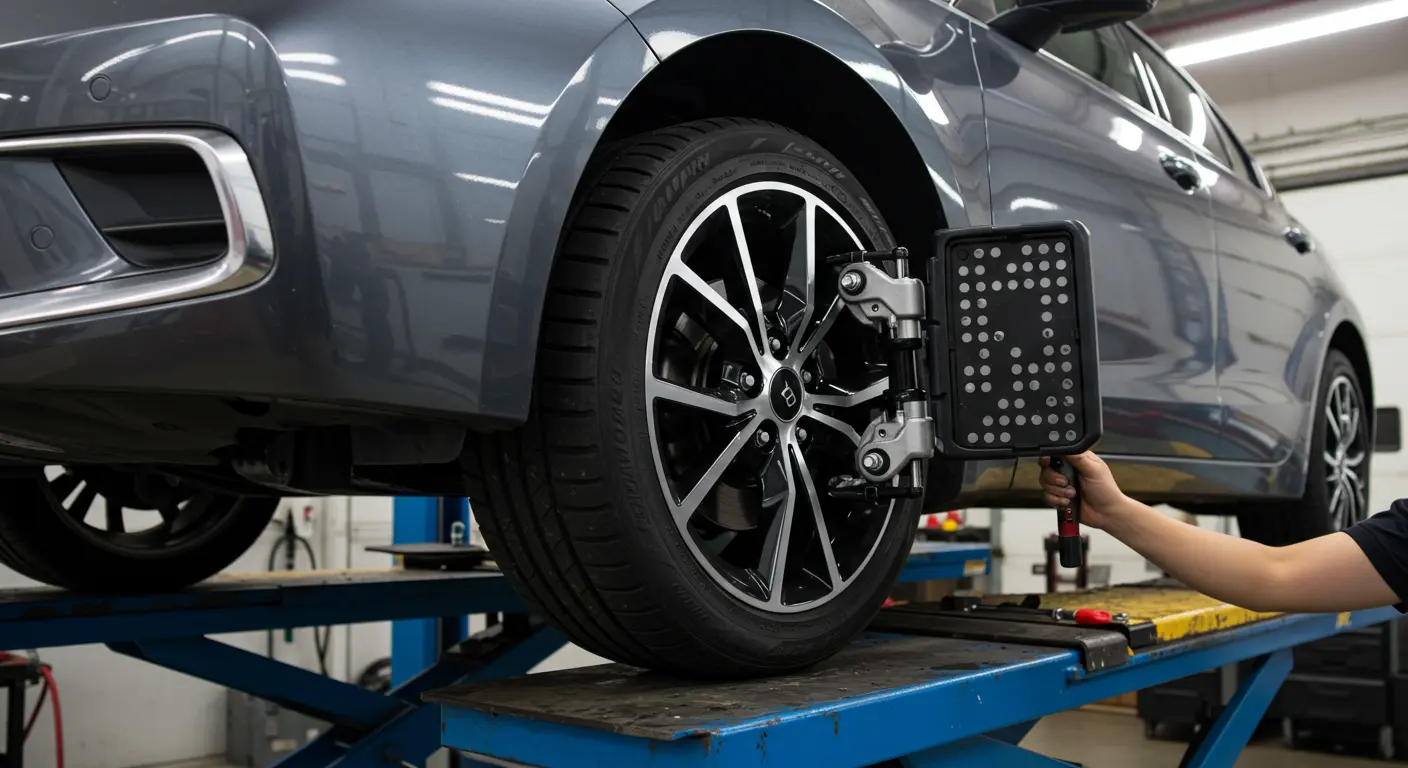
An alignment machine clamps the wheels and measures angles with the car stationary. If a bush or joint has play, the geometry is correct in the machine and moves as soon as the car is loaded and driven.
The car goes back to pulling within days and the alignment gets blamed.
A proper alignment starts with an inspection for play, and a workshop that skips that is selling you a measurement rather than a fix.
Why It Matters Here
Tyres are expensive and heat already shortens their life in this climate. Poor alignment on top of that is a fast way to lose a set.
It also costs fuel, since a wheel that is dragging rather than rolling is resistance the engine has to overcome.
Exotic Auto Services checks for play before aligning and shows you the before and after figures. See tyre maintenance in this climate.
Frequently Asked Questions
What is the difference between wheel alignment and balancing?
Balancing corrects weight distribution around a wheel and tyre so it spins smoothly, and it cures vibration felt at particular speeds. Alignment corrects the angles at which the wheels sit relative to the car and road, and it cures pulling and uneven tyre wear. A vibration will not be fixed by an alignment.
My car vibrates at speed. Do I need an alignment?
Almost certainly not. Vibration that appears at a particular speed range and is felt through the steering wheel or seat is a balancing issue. Alignment problems show as pulling, an off-centre steering wheel and uneven tyre wear rather than as vibration.
Why did my car start pulling again after an alignment?
Usually because there is play in a suspension or steering component. The alignment machine clamps the wheels and measures with the car stationary, so the geometry reads correct, then moves as soon as the car is loaded and driven. The worn part has to be replaced first for the alignment to hold.
How do I read tyre wear to check my alignment?
Run a hand across the tread in both directions as well as looking. Wear on one edge only points at camber. Feathering, where tread blocks are sharp one way and rounded the other, points at toe. Both edges worn is underinflation, centre worn is overinflation, and cupping points at dampers rather than alignment.
Do I need an alignment after suspension work?
Yes, every time. Replacing any arm, joint or damper changes the geometry, so the alignment is the completion of the job rather than an optional extra. Skipping it means the new components wear the tyres unevenly, which costs more than the alignment would have.