BMW
BMW Engine Problems You Should Never Ignore
A BMW can feel smooth and powerful for years, but small engine faults can become costly if they are ignored. This is especially important in the UAE, where high heat, dust, and heavy traffic can put extra stress on the engine.
What this guide covers
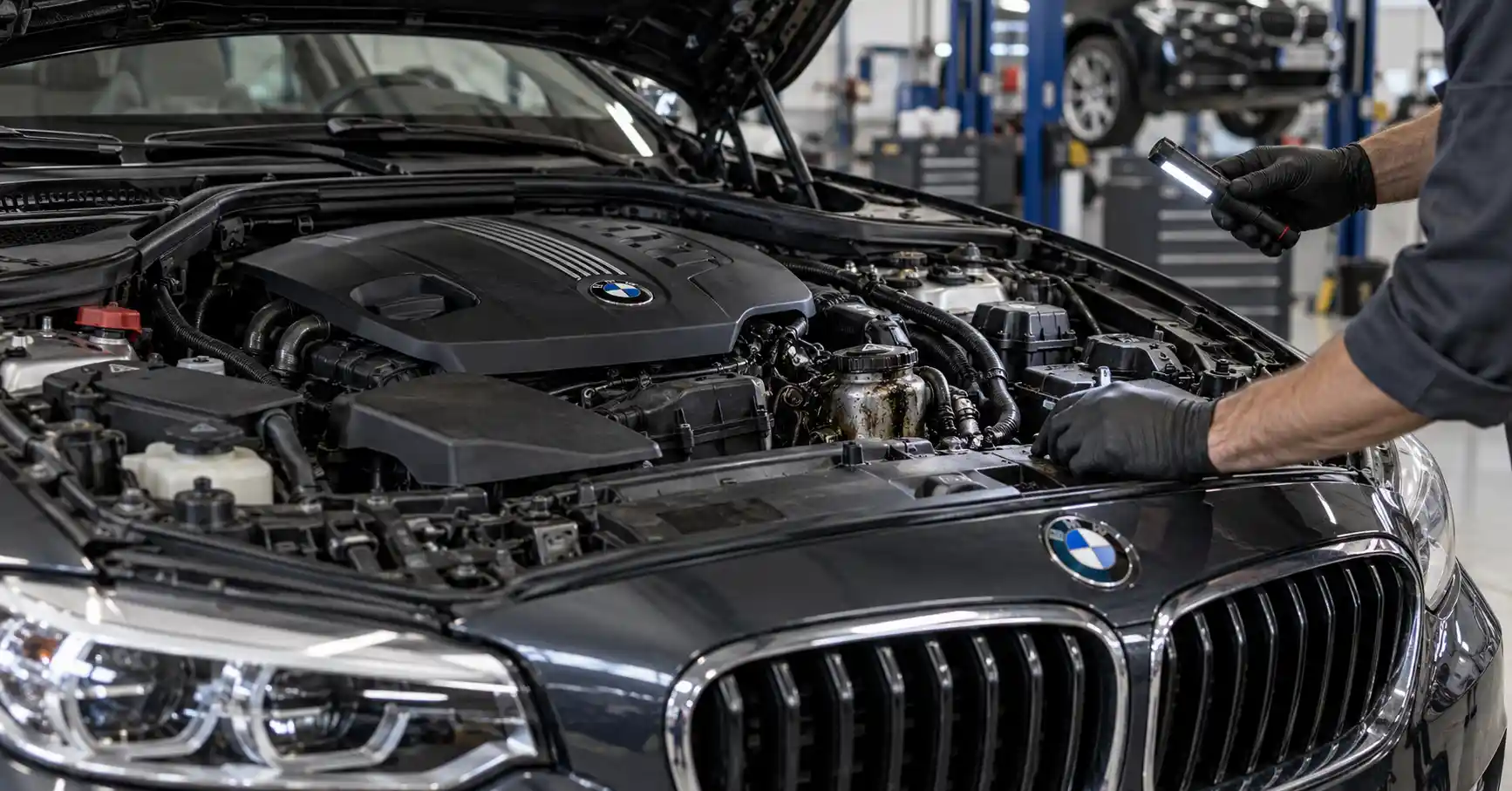
Common BMW engine problems in the UAE include overheating, oil leaks, low oil pressure, timing chain wear, and cooling system faults. Overheating is often fixed by checking the radiator, coolant, thermostat, and water pump.
Oil leaks need a proper inspection of seals, gaskets, and the oil filter housing. Timing chain noise may need tensioner or chain replacement before serious engine damage occurs. Electrical and sensor faults can also be fixed by proper diagnostics instead of replacing parts without testing.
Why BMW Engines Need Care in the UAE?
BMW engines use advanced systems that need the right oil, coolant, and regular checks. UAE driving conditions can make these systems work harder than they would in a cooler climate.
Long traffic jams keep the engine running while the car moves slowly, reducing airflow through the radiator. High outdoor temperatures also increase the load on the cooling system.
Dust can affect air filters and other engine parts, while short trips may prevent the engine from reaching its best operating condition.
Regular maintenance helps spot small faults before they affect major parts such as the turbocharger, cylinder head, or engine block.
Most Common BMW Engine Problems You Should Never Ignore
1. Engine Overheating
Overheating is one of the most serious BMW engine problems because continued driving at high temperatures can cause major damage.
A faulty thermostat, weak water pump, blocked radiator, low coolant level, or damaged cooling fan can reduce the engine's ability to control heat.
A driver may notice a temperature warning, steam, a coolant smell, or poor air conditioning when the engine becomes too hot. The car should be stopped safely instead of being driven for a long distance.
A workshop can perform a cooling system pressure test and inspect the thermostat, hoses, radiator, fan, and coolant level to find the actual cause.
2. Oil Leaks and Low Oil Level
Oil leaks should not be treated as a normal part of owning an older BMW. Engine oil protects moving parts and helps control friction and heat. A low oil level can increase wear on components such as bearings, camshafts, and the turbocharger.
Common leak points include the valve cover gasket, oil pan gasket, oil filter housing gasket, and other seals. Some leaks are easy to spot because oil may appear under the vehicle.
Others may leave oil around the engine without reaching the ground. Finding the exact leak point is important because simply adding oil does not fix the problem.
3. Timing Chain Problems
The timing chain keeps the camshaft and crankshaft moving together at the correct time. If the chain becomes stretched or the tensioner becomes weak, the engine may produce a rattling sound, especially during a cold start.
Ignoring this noise can be risky because a badly worn chain can affect valve timing. In severe cases, the valves and pistons can come into contact, causing major engine damage.
A technician can check fault codes, listen for abnormal sounds, and inspect timing values with suitable diagnostic equipment. Early repair may prevent a much larger engine repair later.
4. Cooling System Faults
The cooling system does more than keep the engine from overheating. It helps maintain a stable operating temperature so the engine can work properly.
BMW models use several parts to control this temperature, including the radiator, water pump, thermostat, coolant hoses, and electric cooling fan.
A weak water pump can reduce coolant flow, while a faulty thermostat can stop the engine from reaching or keeping the correct temperature. Cracked hoses can also cause coolant loss.
In the UAE, checking the cooling system before summer is useful because extreme heat can quickly expose a weak component.
5. Turbocharger Problems
Many modern BMW models use turbocharged engines to produce strong power from smaller engines. The turbocharger works at high speed and depends on clean oil and proper lubrication.
Poor oil quality, low oil level, or blocked oil passages can affect its performance. Signs of a turbo problem can include weak acceleration, unusual whining sounds, excessive smoke, or a check engine light.
Some turbo faults may also be linked to boost leaks, sensors, or the charge air system. A proper inspection should test the complete system before replacing the turbocharger because another small fault may be causing the symptoms.
6. Misfiring and Rough Engine Running
A misfiring engine does not burn the air and fuel mixture correctly in one or more cylinders. The result may be shaking, poor acceleration, higher fuel use, or a flashing check engine light.
Common causes include worn spark plugs, faulty ignition coils, fuel injector problems, air leaks, or sensor faults. BMW diagnostic equipment can help identify which cylinder is affected.
Continuing to drive with a serious misfire can damage the catalytic converter because unburned fuel may enter the exhaust system. Replacing parts without finding the real cause can also increase repair costs.
7. Fuel Injector and Fuel System Issues
Fuel injectors deliver a controlled amount of fuel into the engine. If an injector becomes blocked, dirty, or electrically faulty, the engine may run unevenly. A problem with fuel pressure can create similar symptoms.
Drivers may notice hard starting, rough idling, weak acceleration, or increased fuel use. Poor fuel quality can also affect fuel system performance over time. A technician can check fuel pressure, injector operation, and related fault codes before deciding on a repair.
Cleaning may help some injectors, while others may need replacement if they have an internal or electrical fault.
8. Sensor and Electrical Faults
Modern BMW engines depend on many sensors and control units. These include the mass airflow sensor, oxygen sensor, crankshaft position sensor, camshaft position sensor, and coolant temperature sensor.
A faulty sensor can send incorrect data to the engine control unit. This may cause poor fuel use, rough running, difficult starting, or reduced engine power.
A dashboard warning does not always mean that the sensor itself has failed. Wiring, connectors, air leaks, or another engine fault may trigger the same code. Proper diagnostic testing is needed before changing expensive electronic parts.
Warning Signs You Should Not Ignore
Some engine problems begin with small changes that are easy to overlook. Knowing these signs can help you arrange an inspection before the problem becomes serious.
Watch for:
- Unusual engine noise: Ticking, knocking, rattling, or whining can point to mechanical problems.
- Warning lights: A check engine or temperature warning should be checked without delay.
- Oil or coolant loss: Low fluid levels can lead to serious engine damage.
- Poor acceleration: Weak power may come from ignition, fuel, turbo, or sensor faults.
- Rough idling: Shaking at idle can be linked to misfires, air leaks, or fuel problems.
- Excessive smoke: Blue, white, or black smoke can point to different engine faults.
How Regular Servicing Helps Prevent Major Repairs
Regular servicing allows technicians to find wear before it turns into a major failure. Engine oil and filters should be changed at suitable intervals, while coolant levels, belts, hoses, and the cooling system should also be checked.
BMW vehicles can also benefit from electronic diagnostics because some faults may not produce obvious physical signs. A service check can review stored fault codes, sensor readings, fluid levels, and engine performance.
Following the correct car maintenance schedule in Abu Dhabi for the specific model and engine is important because service needs can differ between petrol, diesel, turbocharged, and hybrid systems.
When Should You Visit a BMW Workshop?
You should arrange an inspection when your BMW develops a new warning light, unusual sound, fluid leak, rough idle, overheating issue, or noticeable loss of power.
Waiting for the car to stop completely can turn a smaller repair into a much larger one. A qualified technician can use visual checks, computer diagnostics, pressure tests, and mechanical inspections to find the source of the problem.
This approach is more useful than replacing parts based only on symptoms. If the vehicle is overheating or showing signs of severe engine damage, it is safer to stop driving and arrange professional assistance.
Conclusion
BMW engine problems can often be controlled when they are found early. Overheating, oil leaks, timing chain wear, turbo faults, misfires, fuel issues, and sensor problems should not be ignored because they can affect major engine parts.
Regular servicing helps protect the cooling system, lubrication system, ignition parts, and engine electronics. If your BMW shows a warning light, unusual noise, fluid leak, or loss of power, arrange an inspection before the issue becomes more expensive.
For professional BMW inspection, diagnostics, and repair in the UAE, Exotic Auto Services can help identify engine faults and recommend the right repair based on the vehicle's actual condition.
Frequently Asked Questions
What are the most common BMW engine problems in Abu Dhabi?
Overheating, oil leaks, low oil level, timing chain wear, cooling system faults, turbocharger problems, misfires, fuel injector issues and sensor faults. UAE heat, dust and heavy traffic put extra stress on the engine and cooling system.
Is it safe to keep driving an overheating BMW?
No. Continued driving at high temperatures can cause major engine damage. Stop the car safely and have the cooling system pressure tested and the thermostat, hoses, radiator, fan and coolant level inspected.
What does a rattle on a cold start mean on a BMW?
It can point to a stretched timing chain or a weak tensioner. A badly worn chain can affect valve timing, and in severe cases valves and pistons can make contact, so it should be inspected early.
Does a BMW engine warning light always mean a sensor has failed?
No. Wiring, connectors, air leaks or another engine fault can trigger the same code. Proper diagnostic testing is needed before changing expensive electronic parts.