Bodywork
DIY Scratch Repair: What Is Worth Attempting
Light scratches genuinely do polish out at home, and this is one job where an owner with patience gets a good result. What matters is knowing which scratches those are, and stopping before you make one worse.

What this guide covers
First, Check It Is Worth Trying
Run a fingernail across the scratch. If it glides over, this is within the clear coat and polishing will work.
If your nail catches, polishing will improve the look and will not remove it, because the clear coat over that line is gone.
If you can see grey primer or bare metal, stop. That needs paint, and in this climate it also needs doing before corrosion starts.
See how to measure scratch depth for the full test.
Preparation Is Most of the Result
This is the step people skip and it is the one that decides whether you improve the panel or add fifty new scratches to it.
- Wash the area thoroughly with car shampoo, and use two buckets so grit does not go back on the paint.
- Dry with a clean microfibre. Not a household towel, which is abrasive.
- Decontaminate with a clay bar if the paint feels rough. Bonded contamination dragged across paint by a polishing pad causes the damage you were trying to fix.
- Work in the shade, on a cool panel. In Abu Dhabi this genuinely limits when you can do it. Polish dries too fast on a hot panel and becomes abrasive dust.
Never polish a panel in direct sun here. The product flashes off before it has done its work, and dried polish residue is more abrasive than the polish was. Early morning, or indoors, is the practical window.
Products, From Least to Most Aggressive
The correct approach is always to start with the mildest thing that could work.
- Wax or glaze. Fills and hides. No abrasion, no risk, temporary result.
- Fine polish or swirl remover. Very mild abrasive. This resolves most light swirls.
- Medium compound. More cutting ability for deeper clear coat marks.
- Rubbing compound. Aggressive, and the point where people damage paint. Use sparingly and only where a milder product has failed.
Work a small area at a time, keep the pad or cloth clean, and check your progress frequently under good light rather than after ten minutes of effort.
By Hand or by Machine
By hand is safe and slow, and it is fine for a small area. You are unlikely to do damage and you may not fully remove a deeper clear coat scratch.
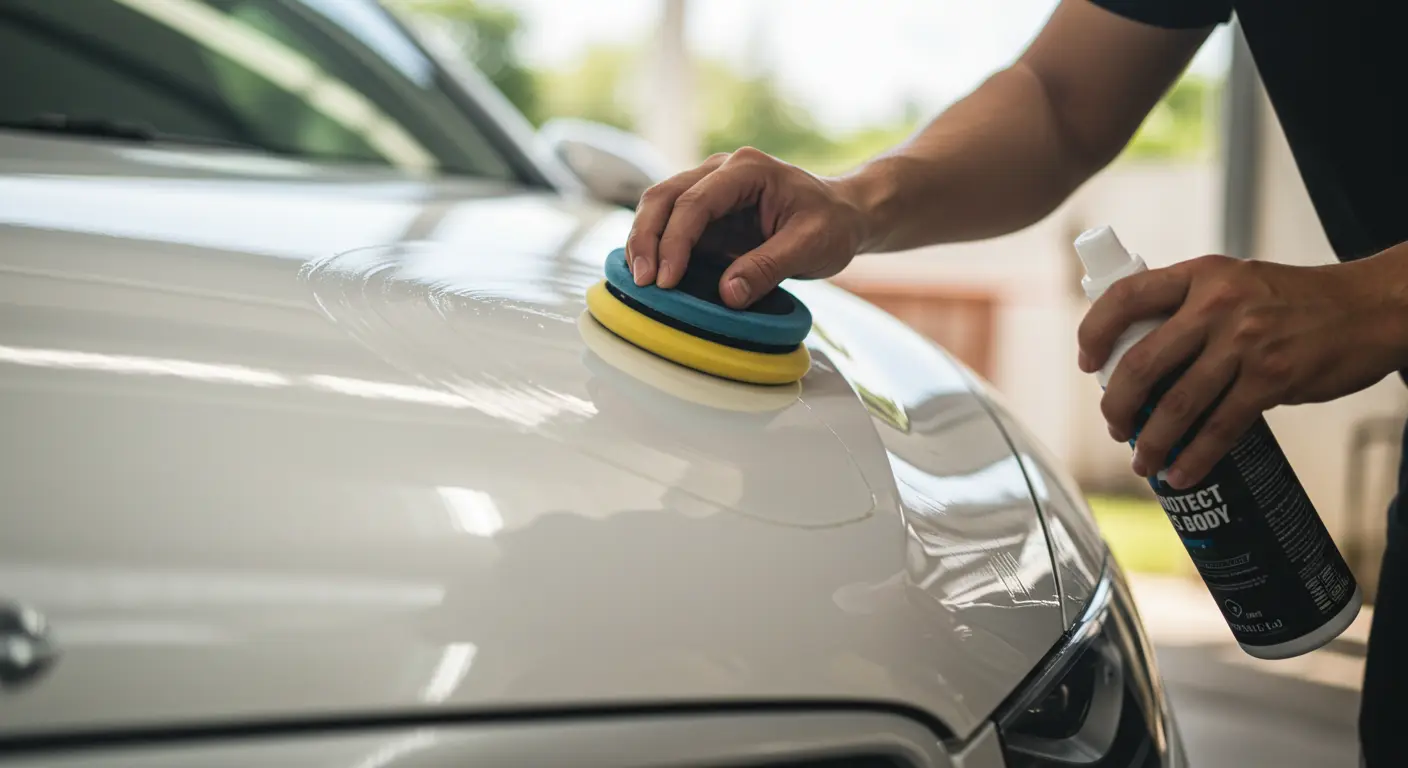
A dual action polisher is far more effective and still forgiving, because the head oscillates rather than only rotating, which limits heat build-up in one spot.
A rotary polisher in inexperienced hands is how paint gets burned through, particularly on edges and body lines where the clear coat is thinnest. That is not a good first tool.
The Two Mistakes That Cost Money
Polishing through the clear coat
The clear coat is finite. Every polish removes a little, and it does not come back.
Once it is gone, the colour coat is exposed and the only fix is refinishing the panel. This happens most often on edges and raised body lines, where the coat is thinnest, and from staying too long in one place with an aggressive compound.
If a scratch has not improved after a couple of careful passes, it is not a clear coat scratch. More pressure will not change that.
Using household products
Toothpaste, baking soda and similar suggestions circulate widely. They are uncontrolled abrasives with no defined particle size.
They can reduce a scratch and they leave a haze of finer scratches behind, which is a different problem rather than a solution.
Where DIY Should Stop
- Anything your fingernail catches on.
- Anything showing primer or metal, because of corrosion rather than appearance.
- Scratches across a body line or panel edge, where clear coat is thinnest.
- Metallic and pearl finishes where paint has been breached, since blending them is skilled work.
- Anything on a car where paint condition materially affects resale value.
Exotic Auto Services will tell you honestly when a scratch would polish out, because sending someone away with that answer is better business than a paint quote they did not need.
See what scratch repair costs and our machine polishing service.
Frequently Asked Questions
Can I really polish a scratch out myself?
Yes, if it is within the clear coat, and that is the majority of light swirls and scuffs. Run a fingernail across it: if it glides over, polishing will remove it properly rather than hide it. If your nail catches, polishing will improve the appearance but the scratch will still be there.
Can polishing damage my paint?
It can if you overdo it. The clear coat is finite and every polish removes a little, so staying too long in one place with an aggressive compound, especially on an edge or body line where the coat is thinnest, can go through it. At that point the only fix is refinishing the panel.
Does toothpaste remove car scratches?
It is an uncontrolled abrasive with no defined particle size, so it can reduce a scratch while leaving a haze of finer scratches behind. That is trading one problem for another. A proper fine polish costs very little and is formulated for the job.
Why should I not polish a car in the sun?
On a hot panel the product flashes off before it has done its work, and dried polish residue is more abrasive than the polish itself, so you can add marks rather than remove them. In Abu Dhabi that means early morning or indoors, and always on a panel cool to the touch.
Is a machine polisher safe for a beginner?
A dual action polisher is reasonably forgiving, because the head oscillates as well as rotates so heat does not build in one spot. A rotary polisher is not a good first tool: it is how clear coat gets burned through, particularly on edges and body lines where the paint is thinnest.