Bodywork
How to Get Rid of Scratches: Start by Measuring the Depth
Every useful decision about a scratch follows from one question: how deep is it. There are three layers of paint on your car, and which one the scratch has reached decides whether it polishes out in twenty minutes or needs a panel resprayed.
What this guide covers
What Car Paint Actually Is
Modern car paint is built in layers on top of the metal, and each does a different job.
- Primer, bonded to the metal, providing adhesion and corrosion protection.
- Base coat, which is the colour. On its own it has almost no gloss and no durability.
- Clear coat, a transparent protective layer that provides the shine and takes the abuse.
The clear coat is the thickest of the three and it exists to be sacrificial. That is why a large share of scratches can be polished away entirely: you are removing a tiny amount of clear coat to level the surface, not filling anything.
The Fingernail Test
Run a fingernail lightly across the scratch, perpendicular to it.
- Your nail glides over it. The scratch is within the clear coat. It will almost certainly polish out.
- Your nail catches slightly. It has gone through the clear coat and into the colour. Polishing will improve it and will not remove it.
- Your nail drops into it noticeably, or you can see a different colour or bare metal in it. It is through to primer or the panel.
Clean the area first. Dirt and dried polish residue make a light scratch feel deeper than it is.
A useful second check: wet the scratch with water. If it disappears while wet and returns as it dries, it is a clear coat scratch and it will polish out. Water is filling it in the same way polishing will level it.
Level One: Clear Coat Only
Light swirls from washing, brush marks, fine scuffs. These are the most common and the least serious.
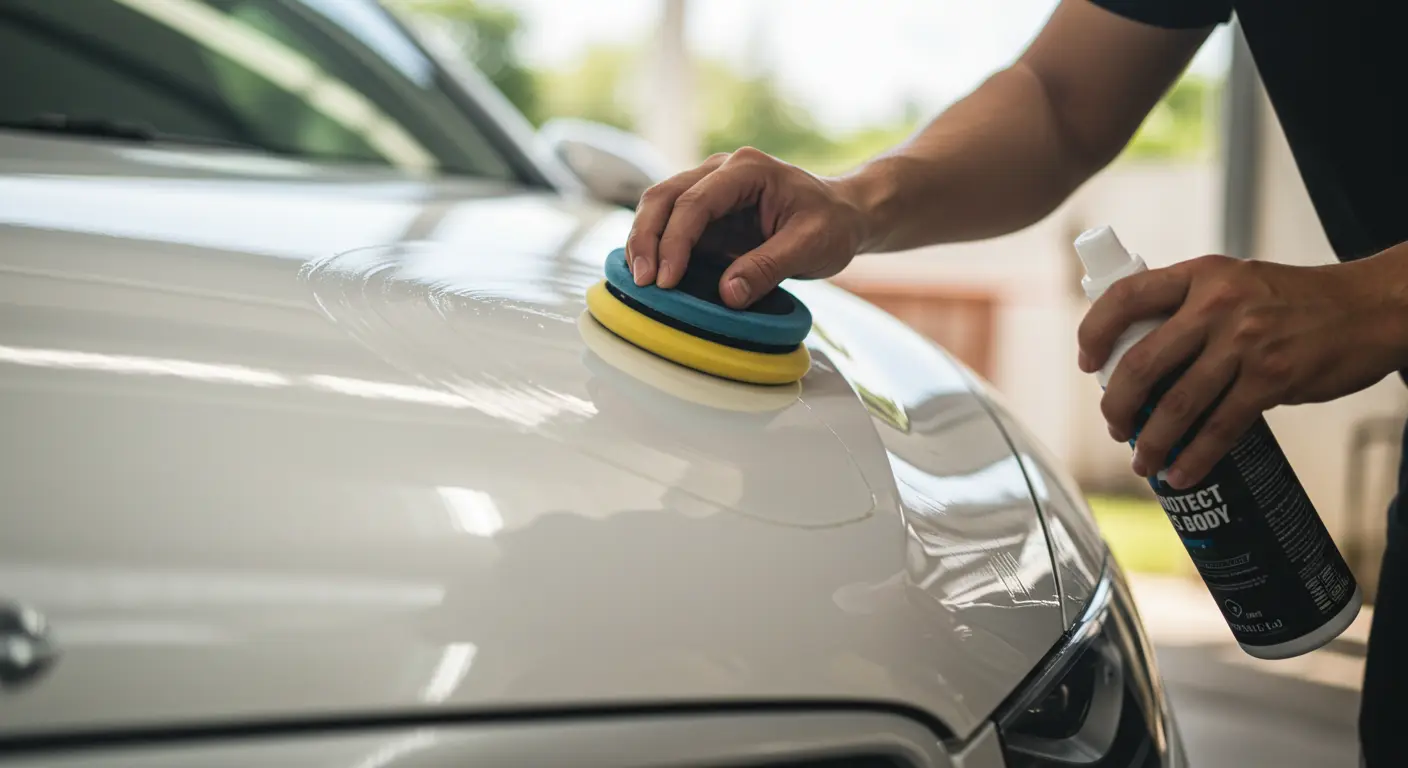
The fix is machine polishing: a mild abrasive removes a microscopic amount of clear coat so the surface is level again, and the scratch stops catching light.
Nothing is added. The scratch is genuinely gone rather than filled.
This is also the level where owner effort is worthwhile. See what you can do yourself.
Level Two: Through to the Colour
Your nail catches and you can see a change in the surface but not a different colour underneath.
Polishing cannot restore what is missing, because the clear coat over that line has gone.
These need touching in and then levelling, or the panel refinished depending on how visible it is. Polishing alone will make it less obvious and leave it there.
It is also now a slow problem rather than a cosmetic one, since the colour coat is not a weatherproof layer.
Level Three: Primer or Metal
You can see grey primer, or bare metal, in the bottom of the scratch.
This is the one to deal with rather than live with, and not for appearance reasons.
Once the primer is breached, the metal is exposed. In a coastal, humid environment with salt in the air, corrosion starts at that line and spreads underneath the surrounding paint.
The repair is filling, priming, painting and clearing, then blending into the surrounding panel. See what happens if it starts to rust.
What Wax and Scratch Pens Actually Do
Worth being clear about, because the products are not dishonest but the expectations often are.
Wax and glaze fill a scratch with a temporary substance that has a similar refractive index to the paint. Light passes through more evenly and the scratch becomes much less visible.
It is a genuine improvement in appearance and it washes out over weeks. The scratch is still there.
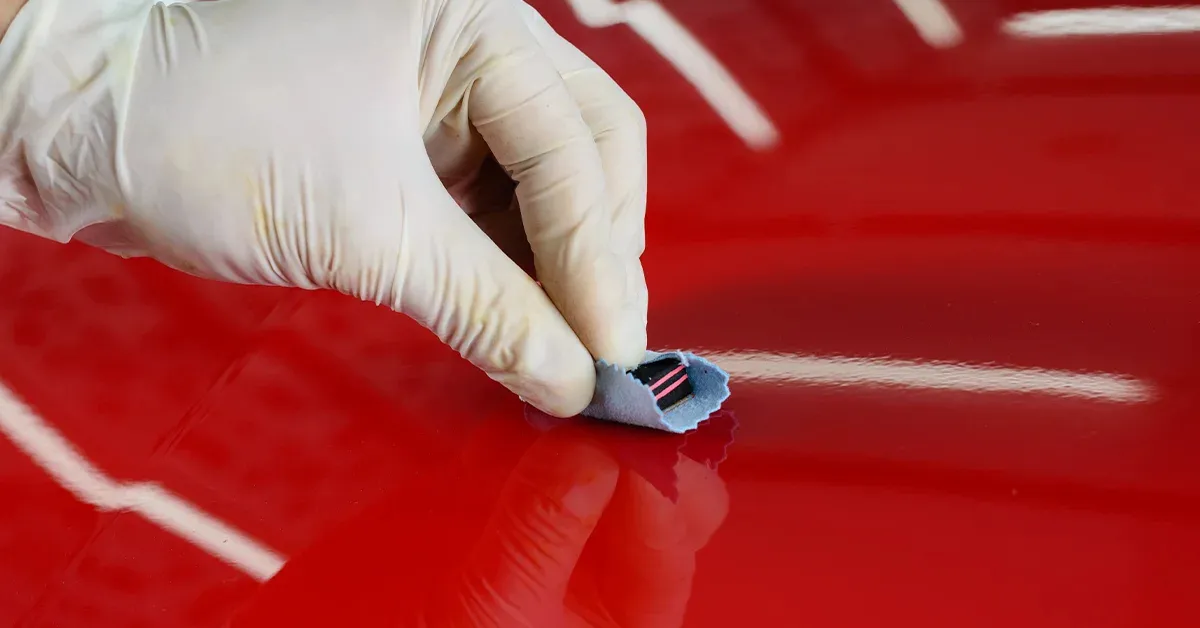
Scratch pens deposit lacquer or paint into the groove. On a fine line this can look good. On anything wider it tends to sit proud and catch light differently, which is sometimes more noticeable than the original.
Neither is wrong. Both are cosmetic rather than corrective, and knowing which you are buying matters.
When to Involve a Bodyshop
- Any scratch showing primer or metal, because of corrosion rather than looks.
- Anything across a body line or panel edge, where paint is thinnest and mistakes show most.
- Deep scratches on a metallic or pearl finish, where blending is genuinely skilled work.
- Multiple panels, where a partial repair will not match.
- Any car where paint condition materially affects resale value.
Exotic Auto Services assesses depth first and tells you honestly which of the three levels you have. See our bodyshop and what scratch repair costs.
Frequently Asked Questions
How do I know how deep a car scratch is?
Run a fingernail lightly across it. If your nail glides over, the scratch is within the clear coat and will almost certainly polish out. If it catches, it has gone through into the colour. If it drops in noticeably, or you can see grey primer or bare metal, it is through to the primer and needs filling and painting.
Can a scratch really be polished out?
Yes, if it is within the clear coat. Polishing removes a microscopic amount of that layer so the surface is level again, which means the scratch is genuinely gone rather than filled. Clear coat is the thickest layer and is designed to be sacrificial, which is why so many scratches can be removed this way.
Does wax remove scratches?
No, it hides them. Wax and glaze fill the groove with a temporary substance that bends light similarly to the paint, so the scratch becomes much less visible. It is a real improvement in appearance and it washes out over a few weeks. The scratch is unchanged underneath.
Do scratch repair pens work?
On a fine line they can look good. They deposit lacquer or paint into the groove, and on anything wider the material tends to sit proud of the surface and catch light differently, which can be more noticeable than the original scratch. They are cosmetic rather than corrective.
How urgent is a scratch that shows bare metal?
More urgent than it looks, and not for appearance reasons. Once the primer is breached the metal is exposed, and in a humid coastal environment with salt in the air corrosion starts at that line and spreads underneath the surrounding paint, which turns a scratch repair into a panel repair.