Choosing a workshop
How to Choose a Car Repair Workshop
Most advice on choosing a workshop is about reputation, which is hard to assess before you have used one. These are things you can check on a phone call, and they separate an equipped workshop from one that is not.

What this guide covers
Five Questions Worth Asking on the Phone
These are specific rather than general, so the answers are informative rather than reassuring.
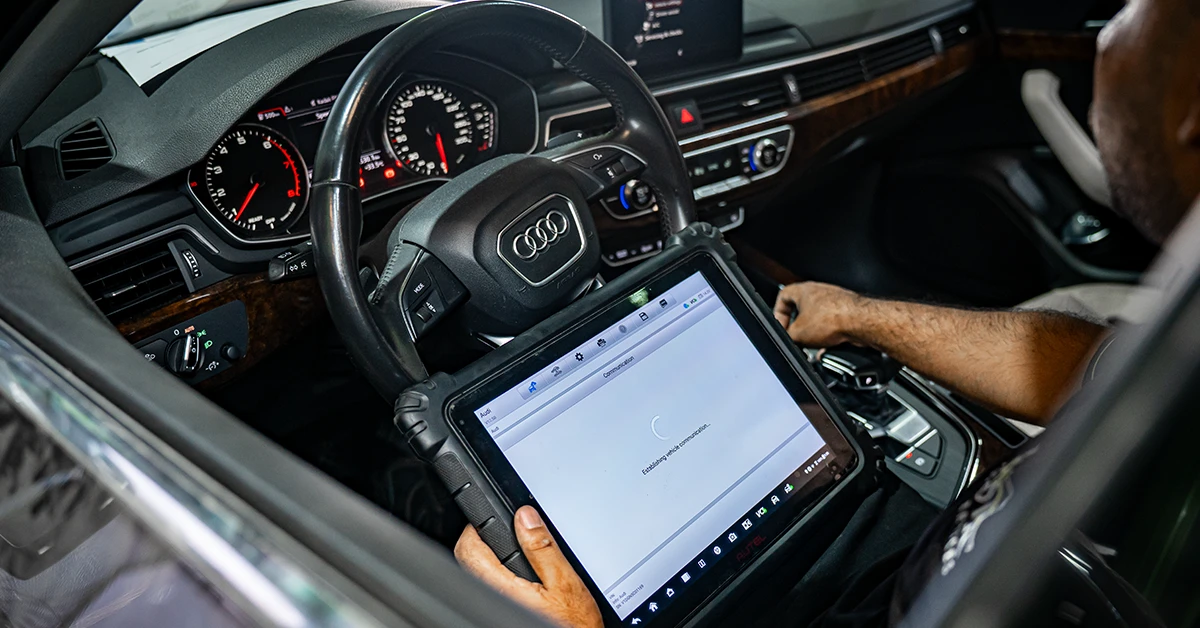
- Can you read all the modules on my car, or only the engine? A generic reader on a car with forty control units talks to one or two. Anything involving gearbox, suspension, air conditioning or driver assistance needs more.
- Can you register a battery on this marque? If not, a new battery will be charged on the old profile and fail early.
- Can you put the electronic parking brake into service mode? If not, rear brakes cannot be done safely on most modern cars.
- Will you reset adaptations after the repair? Skipping it makes a completed gearbox repair feel exactly like the original fault.
- Will you show me the codes and measurements? The answer tells you how they work.
None of these are unreasonable to ask, and a workshop that finds them awkward has answered you.
See what goes wrong when the answer is no.
What a Good Quote Looks Like
- Itemised. Parts and labour separated, so you can see what you are paying for.
- Specific about parts. Genuine, OEM or aftermarket, named rather than implied.
- Clear about the oil specification, not just that oil is included.
- Explicit about what is not included, which is often more useful than what is.
- Conditional where it has to be. A quote saying discs will be measured and replaced only if below minimum is more honest than one that assumes either way.
A quote that is a single number for a complex job is not a quote, it is a figure.
Red Flags
- A firm price for diagnosis before seeing the car. Diagnosis is not a fixed-length job, and a firm price means either guessing or padding.
- Pressure to decide immediately on something that is not a safety issue.
- Replacing parts to find a fault. Testing comes first; parts follow evidence.
- No written record of what was done, used or measured.
- Reluctance to show you the old parts or the readings.
- Clearing a warning light as the repair. If nothing changed, it returns.
- A quote that only makes sense if you do not ask what is excluded.
The safety-issue distinction matters. A genuine safety fault does warrant urgency, and a good workshop will explain why specifically rather than simply insisting. Ask what the risk actually is, and the answer will tell you whether the urgency is real.
Green Flags
- They tell you something does not need doing. It costs them money and it is the strongest signal there is.
- They give measurements rather than verdicts. Five millimetres, not "getting low".
- They explain what they will test before replacing anything.
- They call before doing work beyond what was agreed.
- They tell you what is coming, so you can plan rather than react.
- They are straight about what they cannot do. No workshop covers everything.
Specialist or Multi-Brand
A single-marque specialist has deep familiarity with one range and its known patterns.
A multi-brand workshop with manufacturer-level equipment covers more, which matters if you own more than one car or change marques.
Either is fine. What is not fine is a general workshop without the equipment for your specific car, because the routine jobs listed above will either be done wrongly or not at all.
The question is equipment and familiarity, not the sign on the building.
Staying With One Workshop
There is a real, unglamorous benefit to using the same place over time.
They know what was done and when, what was noted as coming due, what noise you reported last year, and what the car was like before whatever changed.
That history makes diagnosis faster and cheaper, and it produces the documented record that is worth money at resale.
It is worth building that relationship with a workshop that passes the questions above rather than the nearest one.
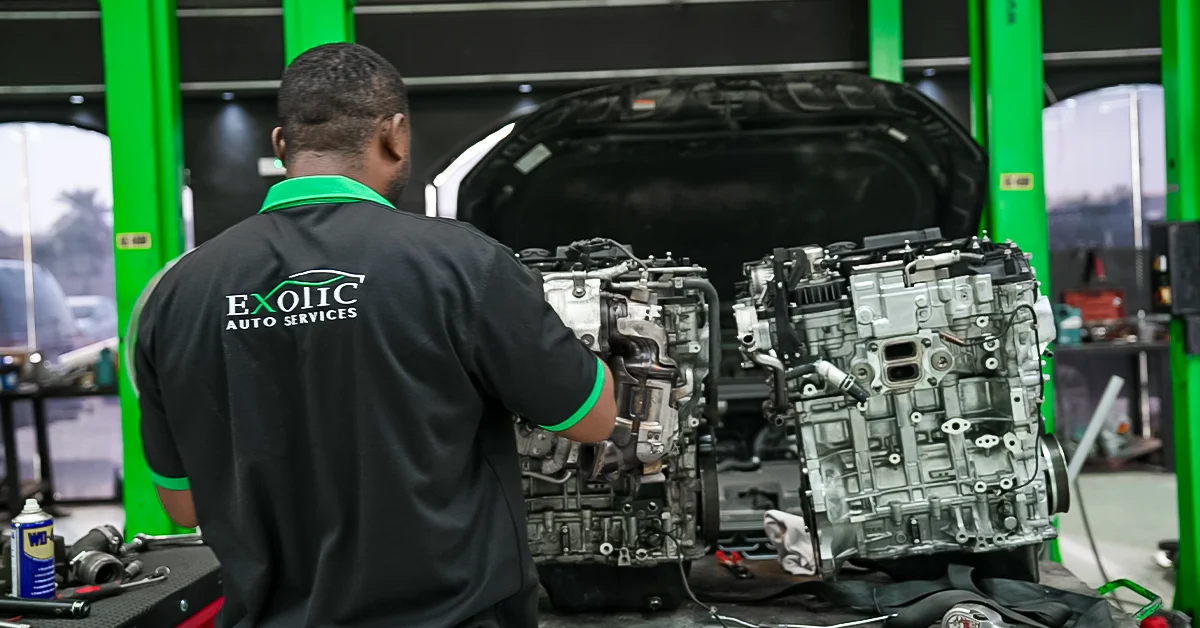
Exotic Auto Services in Musaffah shares codes, measurements and what is coming due as standard. See what experience actually buys you.
Frequently Asked Questions
What should I ask a workshop before booking?
Five specific things: can you read all modules on my car or only the engine, can you register a battery on this marque, can you put the electronic parking brake into service mode, will you reset adaptations after the repair, and will you show me the codes and measurements. The answers are informative in a way general reassurance is not.
What are the warning signs of a workshop to avoid?
A firm price for diagnosis before seeing the car, pressure to decide immediately on something that is not a safety issue, replacing parts to find a fault rather than testing first, no written record of what was done and measured, and treating clearing a warning light as the repair.
Is a single-brand specialist better than a multi-brand workshop?
Either can be right. A specialist has deep familiarity with one range and its known patterns; a multi-brand workshop with manufacturer-level equipment covers more marques. What matters is the equipment and the familiarity rather than the sign on the building. A general workshop without the right equipment for your car is the problem.
What does a good repair quote look like?
Itemised with parts and labour separated, specific about whether parts are genuine, OEM or aftermarket, clear about the oil specification rather than just that oil is included, explicit about what is excluded, and conditional where it should be, such as discs measured and replaced only if below minimum.
Is it worth staying with one workshop?
Yes, for practical reasons rather than loyalty. They know what was done and when, what was noted as coming due, and what the car was like before something changed. That history makes diagnosis faster and cheaper, and it builds the documented record that is worth real money at resale.