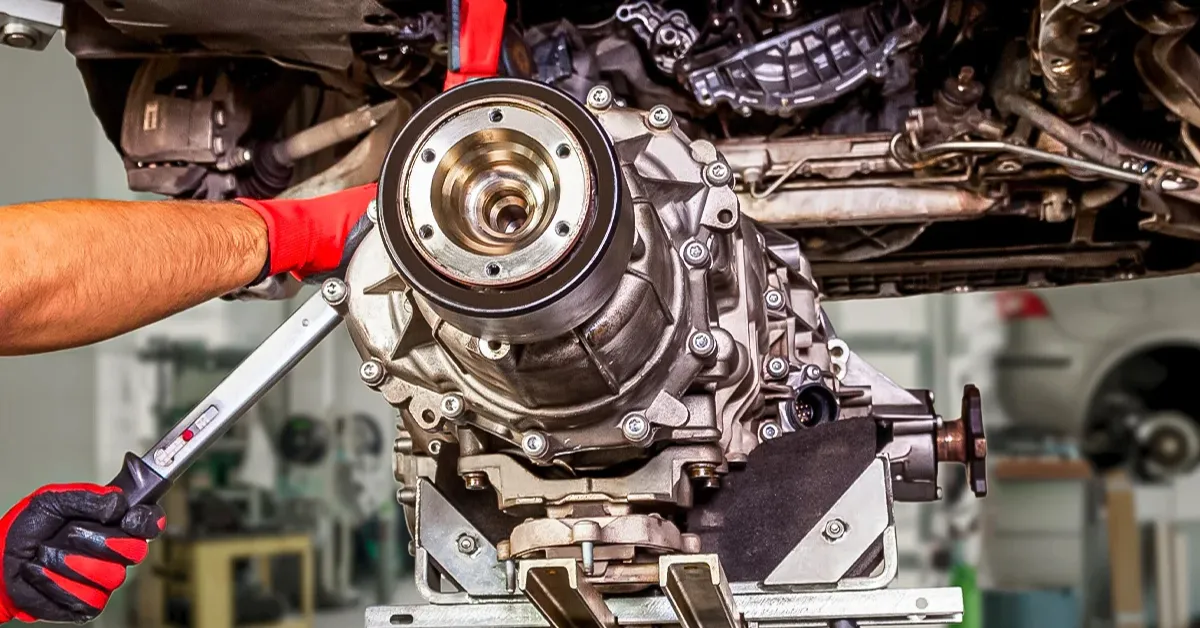
Transmission
Is It Safe to Drive With a Transmission Leak?
Treat this more urgently than an engine oil leak of the same size. In an automatic gearbox the fluid is not just a lubricant, it is the hydraulic medium that applies the clutches, so a low level causes damage quickly rather than eventually.
What this guide covers
Why This Is More Urgent Than an Oil Leak
Engine oil lubricates and cools. An engine slightly low on oil still runs, and the margin gives you time.
An automatic gearbox is a hydraulic system. The fluid is pressurised to apply clutches and hold them applied.
Drop the level and pressure drops with it. Clutches that should be clamped begin to slip, slipping creates heat, and heat destroys both the friction material and the fluid.
That cycle accelerates itself, which is why a gearbox low on fluid can be damaged in a drive or two rather than over months.
A gearbox holds a modest amount of fluid and a leak does not have to be dramatic to matter. A steady drip that would be an inconvenience on an engine can be a serious problem here.
Identifying It
Transmission fluid is usually reddish, thin and slippery, and lands around the middle of the car rather than at the front.
Older or degraded fluid darkens toward brown, which makes it easy to confuse with engine oil, so position is the more reliable clue.
Lay cardboard under the car overnight. Colour against a clean background plus position usually settles it.
See how to identify common fluid leaks.
What to Check Before Driving
- Check the fluid level if the car has a dipstick. Most automatics are checked with the engine running and warm, in park, on level ground.
- Look at the colour on the dipstick. Bright red is healthy. Dark brown or a burnt smell means heat damage has begun.
- Note how the car drives. Any slipping, delay taking up drive or shuddering changes the answer.
- Check for a warning light or limp mode.
If the car has no dipstick, which many modern gearboxes do not, the level is set to temperature at a workshop. That is a design decision rather than evidence the fluid never needs attention.
So Can You Drive It?
Probably, briefly, if all of these are true
- The level is still within range on the dipstick.
- The fluid is red rather than dark, and does not smell burnt.
- The car shifts normally with no slipping, delay or shudder.
- There is no warning light and no limp mode.
- You are driving to a workshop rather than continuing your week.
Stop driving if any of these are true
- The level is below the low mark or reads nothing.
- The fluid is dark or smells burnt.
- There is any slipping, shuddering or delay taking up drive.
- The car is in limp mode or has a transmission warning light.
- The leak is fast enough to leave a visible puddle in one stop.
The asymmetry here is deliberate. Recovery costs a known amount. A gearbox does not.
Topping Up: Get This Right
Topping up buys time to reach a workshop, and only if it is done correctly.
- Use the exact specification. Automatic fluids are not interchangeable, and the wrong one changes friction characteristics and can damage the gearbox on its own.
- Do not overfill. Too much fluid aerates, which causes exactly the pressure loss you were trying to prevent.
- Do not use additives. They will not seal a leaking pan gasket or cooler line.
- Topping up is not a repair. The fluid is going somewhere and the level will drop again.
Where the Leaks Usually Are
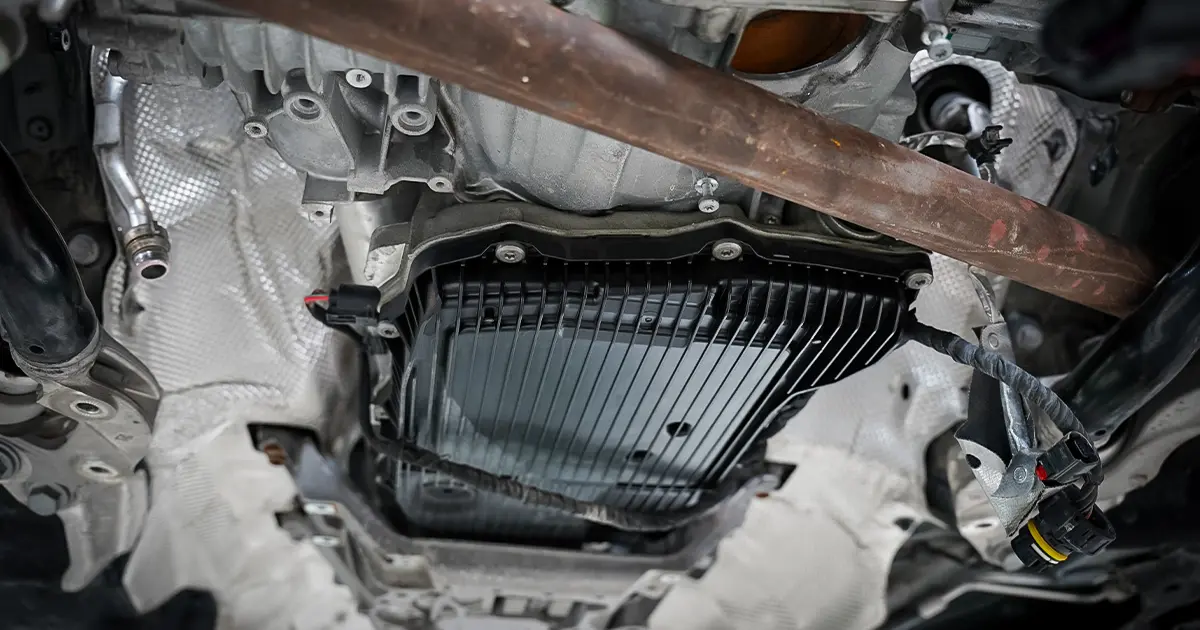
- The pan gasket. The most common, and among the more accessible.
- Cooler lines. They run to the radiator and their unions leak with age.
- The transmission cooler inside the radiator. This one can also let coolant into the fluid, which shows as a milky appearance and is urgent.
- Input and output shaft seals. Harder to reach, so more labour.
- The mechatronic adapter sleeve on certain gearboxes, a known item that drops the level and confuses the control unit.
Milky or pink fluid deserves a mention of its own: that is coolant contamination and it needs immediate attention.
Getting It Sorted
Most transmission leaks are external and repairable without opening the gearbox, which puts them low on the cost ladder.
What moves them up that ladder is running the gearbox low on fluid while the leak is ignored.
Exotic Auto Services will trace the source, check the fluid condition and tell you whether damage has already begun. See transmission repair and what transmission repair costs.
Frequently Asked Questions
Is a transmission leak more serious than an oil leak?
Yes, size for size. Engine oil lubricates and cools, and an engine slightly low still runs. An automatic gearbox is a hydraulic system where the fluid applies the clutches, so a low level causes slipping, slipping causes heat and heat destroys the clutch material. That cycle accelerates itself.
How long can I drive with a transmission leak?
Far enough to reach a workshop, provided the level is still in range, the fluid is red rather than dark, and the car shifts normally with no slipping or warning light. If any of those is not true, stop. Damage from low fluid is measured in a drive or two rather than months.
Can I just top up the transmission fluid?
To reach a workshop, yes, using the exact specification for your gearbox. Automatic fluids are not interchangeable and the wrong one alters friction characteristics enough to cause damage by itself. Do not overfill either, because too much fluid aerates and causes the same pressure loss you were avoiding.
What does milky or pink transmission fluid mean?
Coolant has entered the transmission fluid, almost always through a failed transmission cooler inside the radiator. It needs immediate attention: coolant in the gearbox damages the friction material quickly, and it usually means transmission fluid is entering the cooling system too.
Where do transmission leaks usually come from?
The pan gasket is the most common and among the more accessible. Cooler lines and their unions, the cooler inside the radiator, input and output shaft seals, and on some gearboxes the mechatronic adapter sleeve account for most of the rest. Nearly all are external repairs that do not require opening the gearbox.