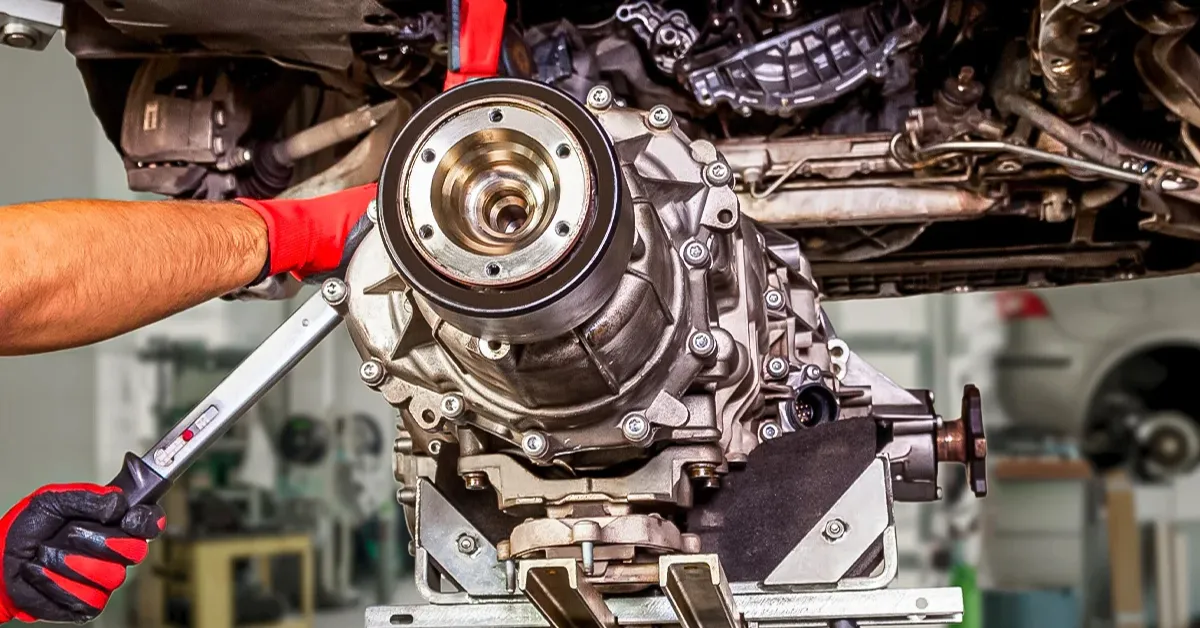
Transmission
Four Kinds of Automatic Gearbox, and How Each One Fails
Four quite different machines are all sold as an automatic gearbox. What counts as normal on one is a fault on another, which is why most transmission advice online is wrong for most readers.
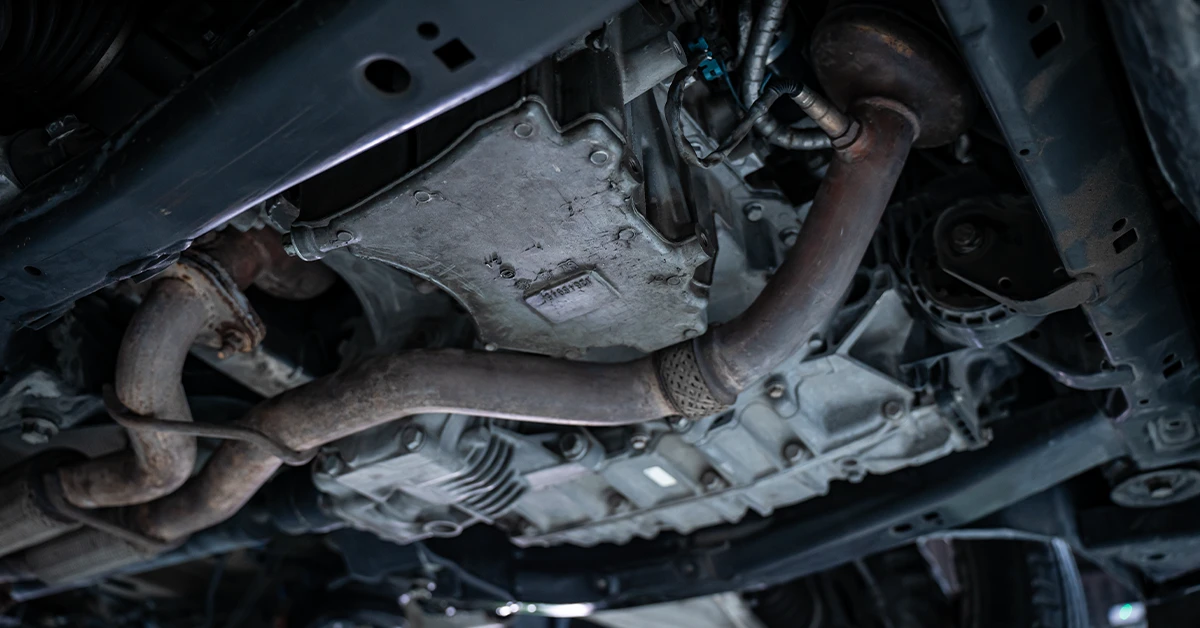
What this guide covers
Why the Type Matters So Much
Someone whose CVT is revving without changing gear reads that this means a slipping transmission, and panics unnecessarily.
Someone whose dual clutch judders on a hill reads that this is normal, and drives on a worn clutch until it is a gearbox.
Both were reading advice written for a different machine, so the first useful step is establishing which you have.
Torque Converter Automatic
The traditional automatic and still the most common. A fluid coupling connects the engine to a set of gears selected hydraulically.
What is normal
Smooth, slightly soft changes. A small amount of creep when you release the brake. Distinct steps between gears.
How it fails
- Torque converter shudder. A shimmer at light throttle around lock-up, felt like driving over rumble strip. Caught early this is often fluid.
- Harsh or delayed shifts. Usually solenoids or the valve body, which report as specific faults rather than requiring a rebuild.
- Slipping. Engine speed rises without the car accelerating. This is the serious one.
- Overheating. Heat is what ends these gearboxes, and this climate is the main variable.
Fluid condition decides almost everything here. It is the cheapest work available on this type.
Dual Clutch
Two automated manual gearboxes sharing a housing, one handling odd gears and one even, so the next gear is pre-selected while you drive the current one.
Fast and efficient, and it behaves differently from a torque converter by design.
What is normal
A slight hesitation pulling away and in crawling traffic. Crawling is the hardest thing you can ask of one, because it is constantly deciding whether to slip a clutch or engage.
A faint mechanical character to the shifts is also normal. It is a manual gearbox underneath.
How it fails
- Judder on pull-away. Clutch condition or lost adaptation, and adaptation is resettable before anything is replaced.
- Mechatronic faults. The control unit is a documented weak point on some dry-clutch units.
- Fluid degradation on wet-clutch units, which have a scheduled oil and filter change that is skipped constantly.
Dual clutch gearboxes come in dry and wet versions. Only the wet ones take a scheduled oil service, and establishing which is fitted decides whether that job applies to you at all.
CVT
No fixed gears. A belt or chain runs between variable pulleys, so the ratio changes continuously.
What is normal
Engine speed rising and holding while road speed climbs, with no step changes. This is the single most misunderstood behaviour in modern cars.
Many manufacturers now program artificial steps to make it feel conventional, which confuses things further.
How it fails
- Shuddering or juddering under light acceleration. That is not normal and usually means fluid or belt wear.
- A delay taking up drive from a standstill.
- Whining that rises with speed.
- Overheating under sustained load, which is what most often ends them here.
CVT fluid is doing mechanical work, squeezing the pulleys onto the belt, rather than only lubricating. It is not lifetime, whatever it is called.
Automated Manual
A conventional manual gearbox with a robot operating the clutch and selecting gears. Common on older small cars and some earlier performance cars.
What is normal
A distinct pause between gears with a lift in acceleration. It feels like a driver changing gear because mechanically that is what is happening.
How it fails
- Clutch wear, which is a wear item exactly as on a manual.
- Actuator or pump faults, giving slow or failed shifts. Diagnosable rather than terminal.
- Lost adaptation, which makes a healthy clutch behave like a worn one.
Owners are frequently disappointed by these because they expect a torque converter automatic. It is not one.
The One Thing They All Share
Heat degrades the fluid, and fluid condition is what decides how long any of them last.
Long-life and filled-for-life describe a warranty period rather than the life of the car, and those calculations assume a milder climate than this one.
A fluid and filter service at a sensible interval is the cheapest transmission work available on every type on this page.
Frequently Asked Questions
How do I know which type of automatic gearbox my car has?
The handbook usually says, and the behaviour is a strong clue. Distinct step changes point to a torque converter automatic or a dual clutch; engine speed rising without steps points to a CVT; a clear pause with a lift in acceleration between gears points to an automated manual. If you are unsure we can confirm it in a moment.
My revs rise but the car does not change gear. Is it slipping?
If it is a CVT, that is exactly how it works: there are no fixed gears, so engine speed rises and holds while road speed builds. If it is any other type, rising revs without acceleration is slipping and should be looked at promptly. Establishing the type first prevents a lot of unnecessary worry.
Is hesitation in traffic normal on a dual clutch?
A slight hesitation pulling away and in crawling traffic is characteristic rather than a fault. The gearbox is constantly deciding whether to slip a clutch or engage, and crawling is the hardest thing you can ask of one. Shuddering, slipping or a warning light is a different matter.
Does automatic transmission fluid really need changing?
Yes, on every type on this page. Long-life and filled-for-life describe a warranty period rather than the life of the car, and those calculations assume a milder climate than Abu Dhabi. Heat is what degrades the fluid, and a fluid and filter service is the cheapest transmission work available.
What is torque converter shudder?
A fine shimmer felt at light throttle around the point the converter locks up, often described as driving over a rumble strip. It is the lock-up clutch beginning to slip. Caught early it is frequently resolved by a correct fluid service; left, it becomes a mechanical repair.