Diagnosis
Why Your Car Stalls and What Each Cause Looks Like
A stall is the engine failing to keep itself running at low load, and when it happens narrows the cause considerably. It is also worth knowing what to do in the moment, because losing the engine means losing power steering and most of your brake assistance.

What this guide covers
If It Happens While You Are Moving
Worth knowing before it happens, because the first second is the surprising one.
- Keep hold of the wheel firmly. Power steering assistance stops with the engine, so it goes very heavy immediately. It still steers.
- Brake firmly and deliberately. The servo holds enough vacuum for roughly one or two assisted applications, after which the pedal becomes hard. The brakes still work with more effort.
- Do not turn the ignition fully off, which can lock the steering on some cars.
- Get to the side of the road, using momentum while you have it.
- Then try restarting, once you are stationary and safe.
The heavy steering and hard brake pedal after a stall are normal and expected rather than a second fault. Knowing that in advance is most of what makes it manageable.
It Stalls at Idle or When Coming to a Stop
The most common pattern. The engine runs fine under load and cannot hold itself at low speed.
- Carbon on the throttle body or intake valves. On direct injection engines this is very common and worst at idle.
- A vacuum leak. Unmetered air entering after the sensor upsets the mixture, and it matters most at idle where the volumes are small.
- Idle control fault. Either an idle control valve on older engines or the electronic throttle on newer ones.
- A dirty or failing mass airflow sensor, giving the engine wrong information about how much air it has.
- A weak fuel pump, which can present at idle before it presents anywhere else.
Carbon and vacuum leaks between them account for a large share of these, and both are identifiable without replacing parts speculatively.
It Stalls in Traffic With the AC On
A specific and useful pattern, common in this climate.
The air conditioning compressor puts a real load on the engine, and the engine has to raise idle speed to compensate. If it cannot, it stalls.
The cooling fan adds load at the same moment, which is why heavy traffic in summer is when it appears.
It usually points at the same idle-related causes above, revealed by the extra load rather than caused by it.
It Stalls at Random While Driving
The engine simply cuts out with no warning, sometimes restarting immediately and sometimes not.
This pattern is different from an idle stall and points elsewhere.
- Crankshaft position sensor. A classic cause. They frequently fail when hot and work again once cool, which makes the fault intermittent and confusing.
- Fuel pump or relay. Cutting out under load or after a period of running.
- Electrical connection or earth. Heat and vibration find weak joints over years.
- Immobiliser or key recognition. Less common, and it does happen.
- Low system voltage. A weak battery or charging fault makes control units behave unpredictably.
That first one is worth mentioning to a workshop if the stall happens more readily when the engine is hot, because it is a strong clue.
On an Automatic, at a Standstill
If an automatic stalls specifically as you come to a halt in drive, the torque converter lock-up clutch not releasing is a possible cause.
It feels like stalling a manual by forgetting the clutch, which is effectively what is happening.
That is a transmission fault rather than an engine one, and it is stored as such. See automatic gearbox problems.
Why It Is Readable
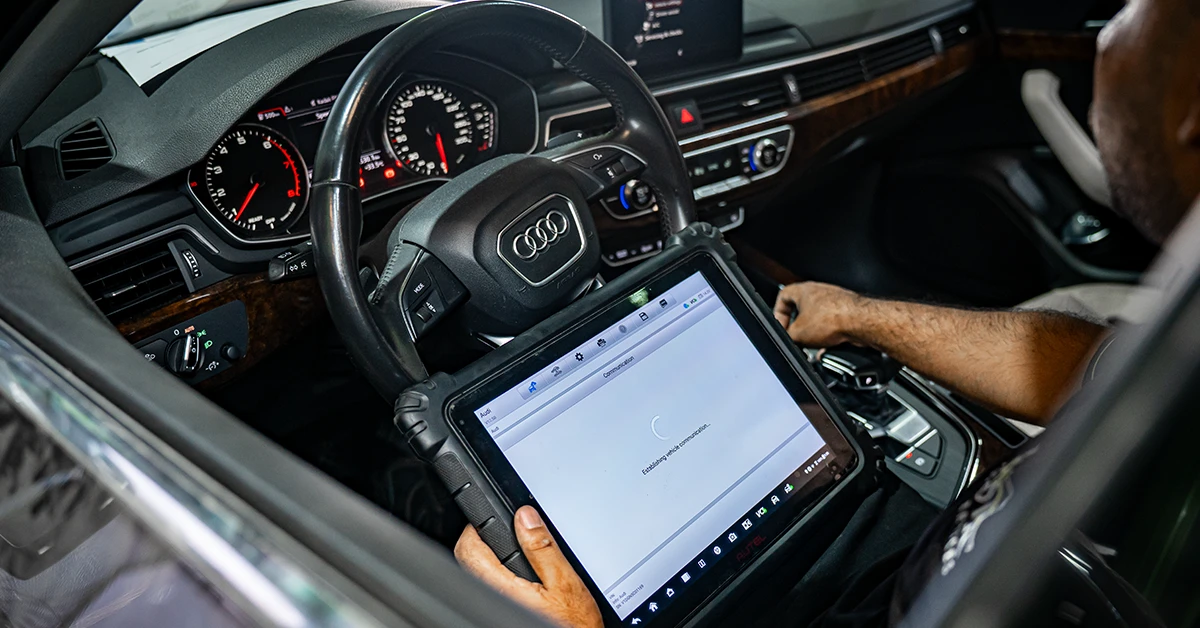
A stall is a significant event and the engine records it. Fault codes plus the freeze frame conditions usually show engine speed, load, coolant temperature and fuel trims at the moment it happened.
That data is what separates a crank sensor from a fuel pump without replacing either speculatively.
Exotic Auto Services in Musaffah reads that data and, for intermittent stalls, logs live data on a road test. See understanding car diagnostics.
A car that stalls repeatedly is worth dealing with promptly, because stalling at a junction is a safety issue rather than an inconvenience.
Frequently Asked Questions
What should I do if my car stalls while driving?
Hold the wheel firmly, because power steering assistance stops with the engine and it goes heavy immediately, though it still steers. Brake firmly: the servo holds enough vacuum for one or two assisted applications, then the pedal becomes hard. Do not turn the ignition fully off, since that can lock the steering, and coast to the side before restarting.
Why does my car stall at idle but drive fine?
Because the engine copes under load and cannot hold itself at low speed. The usual causes are carbon on the throttle body or intake valves, a vacuum leak letting unmetered air in, an idle control or electronic throttle fault, or a mass airflow sensor giving wrong readings. Carbon and vacuum leaks account for a large share.
Why does my car only stall in traffic with the air conditioning on?
The compressor puts a real load on the engine, and the cooling fan adds more at the same time, so the engine has to raise idle speed to compensate. If it cannot, it stalls. The extra load is revealing an existing idle control or air metering problem rather than causing it.
What causes a car to cut out suddenly while driving?
A crankshaft position sensor is a classic cause, and they often fail when hot and work again once cool, which makes the fault intermittent. Fuel pump or relay faults, a poor electrical connection or earth, and low system voltage from a weak battery or charging fault are the other common ones.
Is stalling dangerous?
It can be, which is why repeated stalling is worth dealing with promptly rather than living with. Losing the engine means losing power steering and most brake assistance, and stalling at a junction or while pulling out is a genuinely hazardous moment rather than an inconvenience.