Diagnostics
Dashboard Warning Lights: Red Means Stop, Amber Means Investigate
You do not need to memorise thirty symbols. Warning light colours follow a standard across manufacturers, and the colour alone tells you what to do in the next minute, which is the only decision that matters at the time.

What this guide covers
Red: Stop as Soon as It Is Safe
Red means the car is telling you that continuing risks damage or safety. These are not appointments.
Oil pressure
A red oil can symbol. The most urgent light on the car.
It means oil is not reaching where it needs to, and an engine without oil pressure destroys its bearings in minutes.
Stop and switch the engine off. Do not drive to the workshop. See signs of engine trouble.
Coolant temperature
A red thermometer, or the gauge in the red. The engine is overheating.
Switch the air conditioning off, turn the heater to full, pull over and stop. See what to do in the first two minutes.
Brake system
A red circle with an exclamation mark. Check the handbrake is fully released first, because that is the common false alarm.
If it stays on while driving, it can mean low brake fluid, which means a leak. Combined with a soft or sinking pedal, do not drive.
Charging system
A red battery symbol while driving. The alternator is not charging, and the car is running on the battery until it is empty.
Switch off what you can and get somewhere useful before it stops. See alternator faults.
Airbag and seatbelt warnings are also red. They will not stop the car, but they mean the restraint system may not deploy correctly in an accident, so they are not something to live with for months.
Amber: Investigate, Do Not Panic
Amber means a fault has been detected and recorded. The car is usually protecting itself, and you generally have time to book it in.
Engine management
The engine outline symbol, often called the check engine light. It covers an enormous range, from a loose fuel cap to a misfire.
Steady means a stored fault and drive gently to get it read. Flashing means stop soon: that is an active misfire dumping raw fuel into the catalytic converter and destroying it.
See engine misfires.
ABS
Your normal brakes still work. What you have lost is the anti-lock function, which matters in an emergency stop.
Frequently a wheel speed sensor, which is not an expensive repair.
Traction or stability control
Flashing briefly while driving is the system working, not a fault. Permanently lit means it has been disabled by a fault.
Often the same wheel speed sensor that triggers the ABS light.
Tyre pressure
Check the pressures cold before assuming a sensor fault. In this climate temperature swings alone can trigger it.
See tyre maintenance in this heat.
Glow plug or diesel emissions
On diesels, an amber coil symbol staying on after start is a fault rather than the normal pre-heat.
The Ones People Misread
- The battery light is a charging warning, not a battery condition warning. It is more often the alternator.
- The brake light is often just the handbrake. Check that first.
- Green and blue symbols are information. Lights on, cruise active, indicators. Not warnings.
- A light that appears then clears has still stored a fault, and the freeze frame data is often the most useful part.
- Several lights at once is usually one fault. Low system voltage makes many modules complain simultaneously.
That last one is worth holding on to. A screen full of warnings on a premium car is alarming and frequently resolves to a weak battery.
What Not to Do
- Do not disconnect the battery to clear a light. It erases the stored data that would have diagnosed it, and the fault returns.
- Do not clear codes without fixing anything. Same problem, and it wastes the freeze frame.
- Do not assume a cleared light means a fixed car. Intermittent faults come back, usually less conveniently.
- Do not ignore amber for months. The car is running in a protective mode, which usually costs fuel and performance.
Getting It Read
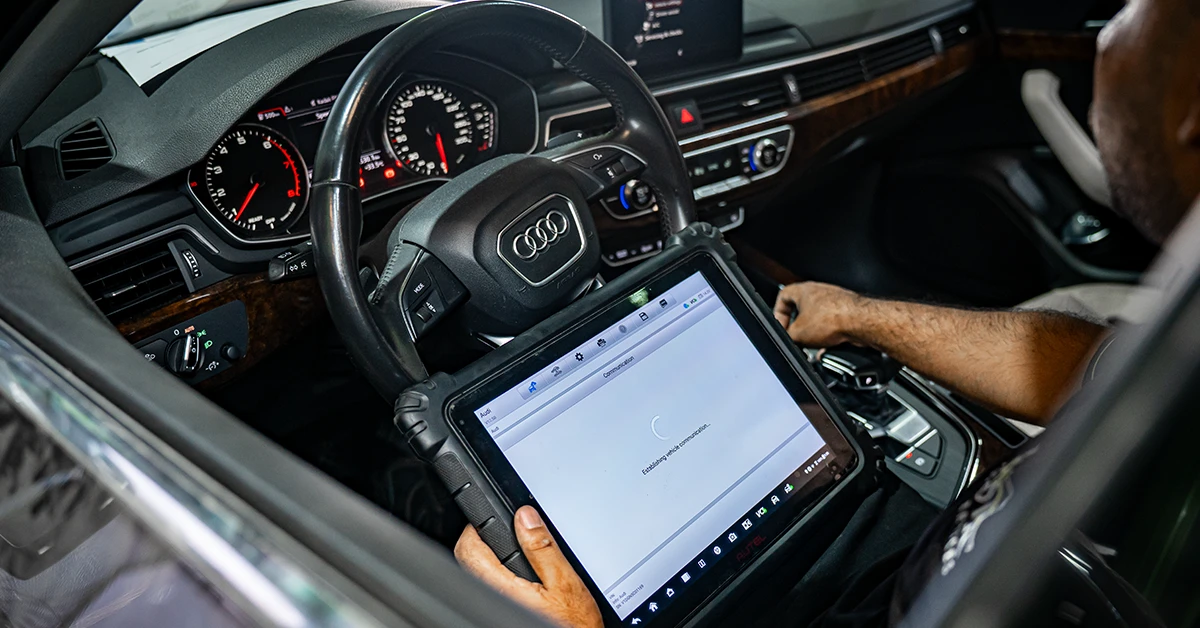
Reading a code is quick and inexpensive. Interpreting it is the part that has value, because a code names a circuit rather than a broken part.
Exotic Auto Services reads all modules rather than just the engine, shares the codes and the freeze frame conditions, and tells you what was tested rather than only what to replace.
Frequently Asked Questions
What do the colours of dashboard warning lights mean?
Red means stop as soon as it is safe, because something risks damage or is a safety issue now. Amber means a fault has been recorded and the car is usually protecting itself, so book it in. Green and blue are information rather than warnings. The colours are standardised across manufacturers.
Can I drive with the engine warning light on?
If it is steady, generally yes, gently and to get it read, because it means a stored fault rather than active damage. If it is flashing, stop as soon as it is safe: that indicates an active misfire pushing unburnt fuel into the catalytic converter, which destroys it.
Which warning lights mean I should stop immediately?
The red oil pressure light, because an engine without oil pressure destroys its bearings within minutes. Red coolant temperature, because overheating warps cylinder heads. And the red brake warning combined with a soft or sinking pedal, which indicates a hydraulic leak.
Why did several warning lights come on at once?
Usually one fault rather than many. Low system voltage from a weak battery or a charging problem makes multiple control units report at the same time, and on a car with many modules that fills the display. Testing the battery and charging system first clears most of them.
Should I disconnect the battery to clear a warning light?
No. It erases the stored fault data including the freeze frame conditions, which is exactly what would have diagnosed the problem. The underlying fault is unchanged so the light returns, and whoever looks at the car next has less information than they would have had.