Running costs
What Actually Decides Fuel Economy in the UAE
Published economy figures come from a laboratory test at a moderate temperature with no air conditioning running. That describes almost nothing about driving in Abu Dhabi, which is why real consumption here rarely matches the brochure.

What this guide covers
Why Brochure Figures Do Not Translate
Official economy figures come from a standardised laboratory procedure. That is the point of them: they make cars comparable to each other.
What they are not is a prediction of what you will get, and the gap is wider here than in most places.
- The test runs at a moderate ambient temperature. Not forty-plus degrees.
- Air conditioning is not running. Here it effectively always is.
- The drive cycle is gentle and does not reflect stop-start city traffic.
- The car is unladen with nothing on the roof.
Use them to compare cars against each other, which is what they are good for. Do not use them to budget.
What Actually Decides Consumption
Weight
Every acceleration is energy put into moving mass, and in city driving you accelerate constantly.
This is why a heavy vehicle with an efficient engine can use more fuel in traffic than a lighter one with a less efficient engine.
Aerodynamics
Drag rises with the square of speed, so at motorway speeds it dominates everything else.
A tall SUV pushes considerably more air aside than a saloon, and no amount of engine efficiency compensates at speed.
It is also why a roof box costs so much more than its weight suggests.
How the engine is actually used
Small turbocharged engines produce excellent laboratory figures because the test keeps them off boost.
Driven briskly, they are on boost frequently, and consumption rises sharply. A larger engine working gently can genuinely use less.
This is the most common reason an owner finds a small-engined car does not deliver what was promised.
Transmission
More ratios generally means the engine spends more time in an efficient part of its range.
A CVT is efficient by design for the same reason, though many drivers dislike how it feels.
The air conditioning
A real, continuous load in this climate that no brochure figure includes. It is the single largest gap between official and actual consumption here.
Hybrids Here
Worth understanding rather than assuming, because the benefit is not uniform.
A hybrid gains most in stop-start driving, where it recovers braking energy and can run on electric power at low speed.
On a steady motorway run the advantage narrows considerably, because there is little braking to recover and the engine is doing the work anyway.
So the honest answer depends on your driving. Heavy city use in Abu Dhabi traffic is exactly the case hybrids suit; long open-road commuting is less so.
They also run their air conditioning electrically, which is a genuine advantage when stationary.
How to Judge a Specific Car
- Compare official figures between cars, not against reality.
- Look for real-world owner data for that model in a hot climate rather than a temperate one.
- Consider your actual driving. Mostly traffic, mostly open road, or a mix.
- Weigh the car up. Kerb weight tells you a great deal about city consumption.
- Check the engine size against the car size. A small engine in a heavy car works hard, and working hard costs fuel.
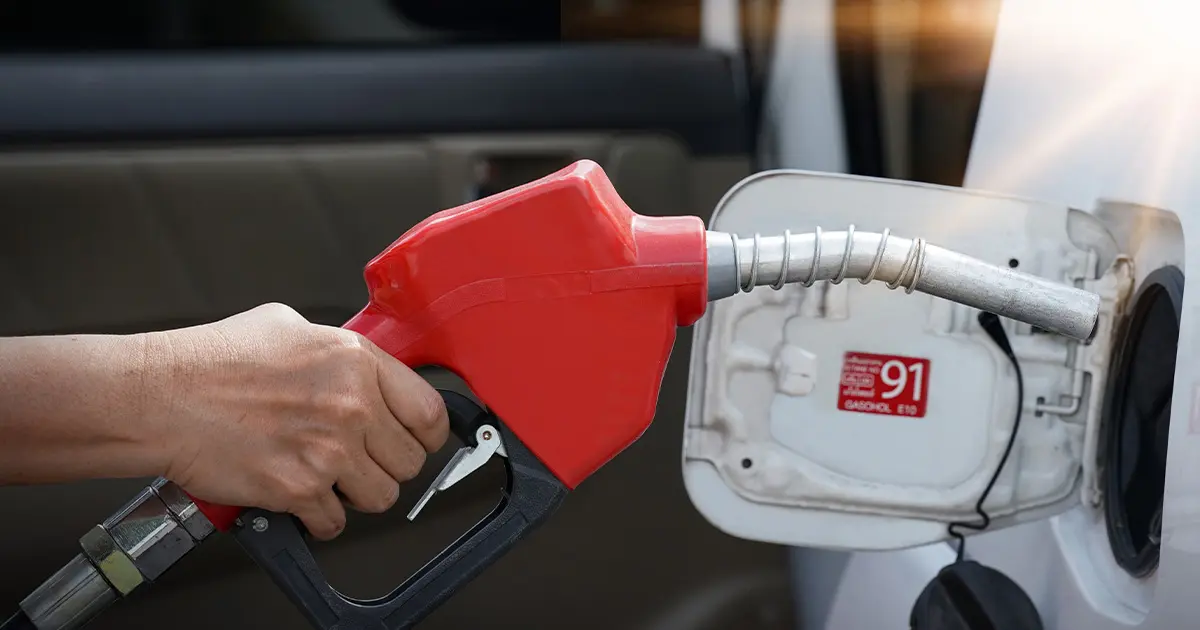
- Factor in fuel grade. An engine requiring premium costs more per litre for the same distance.
That last point is easy to overlook when comparing two cars on consumption alone.
When Consumption Rises on a Car You Own
A meaningful change with no change in driving is a fault, and it is frequently the earliest sign of one.
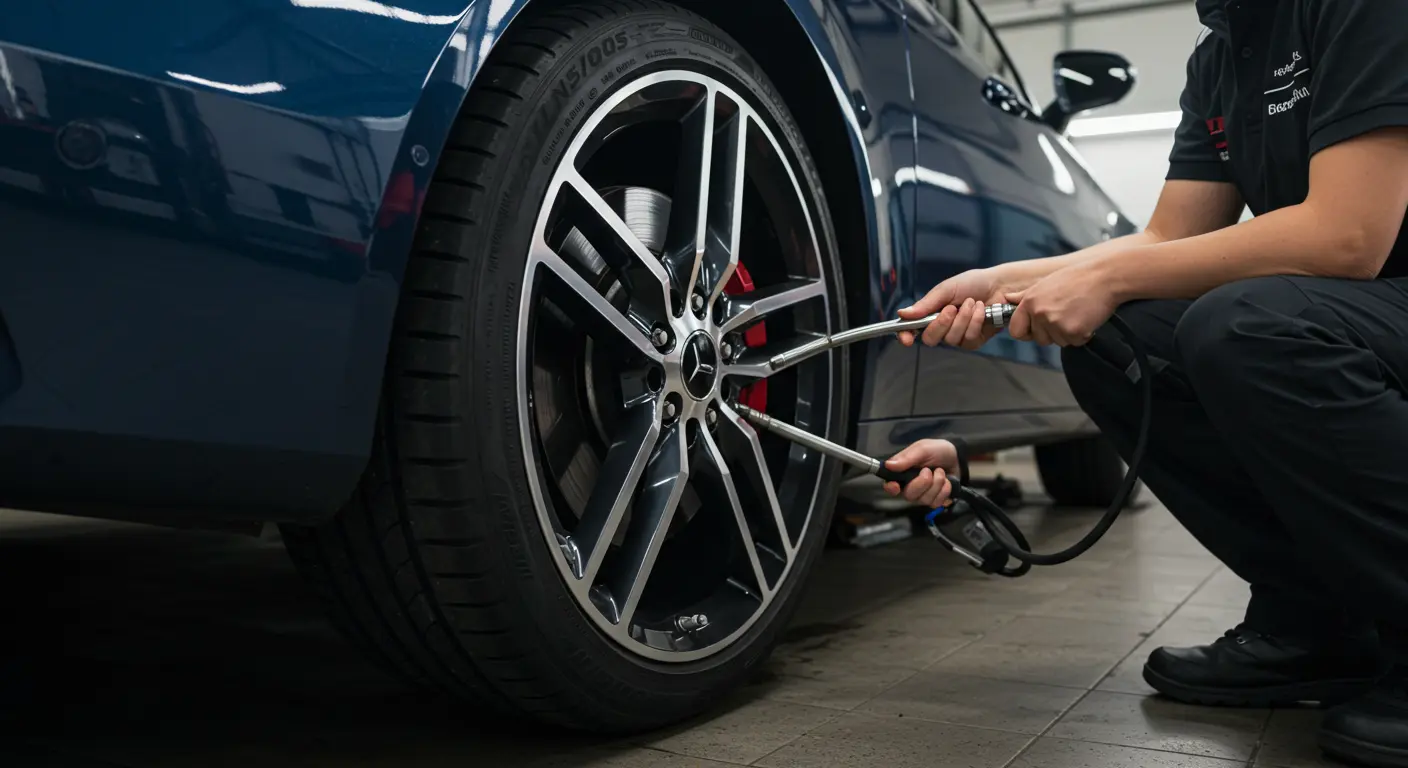
- Underinflated tyres, the most common and the easiest to fix.
- A restricted air filter, which this climate produces quickly.
- Worn spark plugs or a developing misfire.
- A dragging brake, often with one wheel noticeably hotter.
- Carbon on direct injection intake valves, which builds gradually.
- A sensor reading wrongly but plausibly, which may set no fault code at all.
- An air conditioning system low on refrigerant, running longer for less cooling.
Fuel consumption is one of the better early warning systems on a car, and it is worth paying attention to. See why some faults set no code.
Exotic Auto Services in Musaffah will check the mechanical causes when consumption has changed without explanation.
Frequently Asked Questions
Why does my car not achieve its official fuel economy figure?
Because official figures come from a standardised laboratory test at moderate temperature with no air conditioning running, on a gentle drive cycle with the car unladen. In Abu Dhabi the air conditioning is effectively always on and traffic is stop-start, so the gap is wider here than in most places.
Does engine size decide fuel economy?
Less than weight and aerodynamics do. A heavy vehicle with an efficient engine can use more in traffic than a lighter one with a less efficient engine, and at speed aerodynamic drag dominates everything. A small turbocharged engine driven briskly is on boost often, and can use more than a larger engine working gently.
Are hybrids worth it in the UAE?
It depends on your driving. Hybrids gain most in stop-start traffic, where they recover braking energy and run on electric power at low speed, which describes a lot of local driving. On steady open-road running the advantage narrows considerably. They also run air conditioning electrically, which helps when stationary.
How much fuel does air conditioning use?
Enough to be the single largest gap between official and actual consumption in this climate, because it is a continuous load that no brochure figure includes. Turning it off is not practical here, so the useful approach is reducing its load: ventilate before cooling, park in shade, use a sunshade and keep the cabin filter clean.
My fuel consumption suddenly increased. What causes that?
A meaningful change with no change in driving usually means a fault, and it is often the earliest sign of one. Common causes are underinflated tyres, a restricted air filter, worn plugs or a developing misfire, a dragging brake, carbon build-up on direct injection valves, or a sensor reading wrongly without setting a code.