Running costs
Fuel Saving in the UAE: What Works and What Is Folklore
Fuel consumption attracts more folklore than any other subject in motoring. A few things genuinely work, several popular ones do nothing, and one or two are actively harmful. Here is which is which.
What this guide covers
What Genuinely Works
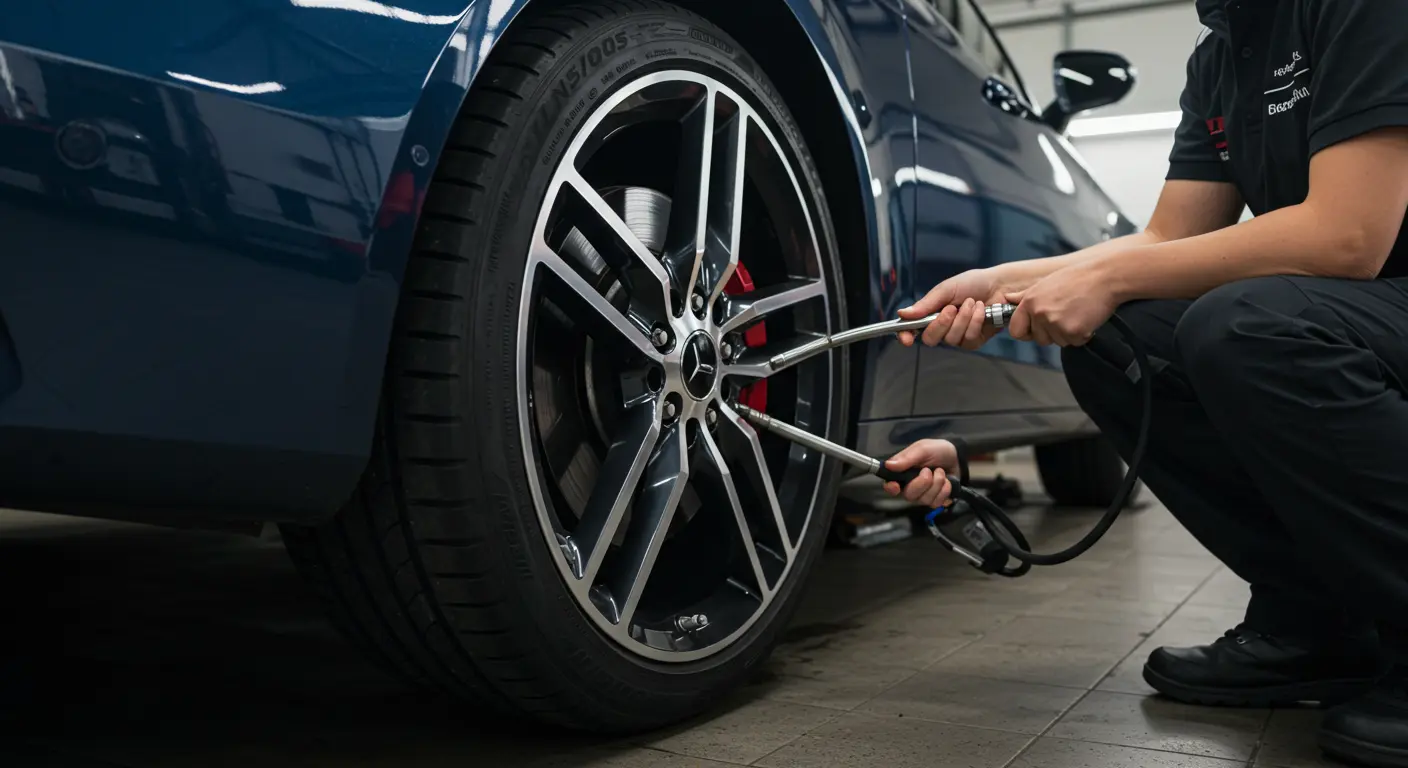
Correct tyre pressure
The best return on five minutes available to any driver.
Underinflated tyres deform more as they roll, and that deformation is energy the engine has to supply. It also generates heat, which is what causes tyre failures here.
Check them cold, monthly, to the manufacturer figure on the door jamb. See tyre pressure in this climate.
Smooth, anticipatory driving
Fuel is used accelerating. Every time you brake, you convert fuel you already burned into heat and throw it away.
Looking further ahead, lifting earlier and arriving at a junction already slowing saves more than any other single change.
It is unglamorous and it works, and it is worth considerably more than most people expect.
Losing unnecessary weight and drag
Roof boxes and roof racks are the significant one, because aerodynamic drag rises steeply with speed. Removing an unused roof rack is a real saving.
Weight in the boot matters less than people think, though it is free to remove.
Servicing
A restricted air filter, worn spark plugs, degraded oil or a dragging brake all cost fuel quietly.
None of them announce themselves, which is why consumption creeping up is often the earliest sign of a fault. See what a service actually does.
The Air Conditioning Question
Most fuel-saving advice says turn it off. In Abu Dhabi that is not practical advice, so here is the useful version.
The compressor does place a real load on the engine, and the cost is genuine.
- Ventilate before cooling. Open the windows for a minute to push the hottest air out, so the system is not cooling a cabin at extreme temperature.
- Park in shade. A cooler starting cabin means less work.
- Use a sunshade. It reduces peak cabin temperature substantially, and protects the dashboard.
- Recirculate once cool, so the system cools cabin air rather than outside air.
- Keep the cabin filter clean. Restricted airflow makes the system work longer for the same result.
- Keep the system healthy. A system low on refrigerant runs longer and cools less.
At low speed, open windows are more efficient than air conditioning. At higher speed the aerodynamic penalty of open windows outweighs it, so the air conditioning is the better choice.
See why an annual regas is not normal.
What Does Not Work
- Fuel-saving devices. Magnets on fuel lines, air vortex generators and plug-in modules. No mechanism, no measurable effect.
- Most fuel additives. Modern fuel already contains detergents. A genuine injector cleaning has a place; a bottle poured in monthly does not.
- Premium fuel in an engine that does not require it. Higher octane resists knock; it does not contain more energy. If your engine does not need it, you are paying for nothing.
- Filling up in the morning because fuel is denser when cold. Underground tanks barely change temperature, and the effect is far too small to notice.
- Overinflating tyres. A marginal gain against reduced grip, longer braking distances and uneven wear. Not a sensible trade.
On premium fuel: if the handbook requires it, use it, because the engine relies on the octane rating. If it merely recommends it, the difference is usually small. If it says nothing, there is no benefit to buying it.
What Is Actively Worse
Coasting in neutral
This one is worth correcting because it is widely believed and it is backwards.
In neutral, the engine must burn fuel to keep idling. Coasting in gear with your foot off the throttle, modern engines cut fuel to the injectors entirely, because the wheels are turning the engine.
So coasting in gear uses less fuel than coasting in neutral, and it also keeps you in control of the car.
Excessive idling
An idling engine returns zero. Warming a modern engine by idling is unnecessary; they warm faster and more evenly when driven gently.
Very high speed
Aerodynamic drag rises with the square of speed. The difference in consumption between a steady cruise and a fast one is substantial, and it is the largest single variable on a long journey.
A Realistic Summary
- Check tyre pressures monthly, cold.
- Drive smoothly and look further ahead.
- Remove roof racks when not in use.
- Service on time, particularly filters and plugs.
- Manage the air conditioning load rather than trying to avoid using it.
- Ignore the additives and the gadgets.
If consumption has increased noticeably with no change in driving, that is a fault rather than a habit, and it is worth having looked at.
Exotic Auto Services in Musaffah will check the things that quietly cost fuel: filters, plugs, a dragging brake, tyre pressures and the air conditioning system.
Frequently Asked Questions
What actually saves fuel?
Correct tyre pressure checked cold monthly, smooth anticipatory driving that avoids braking away energy you already paid for, removing roof racks when not in use, and servicing on time so a restricted filter, worn plugs or a dragging brake are not quietly costing you. Those four are worth more than every gadget combined.
Does turning off the air conditioning save fuel in the UAE?
It does use fuel, and switching it off is not practical here. The useful approach is reducing its load: ventilate for a minute before cooling, park in shade, use a sunshade, switch to recirculate once cool, and keep the cabin filter clean. At low speed open windows are more efficient; at higher speed air conditioning wins.
Is coasting in neutral more efficient?
No, it is the opposite, and this is a widely believed mistake. In neutral the engine burns fuel to keep idling. Coasting in gear with your foot off the throttle, a modern engine cuts fuel to the injectors entirely because the wheels are turning it. Coasting in gear uses less fuel and keeps you in control.
Do fuel additives or fuel-saving devices work?
Fuel-saving devices such as magnets on fuel lines or plug-in modules have no mechanism and no measurable effect. Most additives do little, because modern fuel already contains detergents. A genuine injector cleaning service has a place; a bottle poured in monthly does not.
Should I use premium fuel?
If your handbook requires it, yes, because the engine depends on the octane rating. If it only recommends it, the difference is usually small. If it says nothing, there is no benefit: higher octane resists knock, it does not contain more energy, so you are paying more for the same distance.