Diagnosis
Common Car Problems, Sorted by What You Notice First
You do not notice a failed wheel bearing. You notice a drone that changes when you turn. Faults announce themselves as a noise, a smell, a feel or a leak, so this is organised the way you actually meet them.

What this guide covers
Noises: When It Happens Is the Clue
A squeal or grinding when braking
A squeal is usually the wear indicator doing its job. A grinding metallic noise means the pad material is gone and the disc is being damaged.
The first means book it in. The second means do it now, because the cost is climbing while you drive.
A drone that changes when you steer
A humming or droning that gets louder or quieter as you turn is a classic wheel bearing.
Loading the bearing by turning changes the noise, which is exactly why that test works. It is confirmed on the ramp rather than guessed from the sound.
A knock over bumps
Almost always suspension, and usually one of the cheapest parts on the car: an anti-roll bar link or a worn bush.
They feel similar from the driver seat and are easy to separate with the suspension loaded.
A rattle on cold start that fades
On many engines this is a timing chain tensioner, and on some marques it is an exhaust manifold.
One is a significant job and the other is not, so it is worth identifying rather than assuming. See common European engine problems.
A clunk when taking up drive
Frequently a driveshaft joint or a worn mount rather than the gearbox, and considerably cheaper than owners fear.
Smells: The Fastest Diagnostic You Have
- Sweet, syrupy. Coolant on a hot surface. A leak evaporating before it drips.
- Burning oil. Oil onto the exhaust or engine, usually a cover or housing weeping.
- Hot and acrid after braking. Usually a seized caliper dragging. Check whether one wheel is much hotter.
- Fuel. Either a leak or a misfire pushing unburnt fuel into the exhaust. Both warrant attention.
- Musty from the vents. Damp in the air conditioning system, often a blocked condensate drain.
- Electrical, sharp and plastic-like. Stop and investigate. That one is not worth waiting on.
How It Feels
Vibration through the steering wheel
Points at the front of the car: wheel balance, a warped front disc or a worn front component.
If it appears only under braking, it is the front discs.
Vibration through the seat
Points at the rear instead, usually rear wheel balance or a driveline component.
Separating the two saves a great deal of time, and it costs nothing to notice which you have.
Pulling to one side
Under braking, a caliper is dragging on one side. Constantly, it is alignment or uneven tyre pressures.
A soft or sinking brake pedal
A pedal that feels soft after repeated braking is usually degraded brake fluid boiling.
A pedal that sinks slowly under steady pressure is a leak in the system. That one means stop driving.
Hesitation or lost power
Often the car protecting itself rather than failing. Modern engines cut power when they detect a fault, and the reason is stored.
Leaks: Colour and Position
- Clear water, passenger side, after using the air conditioning. Condensate. Normal.
- Green, pink or orange. Coolant. Treat as urgent.
- Dark brown or black, thick. Engine oil.
- Reddish, slippery, thinner. Usually transmission fluid.
- Clear and oily near a wheel. Possibly brake fluid. Stop driving.
- Dark and near the wheels. Could be a leaking damper.
A clean sheet of cardboard under the car overnight turns a vague worry into a specific answer. See how to spot common fluid leaks.
The Two That Mean Stop Now
Most of this list means book it in. Two do not.
- The red oil pressure warning. Not a level warning. It means oil is not reaching where it should, and an engine destroys its bearings in minutes without it.
- A brake pedal that sinks to the floor. That is a hydraulic leak, and the next application may not be there.
A flashing engine warning light is the third. It is not immediately dangerous to you, but every minute of driving is destroying the catalytic converter.
Getting a Straight Answer
Most of the above can be narrowed down on a road test and a ramp inspection in well under an hour.
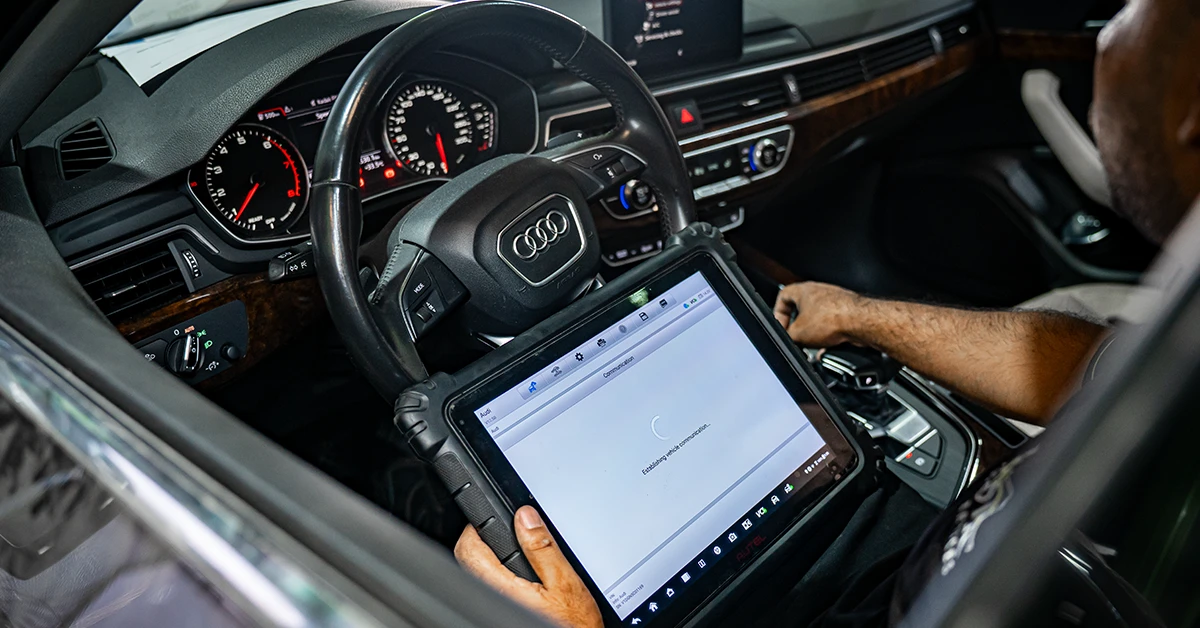
Exotic Auto Services in Musaffah reads the stored faults, road tests where the symptom warrants it, and shares the measurements rather than a conclusion.
For warning lights specifically, see dashboard warning lights.
Frequently Asked Questions
What car symptoms mean I should stop driving immediately?
Two. A red oil pressure warning light means switch the engine off now, because an engine without oil pressure destroys its bearings in minutes. A brake pedal that sinks slowly to the floor under steady pressure means a hydraulic leak, and the next application may not be there. A flashing engine light means stop soon.
What is the humming noise that changes when I turn?
That is the classic wheel bearing symptom. Turning loads the bearing differently, which changes the noise, and that is why the test works. It is confirmed on the ramp rather than from the sound alone, because a tyre with uneven wear can imitate it closely.
My car smells sweet after driving. What is that?
That is coolant reaching a hot surface and evaporating. It means a leak that is burning off before it ever drips onto the ground, which is why nothing appears underneath. A cooling system is sealed and does not consume coolant, so it is worth finding rather than topping up.
Is a vibration through the steering wheel different from one through the seat?
Yes, and noticing which you have saves real diagnostic time. Vibration felt through the steering wheel points at the front of the car, and if it appears only under braking it is usually the front discs. Vibration through the seat points at the rear instead.
How can I tell what is leaking from my car?
Colour and position. Clear water under the passenger side after using the air conditioning is condensate and is normal. Green, pink or orange is coolant. Dark and thick is engine oil, reddish and slippery is usually transmission fluid, and anything clear and oily near a wheel could be brake fluid, which means stop driving.