Suspension
Why Is My Car Vibrating While Driving?
Quick Summary
A car that vibrates while driving most often has an unbalanced wheel, a damaged or uneven tyre, or a bent wheel. If balancing does not fix it, the cause is usually worn suspension or steering joints, a wheel bearing, a CV joint or a driveshaft. Vibration that follows engine speed points to a misfire or worn engine mounts, and vibration only when braking points to the brake discs. Strong vibration, or vibration with knocking or a warning light, should be checked straight away.
Most vibration while driving comes from the wheels and tyres, and those are usually the cheapest fixes. When balancing does not cure it, the cause sits further in: the suspension, steering, drivetrain, engine or brakes. When the vibration happens and where you feel it is the quickest way to narrow it down.
What this guide covers
Why Vibration at Highway Speed Deserves Attention
Vibration from the wheels grows quickly as speed rises. The force created by an out-of-balance wheel increases with the square of its rotation speed, so a small imbalance that feels harmless at 60 km/h can feel severe at 120 km/h.
Road testing backs this up. A vehicle vibration study that added unbalance to a car's front wheels found the vibration level rose with both speed and the amount of unbalance. The largest increase was felt at the steering wheel between 100 and 120 km/h, exactly the range UAE drivers spend most of their highway time in.
Vibration is not only a comfort issue. It speeds up wear on tyres, wheel bearings, ball joints, tie rods and shock absorbers. Left alone, a cheap balancing job can turn into a front-end rebuild.
Match the Vibration to the Likely Cause
The quickest way to narrow down a vibration is to note when it happens and where you feel it.
| When it happens | Where you feel it | Most likely cause |
|---|---|---|
| From about 80 to 120 km/h, fades above | Steering wheel | Front wheel imbalance or tyre fault |
| From about 80 to 120 km/h | Seat and floor | Rear wheel imbalance or tyre fault |
| Gets steadily worse with speed | Whole car | Bent wheel, damaged tyre or worn wheel bearing |
| Only when accelerating | Floor, sometimes a shudder | Worn CV joint, driveshaft or engine mount |
| At idle or low revs, any speed | Seat, dashboard, mirrors | Engine misfire or worn engine mounts |
| Only when braking | Steering wheel or brake pedal | Warped or unevenly worn brake discs |
| Over bumps and rough roads | Steering and body, with knocks | Worn suspension or steering joints |
Wheel and Tyre Causes
Wheels and tyres cause most of the vibrations drivers notice, and they are usually the cheapest to fix.
Unbalanced Wheels
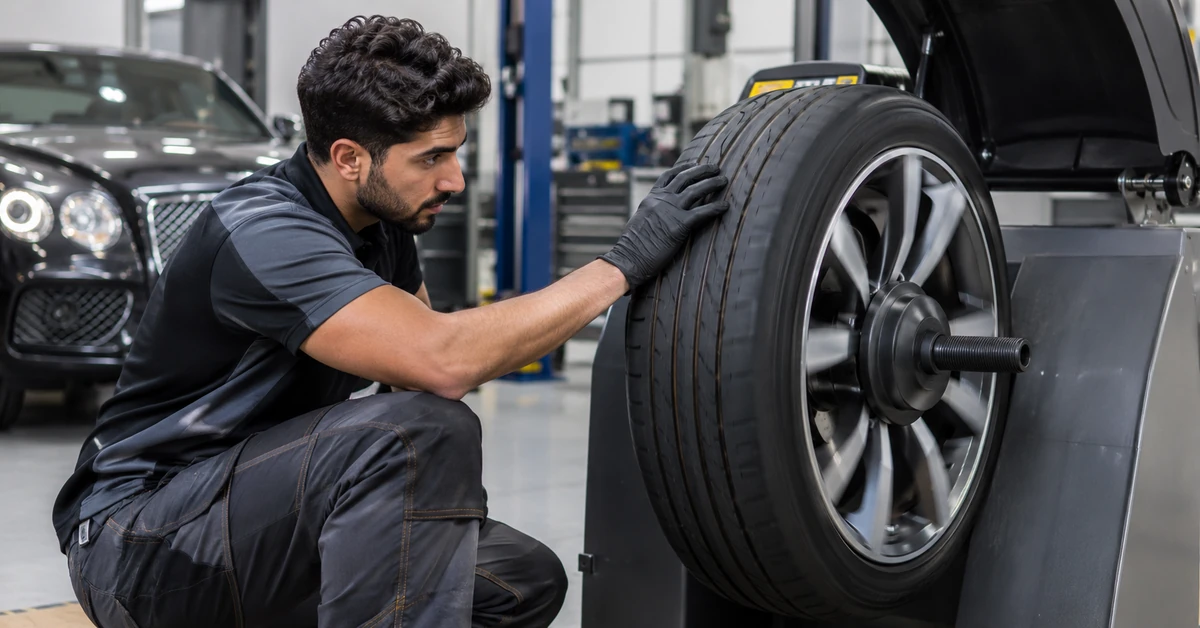
Every wheel and tyre has slight weight differences around its circumference. Small weights fitted during balancing even this out. When a weight falls off, or the tyre wears unevenly, the wheel wobbles as it spins. Front imbalance is felt through the steering wheel. Rear imbalance is felt through the seat.
Damaged or Uneven Tyres
A tyre with a bulge, a separated belt or flat spots from long parking will vibrate even when balanced. Heat in the UAE ages rubber faster, and cars left parked for weeks in summer can develop temporary flat spots. A tyre can also be out of round from the factory, which a road force balancer can detect.
Bent Wheels
Kerbs, potholes and speed bumps can bend a rim, especially low-profile alloys on luxury cars. A bent wheel cannot be balanced properly and may also lose air slowly. It often shows as vibration that gets worse the faster you drive.
Wheel Alignment
Misalignment rarely causes vibration on its own. It does cause uneven tyre wear, and those worn tyres then vibrate at speed. If your car also pulls to one side, alignment should be checked alongside balancing.
Suspension, Steering and Drivetrain Causes
When balancing does not fix the problem, the cause is usually further in.
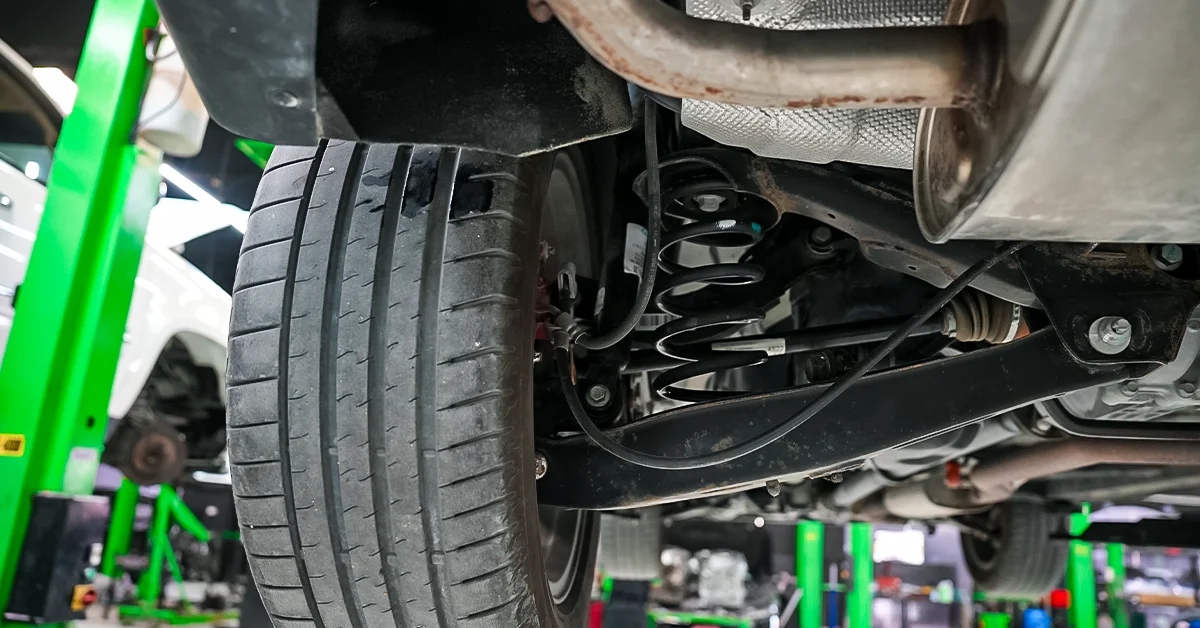
Worn Suspension and Steering Joints
Ball joints, tie rod ends and control arm bushings hold the wheel in place. When they wear, the wheel can shimmy at speed, and you may hear knocks over bumps. Knocking, wandering, and uneven tyre wear are all common signs of worn suspension, and this kind of play also makes balancing ineffective.
Wheel Bearings
A failing wheel bearing often starts with a hum or growl that rises with speed and changes when you turn. As it worsens, it can create a vibration through the floor or steering. Bearings should be replaced promptly, because a seized bearing is dangerous.
CV Joints and Driveshafts
Constant velocity (CV) joints let the driveshafts turn while the wheels steer and move. A worn inner CV joint often causes vibration under acceleration that eases when you lift off. A torn CV boot lets grease out and sand in, which speeds up wear. Rear-wheel-drive and four-wheel-drive cars can also vibrate from worn propshaft joints or centre bearings.
Engine and Brake Causes
Engine Misfire
If the vibration follows engine speed rather than road speed, the engine is the likely source. A misfiring cylinder makes the engine run unevenly, often with a flashing check engine light. Most engine misfires trace back to worn spark plugs, failing ignition coils or dirty injectors.
Worn Engine Mounts
Engine mounts are rubber and hydraulic blocks that stop engine movement reaching the cabin. Heat hardens and cracks them over time. Worn mounts let vibration through at idle, especially with the AC on, and cause a clunk or shudder when pulling away.
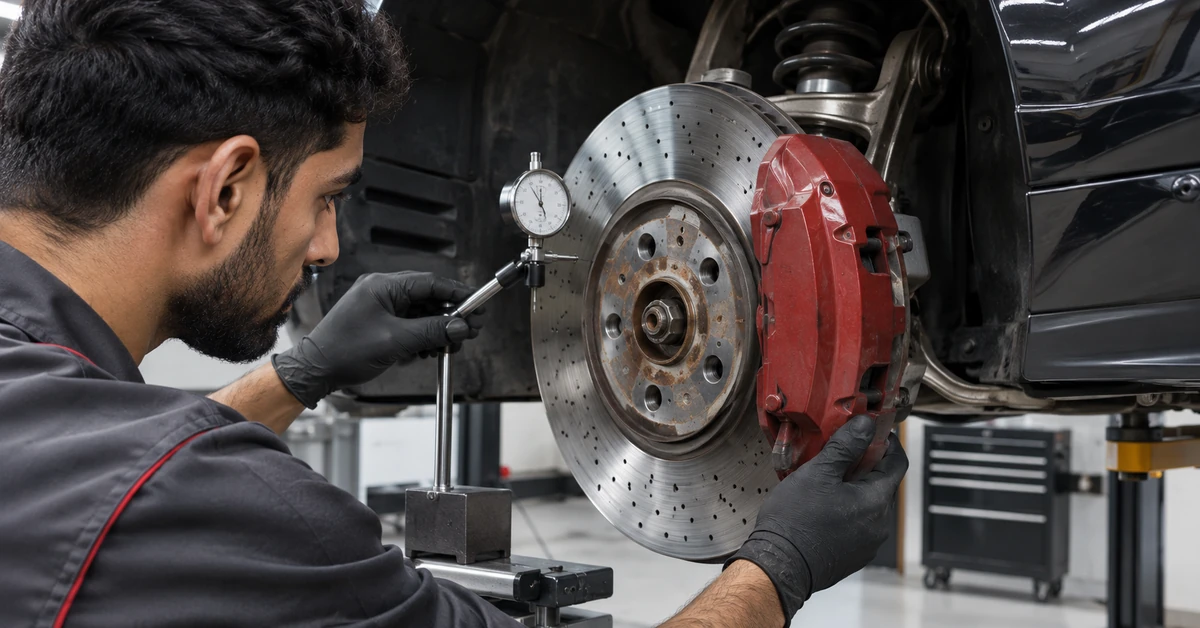
Warped Brake Discs
If vibration appears only when braking, the brake discs are almost always the cause. Uneven disc thickness makes the pads grab and release as the wheel turns, which is why a car shakes when braking but drives smoothly otherwise.
Quick Checks You Can Do Before Visiting a Workshop
A few simple observations help a technician find the fault faster. Check tyre pressures on all four wheels and look for bulges, cuts, or uneven wear. Note the exact speed range where the vibration starts and stops.
Try shifting to neutral at that speed on a safe, empty road. If the vibration stays, it is linked to road speed. If it disappears, it is linked to the engine or transmission.
Note whether it changes when you brake, accelerate, or turn. Those details save diagnostic time and money.
How Exotic Auto Services Diagnoses Vibration
Finding a vibration properly means testing more than one system. At Exotic Auto Services, technicians road test the car at the speed where the vibration appears, then inspect wheels, tyres, suspension, steering and drivetrain on one of the workshop's 18+ hydraulic lifts.
Wheels are checked for runout and balanced on modern equipment, and wheel alignment is set to factory figures where needed. If the cause is deeper, the suspension or drivetrain is repaired using OEM-equivalent parts as standard, with genuine parts on request. You receive an itemised quotation before any work starts.
Frequently Asked Questions
Why does my car vibrate at 100 km/h but not at lower speeds?
This is the classic sign of an unbalanced wheel or a tyre fault. Imbalance forces grow with speed, and many cars have a natural vibration range around 100 to 120 km/h. Balancing usually cures it, unless a tyre or rim is damaged.
Is it safe to drive a car that is vibrating?
Mild vibration from wheel balance is not an immediate danger, but it speeds up wear on other parts. Strong vibration, vibration with knocking, or vibration with a warning light should be checked straight away, because it can signal a failing bearing, joint or tyre.
Can wheel alignment fix car vibration?
Alignment on its own rarely fixes vibration. It corrects the wheel angles, which stops uneven tyre wear. Vibration is more often fixed by balancing, replacing damaged tyres or repairing worn suspension parts, though alignment is often done at the same time.
Why does my car vibrate when I accelerate?
Vibration only under acceleration usually points to a worn inner CV joint, a driveshaft problem or worn engine mounts. If it is joined by jerking or hesitation, the cause may be a misfire or a transmission issue instead.
Why does my car vibrate when idling?
Vibration at idle usually comes from the engine side. Worn engine mounts, a misfiring cylinder, dirty injectors or a rough-running engine are common causes. If the vibration gets worse when the AC is switched on, worn mounts are a strong suspect.
Conclusion
A vibrating car is telling you where to look. Vibration that follows road speed points to wheels, tyres, bearings and driveshafts, while vibration that follows engine speed points to misfires and mounts.
Vibration only when braking means the discs. Catching it early is far cheaper than replacing the parts that wear out because of it. Get the cause found and fixed with suspension repair and wheel services from Exotic Auto Services in Musaffah.