Engine
Engine Misfires: What the Warning Light Is Telling You
A misfire means one cylinder is not contributing. The car will usually still drive, which is exactly why people keep driving it, and that is where a cheap repair becomes an expensive one.

What this guide covers
Flashing or Steady: The Only Question That Matters First
If the engine warning light is flashing, stop driving as soon as it is safe.
A flashing light during a misfire means unburnt fuel is being pushed into the exhaust. The catalytic converter is not designed for that and will overheat and fail.
This is how a set of ignition coils turns into a catalytic converter bill. The fault was cheap; continuing to drive was not.
If the light is steady, the car has recorded a fault but is not doing active damage. Book it in rather than panicking, and avoid heavy loads until it is looked at.
A misfire that comes and goes still stores a code. If the light appeared and later went out, the fault is still in the memory and can be read. Do not assume it fixed itself.
What a Misfire Actually Is
Combustion needs three things: fuel, spark and compression, in the right amounts at the right moment.
A misfire is a cylinder where one of those failed. The engine detects it by measuring tiny variations in crankshaft speed, cylinder by cylinder.
That is why the car can tell you which cylinder is at fault. It is measured rather than guessed at, which makes diagnosis far quicker than most owners expect.
The Three Causes, In Order of Likelihood
Spark: coils and plugs
This is the most common cause by a wide margin, and the cheapest.
Ignition coils fail with heat and age, and on turbocharged engines they work harder because there is more pressure in the cylinder to spark across.
Worn plugs produce the same symptom. Both are quick to test and inexpensive to replace, which is why they are ruled in or out first.
Fuel: injectors and delivery
A blocked or leaking injector gives the wrong amount of fuel to one cylinder.
On direct injection engines, carbon on the intake valves also disrupts airflow and can produce a misfire, particularly on a cold start.
Fuel pressure faults tend to affect the whole engine rather than one cylinder, which is a useful distinction when diagnosing.
Compression: the expensive one
If the cylinder cannot hold pressure, no amount of spark and fuel will help.
Causes include valve wear, a failed head gasket or piston ring wear. This is the least common cause and the most serious.
It is confirmed by a compression or leak-down test rather than assumed, which matters because the repair is on a different scale entirely. See engine repair.
What It Feels Like
- A rough or lumpy idle, often worse when the engine is cold.
- A stumble or hesitation when accelerating, particularly under load.
- A loss of power, sometimes with the car entering a reduced-power mode.
- Higher fuel consumption, because the fuel in that cylinder is being wasted.
- A smell of fuel from the exhaust, which is the warning sign for the catalytic converter.
How It Gets Diagnosed Properly
A misfire is one of the faults where a proper diagnostic saves the most money, because guessing here is expensive.
- Read the stored codes to identify which cylinder, and whether it is one or several.
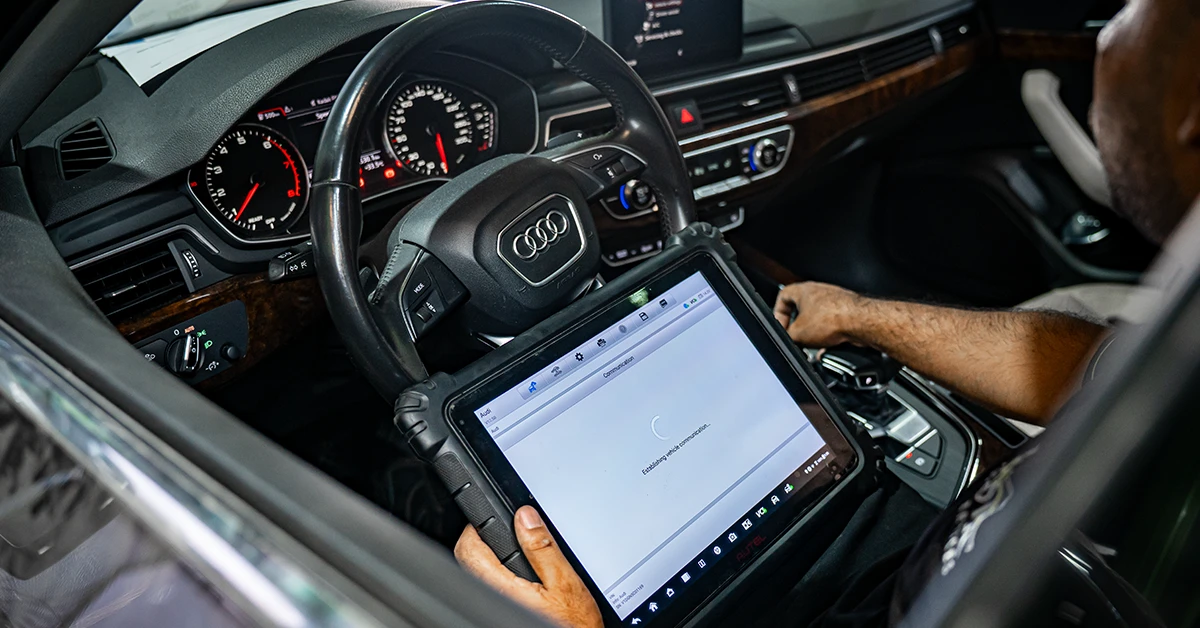
- Read live data for misfire counts per cylinder while the engine runs.
- Swap components between cylinders where possible. If the misfire follows the coil, that is the answer with no parts bought.
- Test fuel delivery if ignition is ruled out.
- Compression or leak-down test only if the first three come back clean.
Working in that order means the cheap causes are eliminated first. Exotic Auto Services diagnoses in that sequence and shows you the readings.
What It Costs to Ignore
The fault itself is often minor. The consequences are not.
A destroyed catalytic converter is many times the cost of a coil. Long-term running on a misfire also washes oil from the cylinder wall and dilutes the oil with fuel.
On a turbocharged engine, fuel-diluted oil is doing the turbo no favours either. See why engine diagnostics matter on modern engines.
Frequently Asked Questions
Can I drive with a misfire?
It depends entirely on the light. A flashing engine warning light means stop as soon as it is safe, because unburnt fuel is reaching the catalytic converter and destroying it. A steady light means the fault is recorded but no active damage is being done, so book it in and avoid heavy loads until then.
What causes an engine misfire most often?
Ignition, by a wide margin. Coils and spark plugs fail with heat and age, and turbocharged engines work them harder because there is more cylinder pressure to spark across. They are also the cheapest and quickest cause to test, which is why a good diagnosis rules them out first.
Why does my car misfire only when cold?
A cold misfire that clears as the engine warms often points at carbon on the intake valves of a direct injection engine, or at an ignition component that is marginal until heat expands it into place. Both are identifiable from live data and the stored freeze-frame conditions.
How much damage does a misfire actually do?
The fault itself is usually minor. Left running, it can destroy the catalytic converter, wash oil from the cylinder wall and dilute the engine oil with fuel. That is how a coil becomes a far larger bill, and it is entirely avoidable by acting on the light.
Does the car know which cylinder is misfiring?
Yes. The engine measures small variations in crankshaft speed cylinder by cylinder and records which one failed, along with the conditions at the time. That is why misfire diagnosis is faster than owners expect, and why replacing all the coils on suspicion is rarely necessary.