Suspension
Range Rover Air Suspension Failure: Signs, Causes and Repair in Abu Dhabi
Quick Summary
Range Rover air suspension failure shows up as sagging after parking, suspension fault messages, a compressor that runs often and a harsh or uneven ride. The usual causes are leaking air springs, a worn compressor, valve block or air line leaks, and faulty height sensors. UAE heat and dust age the rubber faster. Most repairs replace the failed part and fix the leak behind it.
Air suspension gives the Range Rover its smooth ride and adjustable height, but it is also one of the model's most common repair items. In the UAE, heat and dust wear out its rubber and moving parts faster than in cooler climates.
The main signs of Range Rover air suspension failure are the car sagging after being parked, suspension fault messages on the dashboard, a compressor that runs often or loudly, and a harsh, bouncy or uneven ride. Most faults are repaired by replacing the failed part and fixing the leak behind it.
What this guide covers
How Range Rover Air Suspension Works
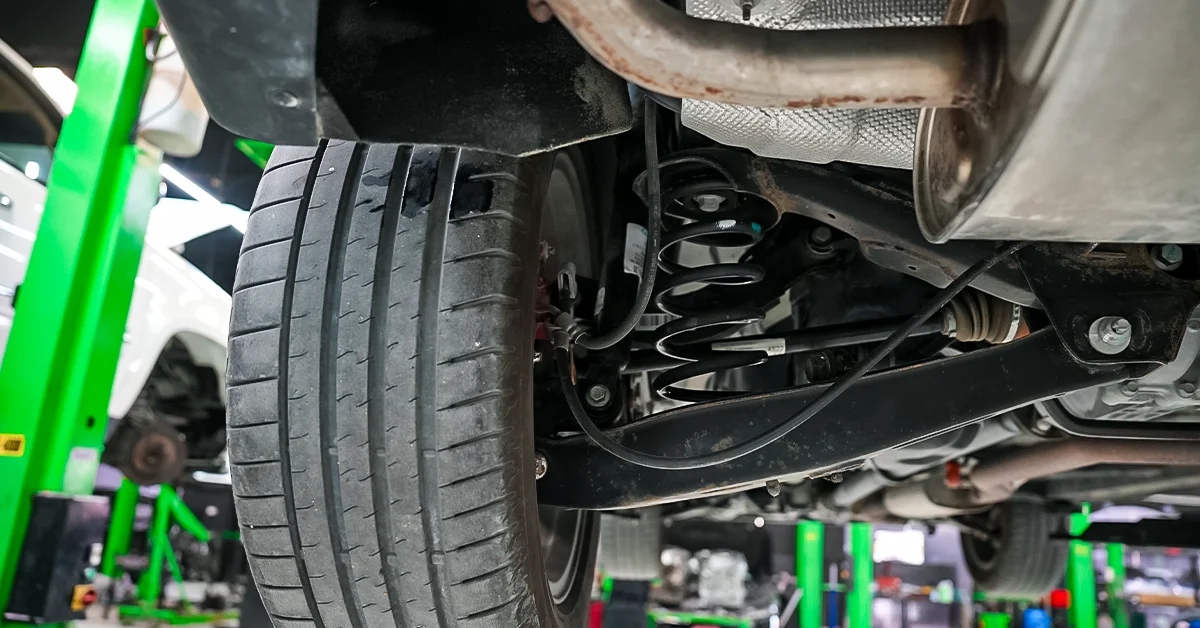
Instead of steel coil springs, most Range Rovers ride on rubber air springs at each corner. A compressor fills them with air, a valve block controls which corner gets air, and height sensors tell the suspension control module how high each corner sits. A reservoir stores compressed air so the car can adjust quickly.
This setup lets the car lower for easy entry, rise for off-road clearance, and stay level when loaded. It also means several parts must work together. A small leak in one area can make other parts work much harder.
| Component | Job | What happens when it fails |
|---|---|---|
| Air springs | Hold the car up at each corner | Car sags, often at one corner overnight |
| Compressor | Pumps air into the system | Slow lifting, overheating, fault message |
| Valve block | Routes air to each corner | Uneven height, leaks, car drops while parked |
| Air lines and fittings | Carry air around the system | Slow leaks and constant compressor running |
| Height sensors | Measure each corner's height | Wrong ride height, warnings, leaning car |
| Reservoir | Stores compressed air | Slow height changes, extra compressor load |
| Control module | Manages the whole system | Faults, failure to change height |
Signs Your Range Rover Air Suspension Is Failing
Sagging After Being Parked
The most common early sign is a corner, or the whole car, sitting low after a few hours or overnight. It usually means air is escaping from a spring, line or valve. The car may rise again once started, which is why owners often live with it for weeks.
Suspension Fault Messages
Warnings such as "Suspension Fault", "Normal Height Only" or "Max Speed 50 km/h" mean the system has detected a problem and limited itself. Height changes may be locked out until the fault is fixed.
Compressor Running Often or Loudly
If you hear the compressor working frequently, especially soon after starting, it is likely topping up a leak. A compressor that runs too long can overheat and wear out early, so a small leak left alone often ends with a compressor failure too.
Harsh, Bouncy or Uneven Ride
A stiff ride, crashing over bumps or the car leaning to one side can point to a failing air spring, a faulty sensor, or worn dampers. Air springs and shock absorbers are often combined into one strut on Range Rovers, so a worn damper can feel like an air suspension fault.
Why Air Suspension Fails Faster in the UAE
Air springs are made of rubber, and heat is hard on rubber. Strong sun and high road temperatures make the rubber dry out and develop fine cracks, especially at the folds where the spring flexes. Those cracks eventually let air escape.
Dust and sand add to the problem. Fine grit works into the folds of the air spring and acts like sandpaper as the spring moves. It can also get into the compressor's intake and valve block if filters and seals are worn.
Compressors also work harder in heat. They pump warmer air, cool down more slowly and are more likely to overheat when topping up a leak. A weak battery adds strain too, because low voltage can trigger suspension faults on modern Range Rovers.
Common Causes of Air Suspension Failure
Leaking Air Springs
Cracked or perished air springs are the most common failure. Front springs often go first because they carry the engine's weight. A leak test with soapy water or specialist equipment usually confirms it.
Worn or Burnt-Out Compressor
Compressors have a limited working life, and constant running from leaks shortens it. Symptoms include slow lifting, overheating messages and eventually no lifting at all. A failed compressor is often a result of another leak, so the whole system should be checked.
Valve Block and Air Line Leaks
O-rings in the valve block and fittings on the air lines harden over time. These leaks can be slow and hard to find without a proper pressure test.
Height Sensor and Electrical Faults
Height sensors sit near the wheels and take a beating from dust, water and impacts. A faulty sensor can make the car sit too high, too low or lean. Wiring, connector corrosion and low battery voltage can also cause false warnings.
Related Suspension Checks Worth Doing
When a Range Rover's suspension is being worked on, it is a good time to check other front-end parts.
For example, Jaguar Land Rover has issued a safety recall covering certain 2014 to 2017 Range Rover and Range Rover Sport vehicles, where the front suspension upper knuckle joint could crack, as set out in this NHTSA recall report. Owners of those model years should confirm recall status with an authorised dealer.
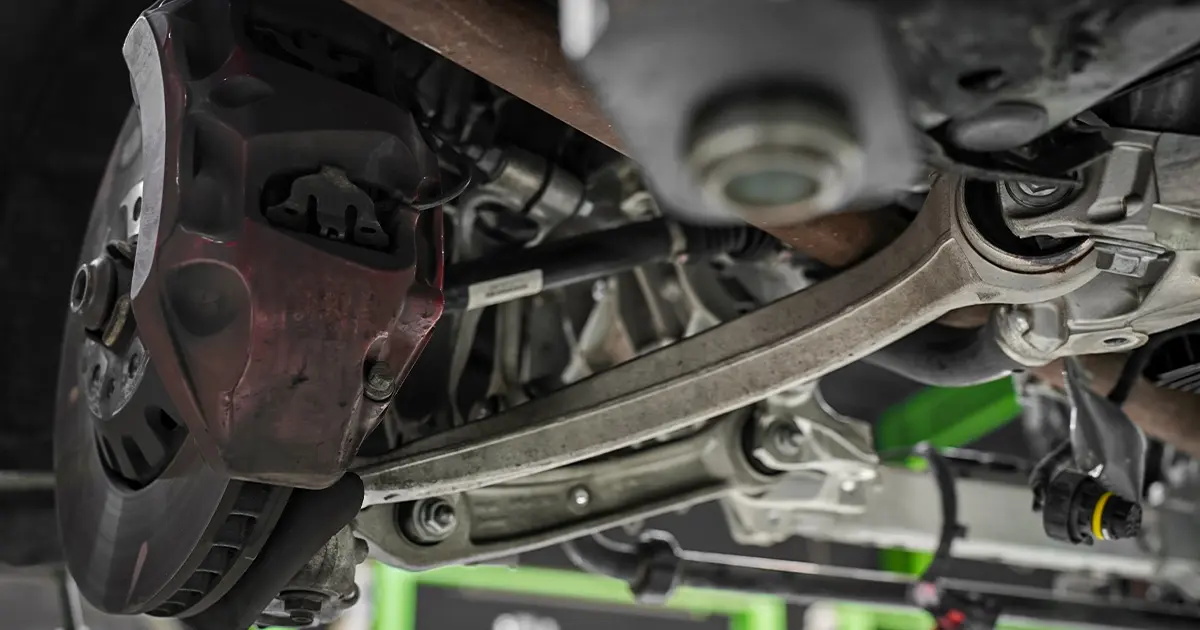
Worn control arm bushings, ball joints, and dampers also affect ride and handling and are worth inspecting at the same time. Owners who act on these early warning signs usually avoid the bigger repair bills that follow.
Repair Options for Range Rover Air Suspension
Replacing the Failed Part
In most cases, the right fix is to replace only the failed part, such as one air spring, the compressor or a valve block. Many specialists replace air springs in pairs on the same axle so the ride stays even.
Fixing the Root Cause
If a compressor has failed, the leak that overworked it must be found too. Otherwise the new compressor will meet the same fate. A full system leak test and diagnostic scan should come before any parts are ordered.
Coil Spring Conversion Kits
Some owners consider converting to steel coil springs to avoid future air suspension costs. Conversions remove features such as height adjustment and off-road settings, can trigger warnings, and may affect resale value and insurance. They are best discussed carefully with a specialist rather than chosen to save money in the short term.
| Repair option | Best for | Trade-offs |
|---|---|---|
| Single part replacement | One clear failure, rest of system healthy | Lowest cost, other ageing parts may follow |
| Axle pair replacement | Older springs on the same axle | Higher cost, even ride and longer life |
| Full system refresh | High mileage, repeated failures | Highest cost, most reliable result |
| Coil spring conversion | Owners who never use height features | Loses features, warnings, resale concerns |
How to Make Air Suspension Last Longer
Respond early to sagging or warnings, because small leaks overwork the compressor. Keep the battery healthy, since low voltage confuses the system.
Avoid parking in access mode for long periods, and wash sand and mud from around the springs after off-road or desert driving. A suspension check at each service catches cracked springs and leaking fittings before they leave you stranded.
Frequently Asked Questions
Why does my Range Rover sink overnight?
A Range Rover that sinks while parked usually has an air leak in an air spring, air line or valve block. The compressor lifts it again when started, but the leak will worsen and overwork the compressor, so it should be tested and repaired soon.
Can I drive with a Range Rover suspension fault?
You can usually drive slowly to a workshop, but the system may limit speed and height. If the car is sitting very low, it can damage tyres, bodywork or suspension parts. If it is close to the bump stops, have it recovered instead of driving it.
How long do Range Rover air springs last?
Lifespan depends on age, mileage, and climate. In hot, dusty conditions like the UAE, rubber ages faster, so springs may fail sooner than in cooler countries. Regular inspection helps catch cracking before a full failure.
Should I replace the compressor or the air spring first?
It depends on what has failed. A leaking spring often causes the compressor to overwork and fail later. A proper diagnosis should identify the leak and test the compressor so you only replace what is actually faulty.
Is converting to coil springs a good idea?
It can lower long-term costs, but you lose height adjustment and off-road modes, and the car may show warnings. It can also affect resale value. Most owners who use the car's full features are better served by repairing the air system properly.
Conclusion
Range Rover air suspension fails gradually, with sagging, warnings, and a busy compressor long before the car is stranded. In Abu Dhabi, heat and dust make air springs and compressors age faster, so early diagnosis matters.
Fixing the real cause, not just the most obvious part, keeps the repair from repeating. Get expert diagnosis and repair from the Range Rover specialists at Exotic Auto Services in Musaffah.