Suspension
Worn Suspension Is a Braking Problem, Not a Comfort Problem
Almost everyone treats worn suspension as a ride quality issue and puts it off. The measurable effect is on how quickly the car stops and how well the tyres stay in contact with the road, which is a different category of problem.

What this guide covers
What a Damper Actually Does
This is worth being clear about, because the common mental model is wrong.
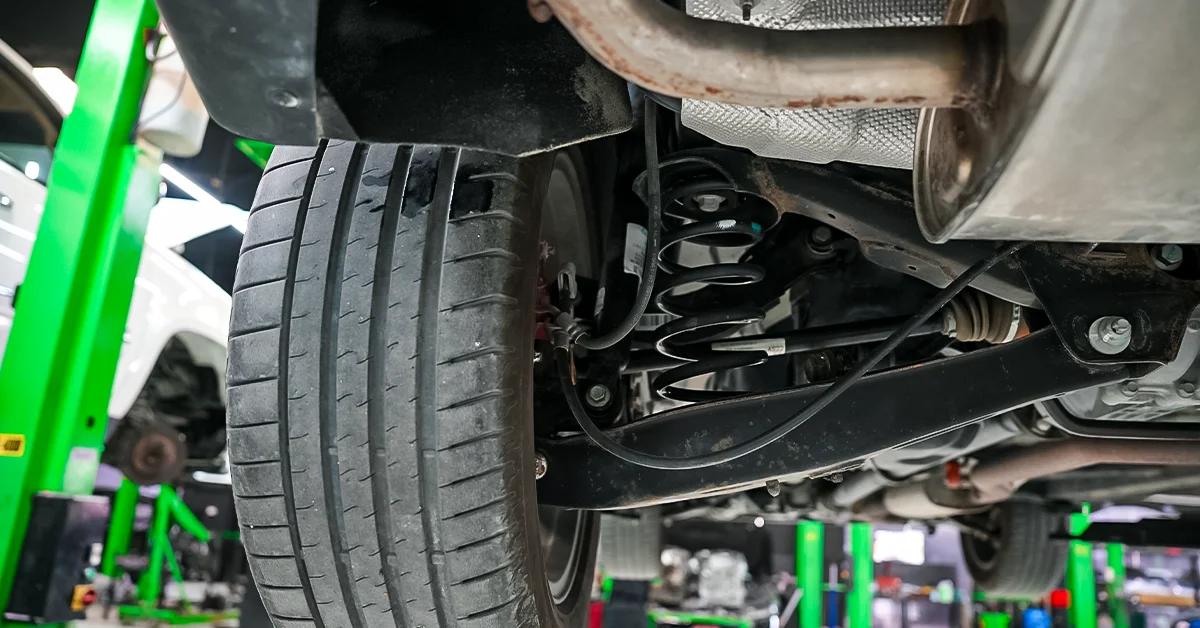
The spring supports the weight of the car. The damper does not. Its job is to control the spring: to stop it continuing to bounce after it has absorbed a bump.
An uncontrolled spring keeps oscillating, and every oscillation means the tyre is unloading and reloading against the road.
A tyre that is momentarily light is a tyre that is not gripping, and grip is what braking and steering both depend on.
The Braking Consequence
This is the part that matters most and gets discussed least.
Braking hard transfers weight forward and compresses the front suspension. A worn damper allows that transfer to happen too quickly and then lets the front oscillate.
The result is a front tyre with a varying load rather than a consistent one, and the shorter distance the tyre spends properly loaded, the less braking force it can generate.
On a rough or uneven surface the effect is larger, because that is exactly when damping matters most.
ABS works by detecting a wheel about to lock and releasing pressure. A tyre that keeps unloading looks like a wheel about to lock, so ABS releases pressure it did not need to. Worn dampers therefore reduce the effectiveness of the system designed to help you stop.
The Tyre Consequence
Worn suspension is one of the more expensive ways to destroy tyres, and it does it quietly.
- Cupping or scalloping. Uneven patches of wear around the tread, caused by the tyre bouncing rather than rolling. It is a strong indicator of failed dampers.
- Uneven wear across the tread. Worn bushes and joints change geometry under load even when a static alignment reads correctly.
- Shortened life generally. A tyre working against a bouncing wheel does more sliding and less rolling.
A set of tyres frequently costs more than the suspension components that ruined them, which makes this a poor economy.
The Knock-On Wear
Suspension components work as a set, and when one stops doing its job the others absorb what it should have.
- Top mounts and bearings take more shock and fail sooner.
- Bushes work through a larger range of movement than intended.
- Wheel bearings see impact loads they were not designed for.
- Springs can eventually break, having absorbed impacts a damper should have controlled.
- Body mounts and subframe bushes take more punishment from an uncontrolled wheel.
This is why suspension bills grow if left. A single failed damper is a small job; the same fault a year later has spread.
How It Feels Before You Measure It
The difficulty with suspension is that it degrades gradually enough that drivers adapt without noticing.
- The car continues to move after a bump instead of settling immediately.
- Noticeable nose dive under braking.
- Body roll that arrives suddenly rather than progressively in corners.
- A floating feeling at speed, particularly over undulations.
- The car feels unsettled when loaded that it did not when empty.
Most owners only discover how far it had gone after the work is done, which is the honest reason this is worth measuring rather than judging.
What This Climate Does to It
Dampers are hydraulic and heat is what degrades their oil and seals, so they fade faster here than in a temperate climate.
Rubber bushes harden with heat cycling on a timeline unrelated to mileage, which is why a low-mileage car here can have tired suspension.
Road surface and speed bumps do the rest. See worn suspension signs and fixes for what each symptom points at.
Getting It Assessed
Dampers are checked with the suspension loaded on a ramp, not by pushing a corner of the car in a car park.
Exotic Auto Services checks dampers, bushes, joints and mounts as a set, and reads the tyres, because uneven wear frequently identifies the fault before the ramp does.
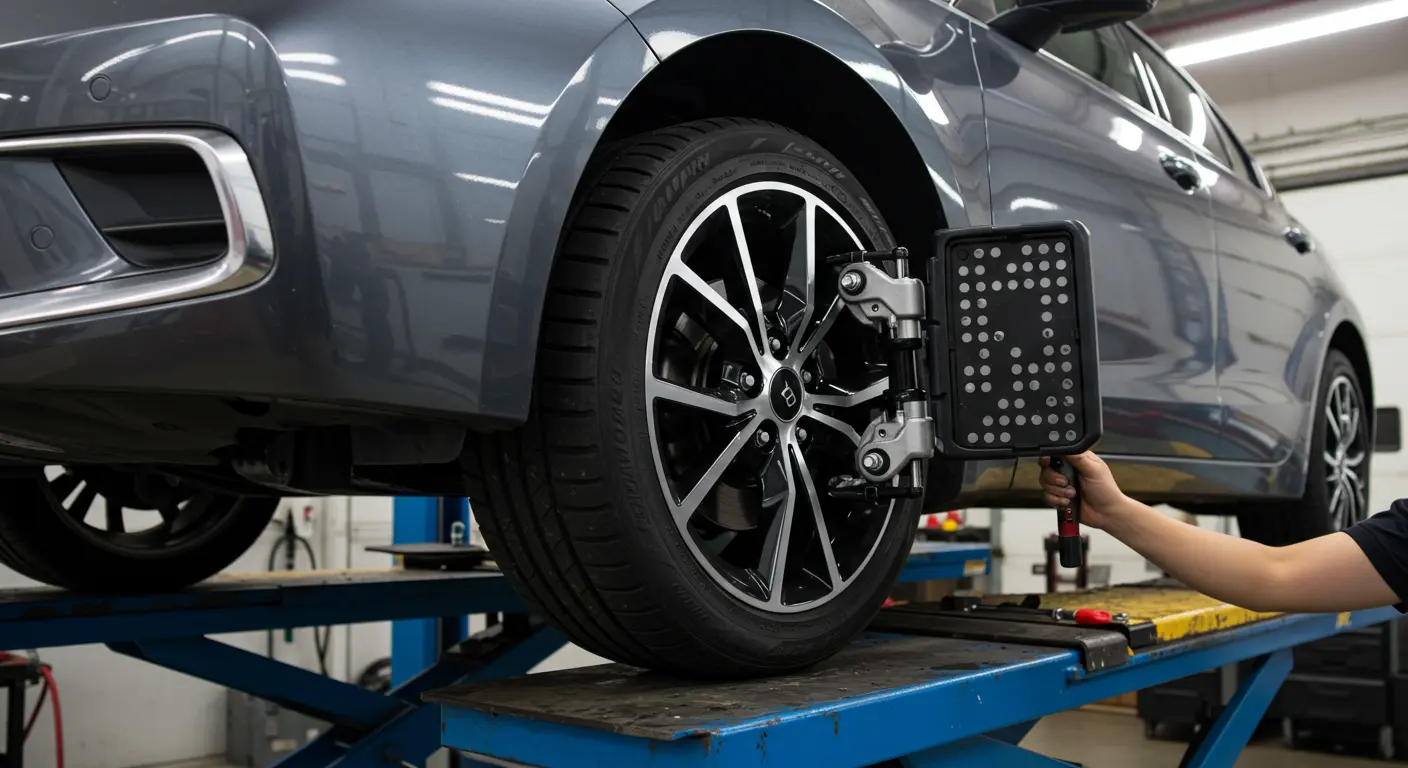
Dampers are replaced in pairs so the axle behaves consistently. See whether your wheels need alignment.
Frequently Asked Questions
Do worn shock absorbers affect braking?
Yes, measurably. A damper controls the spring so the tyre stays loaded against the road, and a worn one lets the wheel unload and reload repeatedly. A tyre that is momentarily light generates less braking force, and the effect is largest on rough surfaces, which is exactly when you need it least.
Is worn suspension just a comfort issue?
No, and that is the most common misunderstanding about it. The measurable effects are longer stopping distances, reduced grip, less effective ABS and accelerated tyre wear. Ride comfort is the symptom people notice, but it is not the reason to fix it.
How do worn shocks damage tyres?
A bouncing wheel does more sliding and less rolling, which produces cupping or scalloping: uneven patches of wear around the tread. It also lets geometry shift under load even when a static alignment reads correctly. A set of tyres often costs more than the dampers that ruined them.
Can I test my shock absorbers by pushing down on the car?
It is a rough indication at best and it misses most partly worn dampers. A damper that has faded rather than failed still resists a hand push while no longer controlling the wheel properly at speed. Checking with the suspension loaded on a ramp, plus reading the tyre wear, is far more reliable.
Why does my low-mileage car have worn suspension?
Heat. Dampers are hydraulic and heat degrades their oil and seals, while rubber bushes harden through heat cycling regardless of distance covered. In this climate suspension components age on a timeline that has more to do with years and temperature than with kilometres.