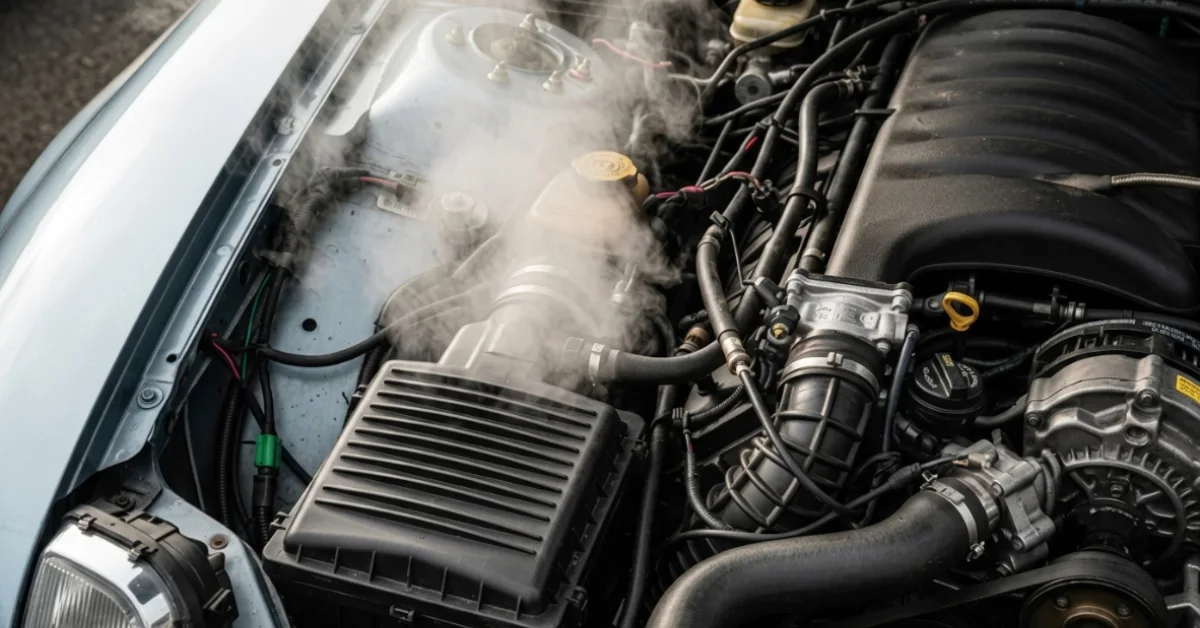
Engine
Engine Overheating: What to Do in the First Two Minutes
An overheating engine gives you a short window in which a cheap repair is still possible. What you do in the first two minutes decides whether this is a hose or a cylinder head.

What this guide covers
What to Do Right Now
If the temperature gauge is climbing or a warning has appeared, work through this in order.
- Switch the air conditioning off. It removes a large load from the engine immediately.
- Turn the cabin heater to full, fan on maximum. The heater is a second radiator, and it genuinely pulls heat out of the engine. It is unpleasant in Abu Dhabi and it works.
- If you are moving in traffic, keep moving gently. Airflow through the radiator matters more than speed.
- Pull over safely and switch the engine off. Idling hot causes damage. Stopping the engine stops the heat being made.
- Open the bonnet if you can do it safely, and then leave it alone.
- Wait. Thirty minutes minimum before touching anything under there.
Do not open the coolant expansion tank while the engine is hot. The system is pressurised, and releasing that pressure flashes the coolant to steam. This is the single most common way people are seriously burned by a car.
What Not to Do
- Do not pour cold water into a hot engine. Sudden temperature change cracks cylinder heads and blocks. Wait until it is cool.
- Do not keep driving to reach a destination. Distance is not the measure here; heat is. A few kilometres can be the difference between a hose and an engine.
- Do not top up and carry on without finding out why. Coolant does not get used up. If it is low, it went somewhere.
- Do not rely on the gauge returning to normal. A gauge that drops as coolant is lost is reading air, not health.
What Overheating Actually Damages
Understanding this is what makes the advice above worth following.
The head gasket
This is the usual casualty. Heat distorts the cylinder head enough to break the seal between head and block.
The symptoms afterwards are coolant loss with no visible leak, white smoke from the exhaust, or an oil filler cap with a mayonnaise-like film under it.
The cylinder head itself
Aluminium heads warp when they get hot enough. A warped head has to be machined flat or replaced.
That is the point where a repair stops being a component and starts being an engine job.
The turbocharger, on boosted engines
Almost every modern engine here is turbocharged, and the turbo runs hotter than the engine around it.
It relies on both oil and coolant to survive. An overheating event takes the turbo with it more often than owners expect.
Why It Happened
Overheating is a symptom rather than a fault. Something in the cooling system stopped doing its job.
The usual causes are a coolant leak, a failed thermostat, a tired water pump, a blocked radiator or a cooling fan that has stopped working.
Which one it is, is worth establishing properly rather than guessing. Our guide to what causes engine overheating works through the symptoms one by one.
In Abu Dhabi, sand packed into the radiator fins is a genuinely common cause and one of the cheapest to fix.
After It Has Cooled
Once the engine is properly cold, check the coolant level in the expansion tank.
If it is low, look underneath for evidence. Coloured residue on hoses, the radiator or the underside of the engine tells you where it went.
You can top up with the correct coolant to get the car recovered, but treat that as moving the car rather than fixing it.
If it overheated badly, or if it lost a lot of coolant, recovery is cheaper than the alternative.
Getting It Checked Properly
An engine that has overheated once should be checked before it is trusted again, even if it seems normal afterwards.
Exotic Auto Services pressure tests the cooling system, checks for combustion gases in the coolant, and reads the stored temperature data so we know how hot it actually got rather than guessing.
For the repair side see our car overheating service, radiator repair or engine repair pages. To stop it happening again, see how to keep an engine from overheating.
Frequently Asked Questions
What should I do first if my engine overheats?
Switch the air conditioning off and turn the cabin heater to full with the fan on maximum. The heater is effectively a second radiator and pulls real heat out of the engine. Then pull over safely, switch the engine off and wait at least thirty minutes before opening anything. Do not open the coolant tank while it is hot.
Can I keep driving if the temperature gauge is high?
Only far enough to stop safely. Distance is not what causes the damage, heat is, and a few kilometres running hot can be the difference between replacing a hose and replacing a cylinder head. If the gauge is in the red, stopping is always cheaper than continuing.
Is it safe to pour water into an overheated engine?
Not while it is hot. Cold water meeting hot metal causes rapid contraction that can crack a cylinder head or block, which turns a cooling fault into an engine rebuild. Wait until the engine is genuinely cool, then top up with the correct coolant rather than plain water where possible.
My engine overheated once but seems fine now. Do I need it checked?
Yes. Head gasket damage often does not show up immediately, and coolant loss with no visible leak is exactly how it presents later. A pressure test and a check for combustion gases in the coolant take very little time and tell you whether the engine got away with it.
Why does my car overheat in traffic but not on the motorway?
That points at airflow rather than coolant. At speed, air is forced through the radiator; at a standstill the cooling fan has to do that work. A failed fan, or a radiator packed with sand and dust, produces exactly this pattern and both are inexpensive to put right.