Your car’s suspension system works silently every day. It absorbs shocks, keeps your tires on the road, and gives you control while driving. On Abu Dhabi roads, where heat, speed, and road conditions vary, suspension parts wear out faster than many drivers expect.
Ignoring suspension problems does not just affect comfort. It can damage tires, reduce braking ability, and put extra stress on other systems. At the Exotic car repair workshop in Abu Dhabi, suspension issues are one of the most common problems we inspect and repair.
This guide explains the clear signs of worn suspension parts, why they fail, and how to fix them properly.
What Does the Suspension System Do?
The suspension system connects your car’s body to the wheels. Its main job is to keep the car stable and comfortable while driving.
Key functions include:
- Absorbing bumps and road shocks
- Keeping tires in contact with the road
- Supporting vehicle weight
- Improving steering control
When suspension parts wear out, all these functions suffer.
Why Suspension Parts Wear Faster in Abu Dhabi
Abu Dhabi driving conditions play a significant role in suspension wear.
Common reasons include:
- High temperatures weaken rubber bushings
- Speed bumps and uneven roads
- Long highway drives at high speeds
- Heavy vehicle loads
- Poor wheel alignment
Over time, even high-quality suspension components lose strength
Common Signs of Worn Suspension Parts
Suspension problems usually show warning signs. The key is noticing them early.
- Excessive Bouncing: If your car keeps bouncing after hitting a bump, worn shocks or struts are likely the cause. A healthy suspension settles quickly.
- Uneven or Rapid Tire Wear: Suspension issues often lead to poor tire contact with the road. This causes uneven tire wear and reduces tire life. In many cases, a wheel alignment check is also required.
- Pulling to One Side: If your car drifts left or right while driving straight, worn suspension or alignment issues may be present.
- Clunking or Knocking Noises: Strange noises over bumps often indicate worn bushings, ball joints, or control arms. These sounds should never be ignored.
- Poor Steering Control: If steering feels loose, delayed, or unstable, suspension components may no longer support proper handling.
- Nose Dives When Braking: When the front of the car dips sharply during braking, worn shocks are often the reason. This also affects braking safety.
Most Common Suspension Parts That Wear Out
Understanding which parts fail helps explain the repair process.
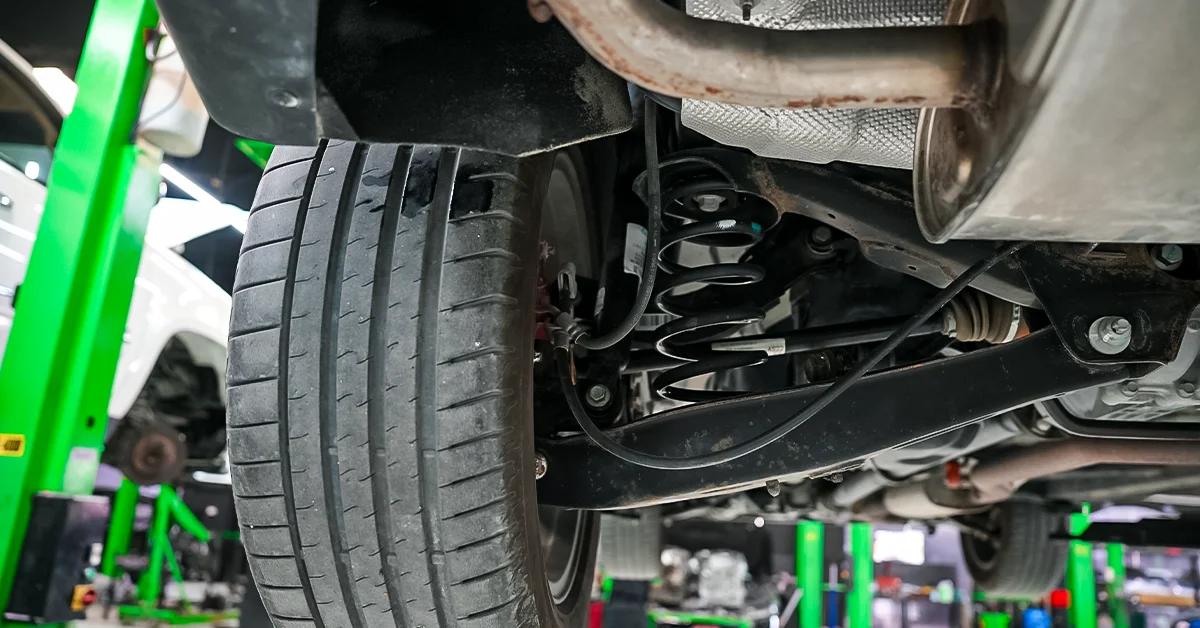
- Shock Absorbers and Struts: These control bouncing and keep the car stable. They usually wear out gradually and lose damping ability.
- Control Arms and Bushings: Rubber bushings crack over time due to heat and pressure. This leads to loose handling and noise.
- Ball Joints: Ball joints allow smooth steering movement. When worn, they cause clunking sounds and steering play.
- Springs: Broken or sagging springs lower ride height and affect balance.
What Happens If You Ignore Worn Suspension Parts
Delaying suspension repair can lead to bigger problems.
Possible consequences include:
- Faster tire damage
- Reduced braking efficiency
- Increased strain on wheel alignment
- Extra load on steering and drivetrain
- Higher repair costs later
In some cases, worn suspension can even affect gearbox performance due to constant vibration.
How Suspension Problems Are Diagnosed
Diagnosis usually includes:
- Road testing
- Visual inspection of components
- Checking for leaks and cracks
- Measuring ride height
- Testing wheel alignment angles
Suspension issues are often found during Car PPI inspections, especially on used vehicles.
Best Fixes for Worn Suspension Parts
There is no one-size-fits-all fix. Repairs depend on damage level and vehicle type.
Suspension Repair or Replacement: Worn shocks, struts, bushings, or ball joints must be replaced with proper specifications. This restores safety and comfort.
Wheel Alignment After Repair: After suspension work, wheel alignment is critical. It ensures straight tracking and even tire wear.
Related Repairs That May Be Needed
Sometimes suspension wear affects other systems:
- Steering components
- Tires from the tyre shop
- Brake stability
- Electrical sensors related to suspension systems
Can Suspension Issues Affect Other Car Systems?
Yes. Suspension problems often lead to other repairs if ignored.
Examples include:
- Increased load on engine mounts
- Extra vibration affecting electrical repair components
- Reduced comfort that impacts overall vehicle performance
That is why suspension repair should never be delayed.
How Often Should Suspension Be Checked in Abu Dhabi?
A suspension inspection is recommended:
- Every 20,000–30,000 km
- Before long road trips
- When buying a used car
- If new noises or handling changes appear
Many drivers combine suspension checks with routine services like oil changes or general inspections.
Suspension Repair vs. Temporary Fixes
Temporary fixes only hide symptoms. They do not solve the problem.
Proper suspension repair:
- Restores original ride quality
- Protects tires and steering
- Improves safety and control
- Prevents future damage
Professional repair always costs less than repeated temporary solutions.
Why Professional Suspension Repair Matters
Suspension systems are safety-critical. Incorrect installation or cheap parts can cause serious issues.
At Exotic Auto Services Abu Dhabi, suspension repair focuses on:
- Manufacturer-approved parts
- Correct torque and fitting
- Alignment calibration
- Road testing after repair
This ensures long-term reliability.
Final Thoughts
Worn suspension parts affect more than comfort. They impact safety, handling, tire life, and overall vehicle performance. On Abu Dhabi roads, ignoring suspension problems leads to higher repair costs and unsafe driving conditions.
If you notice bouncing, noise, uneven tire wear, or poor steering control, your suspension system needs attention. Early diagnosis and professional repair restore stability and protect other vehicle systems.
A healthy suspension means a safer, smoother, and more controlled drive every time.